

Ready & Packaged Foods
All →Vegetables & Legumes
All →Desserts & Confectionery
All →Meat & Protein
All →Grains & Bakery
All →Beverages
All →Milk & Dairy
All →

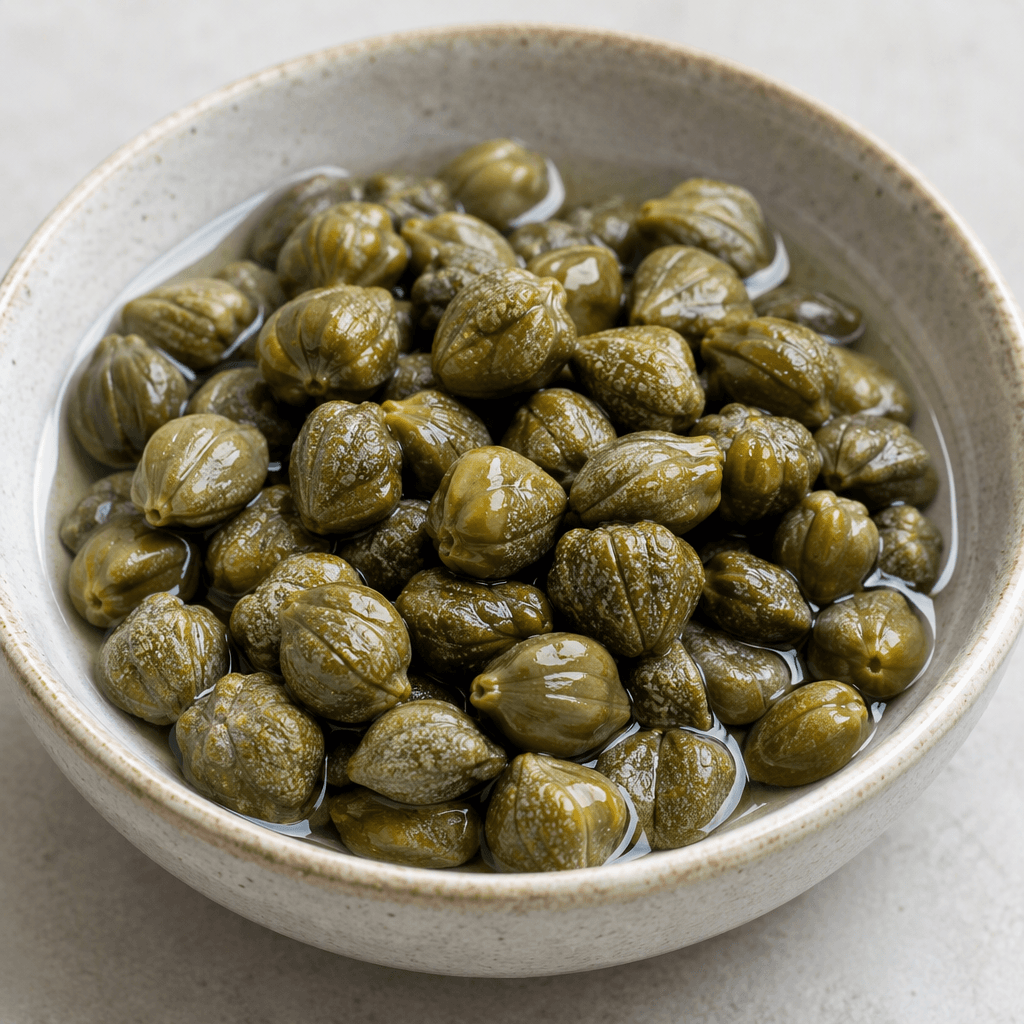
Capers Calories
Tangy and salty, source of antioxidants, common in Mediterranean cuisine
In season: Spring · Summer
CALORIES
GI
POTASSIUM
FIBER
Quick answer
1 tablespoon (medium) of Capers (8 g) has 2 calories. That works out to 23 calories per 100 g. It contains 0.4 g of carbs, 0.2 g of protein, 0.1 g of fat and 0.3 g of fiber. Its 236.8 mg of Sodium covers 10% of the Daily Value. Its glycemic index is 15 (low), so it raises blood sugar slowly.
What is Capers?
Capers are the unopened flower buds of the caper bush, native to the Mediterranean region and also grown in other warm, dry climates. They are usually preserved in brine or packed in salt, which gives them their distinctive sharp, tangy flavour. The small buds are tender but retain a slight bite.
Across Mediterranean cooking, capers add a salty, bright note to fish, salads, sauces and pasta; elsewhere, they’re often used sparingly to sharpen a dish rather than eaten on their own. They are low in calories and provide some fibre, but their briny taste can bring plenty of salt. Rinse and drain them first if you want a gentler flavour, then pair with lemon, olive oil or grilled fish.
Capers Nutrition Facts
Selected: 100 g
23
KCAL / 100G
Carbs
4.9g
· 2% DV
Protein
2.4g
· 5% DV
Fat
0.9g
· 1% DV
Fiber
3.2g
· 11% DV
DV is the share of the daily value covered, on a 2,000 kcal reference diet.
Calories come from: Carbs 53% · Protein 26% · Fat 21%
Capers Vitamins & Minerals
Vitamins
Vitamin K
24.6µg · 21% DV
Vitamin A
138µg · 15% DV
B2
0.14mg · 11% DV
B5
0.35mg · 7% DV
Minerals
Sodium
2960mg · 129% DV
Iron
2mg · 11% DV
Magnesium
33mg · 8% DV
Calcium
40mg · 4% DV
How Nutritious Is Capers?
Nutrient density
High
How many vitamins, minerals and how much fiber this food carries per calorie. A high score means a lot of nutrition for few calories.
Satiety score
Medium
An EatBetter score computed from fiber, protein and calorie density. A high score means staying full longer on the same calories.
Both scores are calculated per 100 g and do not change with the selected portion. The satiety score is EatBetter's own calculation, not a clinical measure.
Capers Glycemic Index
GLYCEMIC INDEX
GLYCEMIC LOAD
Accounts for portion size — a more realistic measure than GI alone.
How to Burn Off Capers
To burn the 23 calories in 100 g:
🚶
Walking (5 km/h)
🏃
Running (8 km/h)
🚴
Cycling
🏊
Swimming
Times are calculated with the MET equation for a 70 kg adult. Actual burn varies with your weight, age and pace.
Is Capers Processed?
NOVA 2
Minimally Processed
1. Unprocessed
2. Minimally Processed
3. Processed
4. Ultra-Processed
NOVA classifies foods into 4 groups by industrial processing. NOVA 1 (unprocessed) is the healthiest.
Does Capers Contain Allergens?
No known major allergens
Which Diets Is Capers Good For?
Vegan
✓ Suitable
Vegetarian
✓ Suitable
Gluten-Free
✓ Suitable
Dairy-Free
— Not suitable
Mediterranean
✓ Suitable
Paleo
— Not suitable
Whole30
— Not suitable
DASH
— Not suitable
Keto
✓ Suitable
Low FODMAP
— Not suitable
Capers Fat Profile
SATURATED
0.23g
MONOUNSATURATED
0.13g
POLYUNSATURATED
0.32g
Omega 6:3 ratio 2:1
Below the ideal 4:1 — a good omega balance.
Compare Capers
Foods Similar to Capers
Frequently Asked Questions About Capers
What are capers?
Capers are the unopened flower buds of the caper plant, usually cured in brine or salt. Their sharp, tangy flavor makes them a seasoning rather than a vegetable typically eaten in large portions.
What do capers taste like?
Capers taste salty, tangy, and slightly floral, with a briny sharpness. The exact intensity varies with how they are preserved, so taste one before adding them to a dish.
Are capers and caper berries the same thing?
No. Capers are unopened flower buds, while caper berries develop after the flower blooms. Berries are larger, often sold with their stems, and have a milder, more olive-like texture.
Do you need to rinse capers before using them?
No, rinsing is optional. Rinse and drain capers if you want to reduce their briny saltiness; otherwise, use them straight from the jar and adjust the dish’s added salt.
How do you use capers in pasta?
Add drained capers to pasta with olive oil, garlic, lemon, or tomatoes for a bright, salty accent. Stir them in near the end of cooking so their flavor stays distinct.
Can you eat capers straight from the jar?
Yes, capers are ready to eat straight from the jar. They are intensely salty and tangy, so most people use a small amount as a garnish or mix them into a dish.
How should you store capers after opening?
Keep opened capers refrigerated in their tightly closed jar, with the buds covered by brine. Use a clean utensil each time, and discard them if you notice mold, an off smell, or other spoilage.
What can I use instead of capers?
Chopped green olives are the closest common substitute for capers’ briny, savory character. Add a little lemon juice or vinegar if needed, but start with less because olives can also be quite salty.
When should you add capers while cooking?
Add capers near the end of cooking or stir them into a finished sauce. Prolonged cooking can mute their sharp flavor, while adding them late keeps their texture and tang more noticeable.
Are capers good for you?
Capers provide plant compounds with antioxidant activity, but brined capers can also be high in salt. They work well as a flavorful accent; people limiting sodium should use a smaller amount or rinse them first.
Have another question about Capers?
Ask the AI nutrition coach — calories, portions, alternatives and more, answered in seconds in the app.

Scan calories with your camera
Instant AI nutrition analysis

Nutrition data compiled from USDA FoodData Central and scientific sources.