

Ready & Packaged Foods
All →Vegetables & Legumes
All →Desserts & Confectionery
All →Meat & Protein
All →Grains & Bakery
All →Beverages
All →Milk & Dairy
All →

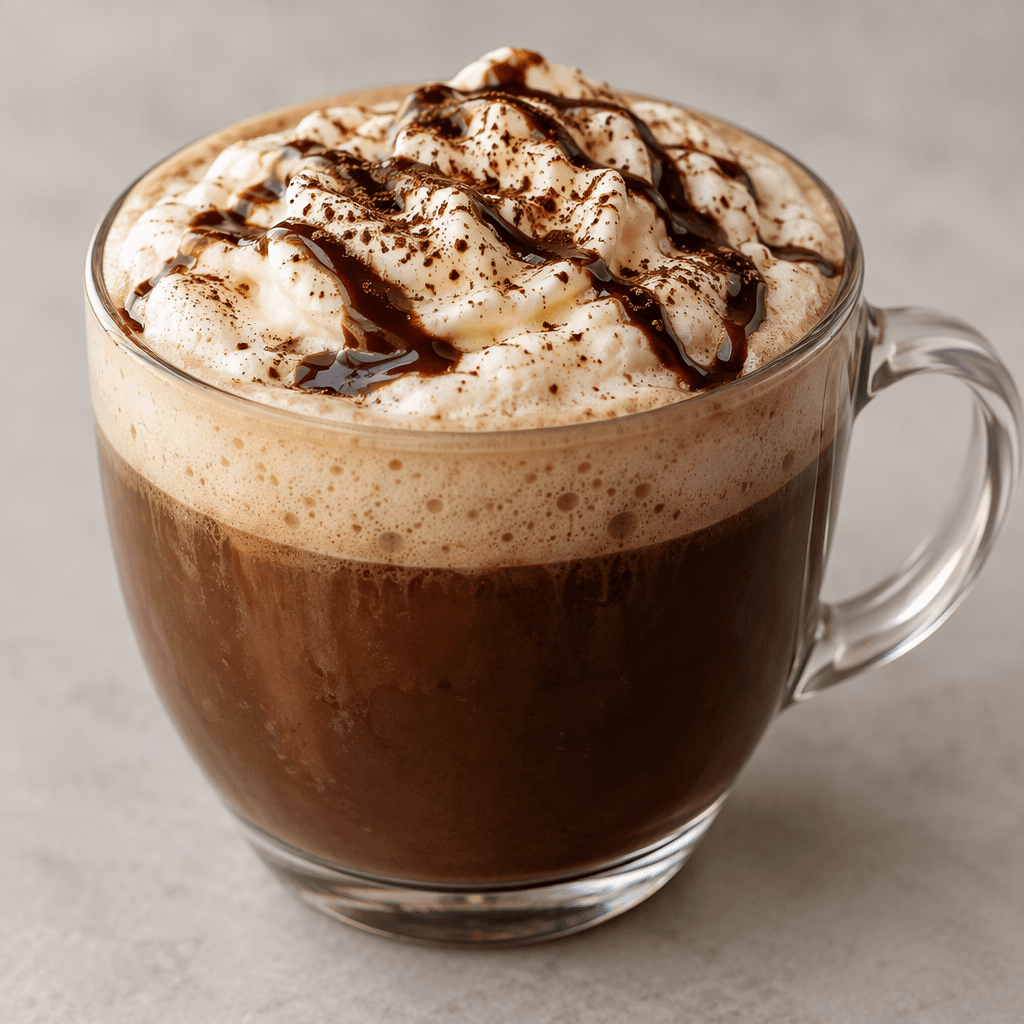
Caffè Mocha Calories
Sweet espresso-based drink with milk and chocolate
CALORIES
GI
POTASSIUM
FIBER
Quick answer
1 cup (medium) of Caffè Mocha (240 g) has 178 calories. That works out to 74 calories per 100 g. It contains 24.5 g of carbs, 6.2 g of protein, 6.5 g of fat and 1.4 g of fiber. Its 0.8 µg of B12 covers 32% of the Daily Value. Its glycemic index is 41 (low), so it raises blood sugar slowly.
What is Caffè Mocha?
Caffè Mocha combines espresso with chocolate—often cocoa or chocolate syrup—and steamed milk, sometimes finished with milk foam or whipped cream. It belongs to the modern café tradition built around Italian-style espresso; its name also recalls Mocha, Yemen’s historic coffee port. Recipes vary in sweetness and chocolate intensity.
It is commonly served hot in cafés, though iced versions are also popular, and makes a coffee-break treat or after-meal drink. Milk softens espresso’s bitterness while chocolate gives it a richer, sweeter taste than a plain latte. It provides 74 kcal per 100 g. For a less sweet cup, ask for less chocolate and skip the whipped cream; it pairs well with a plain biscuit rather than another rich dessert.
Caffè Mocha Nutrition Facts
Selected: 100 g
74
KCAL / 100G
Carbs
10.2g
· 4% DV
Protein
2.6g
· 5% DV
Fat
2.7g
· 3% DV
Fiber
0.6g
· 2% DV
DV is the share of the daily value covered, on a 2,000 kcal reference diet.
Calories come from: Carbs 54% · Protein 14% · Fat 32%
Caffè Mocha Vitamins & Minerals
Vitamins
B12
0.32µg · 13% DV
B2
0.12mg · 9% DV
B5
0.28mg · 6% DV
Biotin
1.1µg · 4% DV
Minerals
Phosphorus
78mg · 11% DV
Calcium
95mg · 10% DV
Iodine
8µg · 5% DV
Potassium ⭐
155mg · 5% DV
How Nutritious Is Caffè Mocha?
Nutrient density
Low
How many vitamins, minerals and how much fiber this food carries per calorie. A high score means a lot of nutrition for few calories.
Satiety score
Medium
An EatBetter score computed from fiber, protein and calorie density. A high score means staying full longer on the same calories.
Both scores are calculated per 100 g and do not change with the selected portion. The satiety score is EatBetter's own calculation, not a clinical measure.
Caffè Mocha Glycemic Index
GLYCEMIC INDEX
GLYCEMIC LOAD
Accounts for portion size — a more realistic measure than GI alone.
How to Burn Off Caffè Mocha
To burn the 74 calories in 100 g:
🚶
Walking (5 km/h)
🏃
Running (8 km/h)
🚴
Cycling
🏊
Swimming
Times are calculated with the MET equation for a 70 kg adult. Actual burn varies with your weight, age and pace.
Is Caffè Mocha Processed?
NOVA 3
Processed
1. Unprocessed
2. Minimally Processed
3. Processed
4. Ultra-Processed
NOVA classifies foods into 4 groups by industrial processing. NOVA 1 (unprocessed) is the healthiest.
Does Caffè Mocha Contain Allergens?
Contains these allergens:
Which Diets Is Caffè Mocha Good For?
Vegan
— Not suitable
Vegetarian
✓ Suitable
Gluten-Free
— Not suitable
Dairy-Free
— Not suitable
Mediterranean
✓ Suitable
Paleo
— Not suitable
Whole30
— Not suitable
DASH
— Not suitable
Keto
— Not suitable
Low FODMAP
— Not suitable
Caffè Mocha Fat Profile
SATURATED
1.7g
MONOUNSATURATED
0.7g
POLYUNSATURATED
0.12g
Omega 6:3 ratio 3:1
Below the ideal 4:1 — a good omega balance.
Compare Caffè Mocha
Foods Similar to Caffè Mocha
Frequently Asked Questions About Caffè Mocha
What is Caffè Mocha made of?
Caffè Mocha is made with espresso, milk and chocolate, often chocolate syrup or cocoa. Cafés may top it with milk foam or whipped cream, so the exact ingredients vary by recipe.
Does Caffè Mocha have more caffeine than a latte?
Not necessarily. Caffè Mocha and a latte can contain a similar amount of caffeine when made with the same number of espresso shots; chocolate changes the flavor, but does not automatically make the drink more caffeinated.
How do you make Caffè Mocha at home?
Make Caffè Mocha by dissolving chocolate or cocoa in freshly brewed espresso, then adding steamed milk. Top it with milk foam if you like; adjust the chocolate to make the coffee flavor more or less prominent.
What is the difference between Caffè Mocha and a cappuccino?
Caffè Mocha includes chocolate along with espresso and milk, while a cappuccino is made with espresso, steamed milk and a thick layer of foam. A cappuccino has no chocolate unless it is added separately.
Can you make Caffè Mocha iced?
Yes, Caffè Mocha can be served iced. Stir chocolate into espresso while it is still warm, then pour it over cold milk and ice; adding chocolate before chilling helps it mix smoothly.
What is the difference between Caffè Mocha and white mocha?
Caffè Mocha usually gets its chocolate flavor from dark or milk chocolate, while a white mocha uses white chocolate. White chocolate has a creamier, sweeter flavor and lacks the cocoa solids found in darker chocolate.
Is Caffè Mocha sweet?
Usually, yes. Caffè Mocha often gets sweetness from chocolate or chocolate syrup, but the level varies by café and recipe. Ask for less syrup or unsweetened cocoa if you want a less sweet drink.
Can you reheat Caffè Mocha?
Yes, you can gently reheat Caffè Mocha, although the milk may lose its smooth texture. Warm it slowly on the stovetop or in short microwave bursts, stirring between each, and avoid bringing it to a boil.
Does Caffè Mocha keep you awake?
It can, because Caffè Mocha contains espresso and therefore caffeine. How strongly it affects your sleep varies, but having it later in the day may make it harder to fall asleep if you are caffeine-sensitive.
Can you drink Caffè Mocha while pregnant?
Caffè Mocha can fit during pregnancy if its caffeine is counted toward your daily limit, including caffeine from other drinks and foods. The amount varies with the espresso used, so ask your clinician for guidance if you are unsure about your limit.
Have another question about Caffè Mocha?
Ask the AI nutrition coach — calories, portions, alternatives and more, answered in seconds in the app.

Scan calories with your camera
Instant AI nutrition analysis

Nutrition data compiled from USDA FoodData Central and scientific sources.