

Ready & Packaged Foods
All →Vegetables & Legumes
All →Desserts & Confectionery
All →Meat & Protein
All →Grains & Bakery
All →Beverages
All →Milk & Dairy
All →

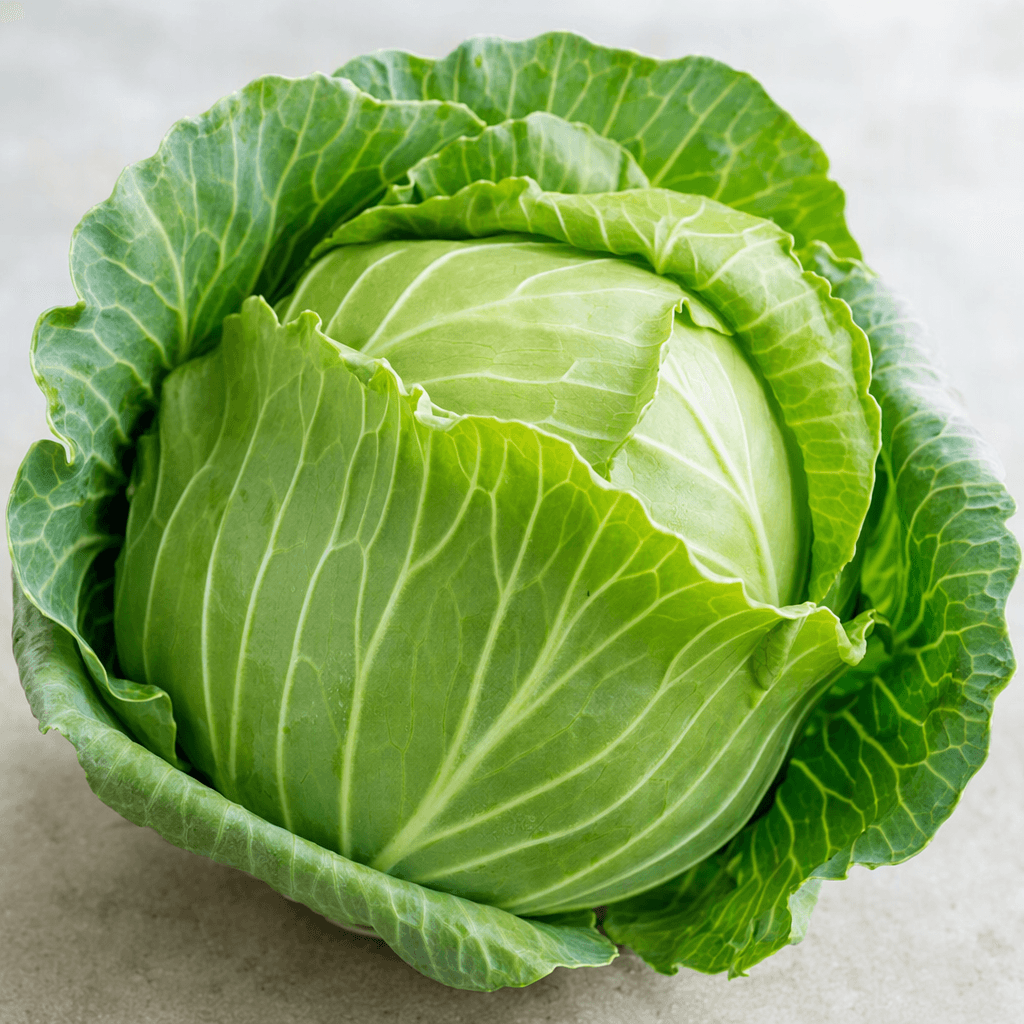
Cabbage Calories
Low calorie, source of fiber and vitamin C
In season: Spring · Summer · Autumn · Winter
CALORIES
GI
POTASSIUM
FIBER
Quick answer
1 cup (chopped) of Cabbage (89 g) has 22 calories. That works out to 25 calories per 100 g. It contains 5.2 g of carbs, 1.2 g of protein, 0.1 g of fat and 2.2 g of fiber. Its 67.6 µg of Vitamin K covers 56% of the Daily Value. Its glycemic index is 10 (low), so it raises blood sugar slowly.
What is Cabbage?
Cabbage is a leafy vegetable that grows in a compact head and can be eaten raw or cooked. Its crisp leaves are commonly shredded into salads and slaws, fermented into sauerkraut or kimchi, or cooked in soups, stews and stuffed-cabbage dishes. Raw cabbage has a fresh crunch and mild, slightly peppery flavour; cooking softens it and brings out a gentle sweetness. It pairs well with sharp dressings, herbs and hearty ingredients such as beans.
Cabbage is mostly water and provides fibre and vitamin C, while remaining low in calories: 100 g has 25 calories. Add it raw for crunch or cook it with little oil for a lighter meal.
Cabbage Nutrition Facts
Selected: 100 g
25
KCAL / 100G
Carbs
5.8g
· 2% DV
Protein
1.3g
· 3% DV
Fat
0.1g
· 0% DV
Fiber
2.5g
· 9% DV
DV is the share of the daily value covered, on a 2,000 kcal reference diet.
Calories come from: Carbs 79% · Protein 18% · Fat 3%
Cabbage Vitamins & Minerals
Vitamins
Vitamin K
76µg · 63% DV
Vitamin C
36.6mg · 41% DV
Folate
43µg · 11% DV
B6
0.12mg · 7% DV
Minerals
Potassium ⭐
170mg · 5% DV
Calcium
40mg · 4% DV
Phosphorus
26mg · 4% DV
Magnesium
12mg · 3% DV
How Nutritious Is Cabbage?
Nutrient density
High
How many vitamins, minerals and how much fiber this food carries per calorie. A high score means a lot of nutrition for few calories.
Satiety score
Medium
An EatBetter score computed from fiber, protein and calorie density. A high score means staying full longer on the same calories.
Both scores are calculated per 100 g and do not change with the selected portion. The satiety score is EatBetter's own calculation, not a clinical measure.
Cabbage Glycemic Index
GLYCEMIC INDEX
GLYCEMIC LOAD
Accounts for portion size — a more realistic measure than GI alone.
How to Burn Off Cabbage
To burn the 25 calories in 100 g:
🚶
Walking (5 km/h)
🏃
Running (8 km/h)
🚴
Cycling
🏊
Swimming
Times are calculated with the MET equation for a 70 kg adult. Actual burn varies with your weight, age and pace.
Is Cabbage Processed?
NOVA 1
Unprocessed
1. Unprocessed
2. Minimally Processed
3. Processed
4. Ultra-Processed
NOVA classifies foods into 4 groups by industrial processing. NOVA 1 (unprocessed) is the healthiest.
Does Cabbage Contain Allergens?
No known major allergens
Which Diets Is Cabbage Good For?
Vegan
✓ Suitable
Vegetarian
✓ Suitable
Gluten-Free
✓ Suitable
Dairy-Free
— Not suitable
Mediterranean
✓ Suitable
Paleo
✓ Suitable
Whole30
— Not suitable
DASH
— Not suitable
Keto
— Not suitable
Low FODMAP
— Not suitable
Cabbage Fat Profile
SATURATED
0.02g
MONOUNSATURATED
0.01g
POLYUNSATURATED
0.03g
Omega 6:3 ratio 0.5:1
Below the ideal 4:1 — a good omega balance.
Compare Cabbage
Foods Similar to Cabbage
Frequently Asked Questions About Cabbage
How can you tell if cabbage has gone bad?
Cabbage has likely spoiled if it smells sour or rotten, feels slimy, or has widespread dark, soft patches. A few wilted outer leaves can usually be removed; discard the head if the inside is discolored or has an unpleasant odor.
How do you cut cabbage into even wedges?
To cut cabbage into wedges, remove any damaged outer leaves, rinse the head, and slice it in half through the core. Cut each half into wedges, keeping a little core attached so the leaves stay together during roasting or grilling.
Can you eat cabbage raw without cooking it?
Yes, cabbage is safe to eat raw when it is washed and fresh. Slice it finely for slaw or salads; massaging the shreds with a little dressing softens their crisp texture. Remove damaged outer leaves before preparing it.
How do you make sauerkraut from cabbage?
Sauerkraut is made by shredding cabbage, mixing it with salt, and packing it firmly so its released liquid covers the shreds. Keep the cabbage submerged in a clean container as it ferments; use clean utensils to reduce the risk of contamination.
What is the best way to store a cut cabbage?
Wrap the cut surface of cabbage or place the remaining piece in an airtight container, then refrigerate it. Keep it away from foods that readily absorb odors, and remove any dried or discolored surface before using the rest.
Can you roast cabbage in the oven?
Yes, cabbage can be roasted in wedges or thick slices. Coat the pieces lightly with oil, season them, and roast until the edges are browned and the center is tender. Leaving some core attached helps the slices hold their shape.
Why does cabbage smell strong when it is cooked?
Cabbage releases sulfur-containing compounds as it cooks, and a strong smell is more likely when it is boiled for a long time. Cook it briefly by steaming, sautéing, or roasting, and ventilate the kitchen to keep the odor from lingering.
Can cabbage be frozen, and how should you prepare it?
Yes, cabbage can be frozen, though thawed cabbage becomes softer and works best in cooked dishes. Chop it, briefly blanch it, cool it promptly, and drain it well before packing it airtight. Use fresh cabbage instead when you need a crisp salad texture.
Can cabbage leaves be used as a wrap?
Yes, large cabbage leaves can be used as wraps. Briefly blanch or steam them until flexible, then trim the thick center rib if it makes rolling difficult. Fill and roll the leaves, or use them as a sturdy alternative to tortillas.
Does cabbage need to be washed before eating?
Yes, rinse cabbage under clean running water before cutting or eating it, and remove damaged outer leaves. If you cut it into wedges first, rinse between the leaves as well. Do not use soap or household cleaning products on cabbage.
Have another question about Cabbage?
Ask the AI nutrition coach — calories, portions, alternatives and more, answered in seconds in the app.

Scan calories with your camera
Instant AI nutrition analysis

Nutrition data compiled from USDA FoodData Central and scientific sources.