

Ready & Packaged Foods
All →Vegetables & Legumes
All →Desserts & Confectionery
All →Meat & Protein
All →Grains & Bakery
All →Beverages
All →Milk & Dairy
All →

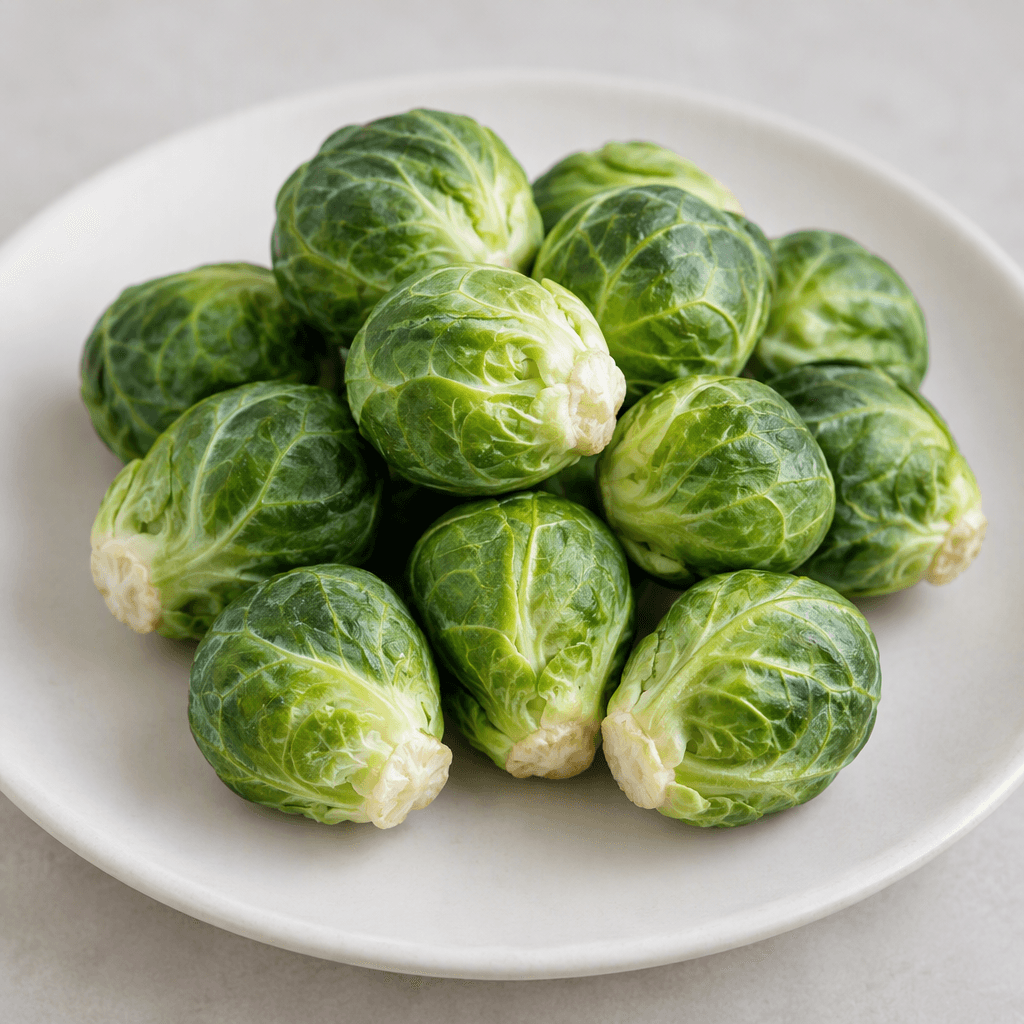
Brussels sprouts Calories
High in fiber, vitamin C and vitamin K
In season: Autumn · Winter
CALORIES
GI
POTASSIUM
FIBER
Quick answer
6 piece (medium) of Brussels sprouts (85 g) has 37 calories. That works out to 43 calories per 100 g. It contains 7.6 g of carbs, 2.9 g of protein, 0.3 g of fat and 3.2 g of fiber. Its 150.5 µg of Vitamin K covers 125% of the Daily Value. Its glycemic index is 15 (low), so it raises blood sugar slowly.
What is Brussels sprouts?
Brussels sprouts are the small, tightly layered buds of a cabbage-family plant, traditionally associated with the area around Brussels, Belgium. Their flavour is earthy and gently sweet when cooked, with a faint bitterness; roasted leaves turn crisp while the centres stay tender.
Across English-speaking kitchens, they’re often roasted or steamed as a dinner side, added to salads, or served with a festive meal. They’re a useful source of fibre and vitamins C and K, with 3.8 g of fibre per 100 g. Roast them with a little oil or steam until just tender, then add lemon; they pair well with grains, fish, or other mains.
Brussels sprouts Nutrition Facts
Selected: 100 g
43
KCAL / 100G
Carbs
8.9g
· 3% DV
Protein
3.4g
· 7% DV
Fat
0.3g
· 0% DV
Fiber
3.8g
· 14% DV
DV is the share of the daily value covered, on a 2,000 kcal reference diet.
Calories come from: Carbs 69% · Protein 26% · Fat 5%
Brussels sprouts Vitamins & Minerals
Vitamins
Vitamin K
177µg · 148% DV
Vitamin C
85mg · 94% DV
Folate
61µg · 15% DV
B6
0.22mg · 13% DV
Minerals
Potassium ⭐
389mg · 11% DV
Phosphorus
69mg · 10% DV
Iron
1mg · 6% DV
Magnesium
23mg · 5% DV
How Nutritious Is Brussels sprouts?
Nutrient density
Very high
How many vitamins, minerals and how much fiber this food carries per calorie. A high score means a lot of nutrition for few calories.
Satiety score
High
An EatBetter score computed from fiber, protein and calorie density. A high score means staying full longer on the same calories.
Both scores are calculated per 100 g and do not change with the selected portion. The satiety score is EatBetter's own calculation, not a clinical measure.
Brussels sprouts Glycemic Index
GLYCEMIC INDEX
GLYCEMIC LOAD
Accounts for portion size — a more realistic measure than GI alone.
How to Burn Off Brussels sprouts
To burn the 43 calories in 100 g:
🚶
Walking (5 km/h)
🏃
Running (8 km/h)
🚴
Cycling
🏊
Swimming
Times are calculated with the MET equation for a 70 kg adult. Actual burn varies with your weight, age and pace.
Is Brussels sprouts Processed?
NOVA 1
Unprocessed
1. Unprocessed
2. Minimally Processed
3. Processed
4. Ultra-Processed
NOVA classifies foods into 4 groups by industrial processing. NOVA 1 (unprocessed) is the healthiest.
Does Brussels sprouts Contain Allergens?
No known major allergens
Which Diets Is Brussels sprouts Good For?
Vegan
✓ Suitable
Vegetarian
✓ Suitable
Gluten-Free
✓ Suitable
Dairy-Free
— Not suitable
Mediterranean
✓ Suitable
Paleo
✓ Suitable
Whole30
— Not suitable
DASH
— Not suitable
Keto
✓ Suitable
Low FODMAP
— Not suitable
Brussels sprouts Fat Profile
SATURATED
0.07g
MONOUNSATURATED
0.03g
POLYUNSATURATED
0.13g
Omega 6:3 ratio 0.3:1
Below the ideal 4:1 — a good omega balance.
Compare Brussels sprouts
Foods Similar to Brussels sprouts
Frequently Asked Questions About Brussels sprouts
How do you cook Brussels sprouts?
Brussels sprouts can be roasted, steamed, sautéed, or boiled. Trim the stem ends and remove loose outer leaves; halve larger sprouts so they cook evenly. Stop cooking when they are tender, since overcooking can make them mushy and strongly sulfurous.
Are Brussels sprouts healthy?
Yes, Brussels sprouts are a nutritious vegetable and provide fiber, vitamin C, and vitamin K. Fiber supports digestion, while these vitamins have important roles in normal body functions. Add them to a varied meal rather than relying on them as a remedy.
Why do Brussels sprouts taste bitter?
Brussels sprouts can taste bitter because they contain naturally occurring compounds, and prolonged cooking may intensify the sharp flavor. Choose firm, fresh sprouts and try roasting or quickly sautéing them; browning brings out a sweeter, nuttier taste.
Can you eat Brussels sprouts raw?
Yes, Brussels sprouts can be eaten raw. Rinse them, remove any loose leaves, and slice or shred them thinly for a salad or slaw. Their firm texture is easier to enjoy when finely cut, though raw sprouts may cause more gas for some people.
How do you prepare Brussels sprouts before cooking?
Rinse Brussels sprouts under running water, trim a thin slice from each stem, and remove damaged outer leaves. Cut larger sprouts in half if needed. Dry them well before roasting so surface moisture does not prevent them from browning.
How do you roast Brussels sprouts so they get crispy?
For crisp Brussels sprouts, dry them thoroughly, halve them, and toss with a little oil and seasoning. Arrange them cut-side down with space between pieces, then roast until browned and tender. Crowding the pan traps steam and softens the edges.
How should you store Brussels sprouts?
Keep unwashed Brussels sprouts dry in the refrigerator, preferably in a ventilated bag or container in the crisper drawer. Remove yellowing leaves before cooking. Once cooked, refrigerate them in a covered container and use them within a few days.
Can you freeze Brussels sprouts?
Yes, Brussels sprouts freeze well after brief blanching. Cool them promptly, drain and dry them thoroughly, then pack them in an airtight freezer container. They may be softer after thawing, so frozen sprouts work especially well in cooked dishes.
Why do Brussels sprouts smell bad when cooked?
Brussels sprouts can develop a strong sulfur smell when cooked for too long. Cook them only until tender and use a method such as roasting or sautéing to avoid prolonged boiling. Fresh sprouts usually have a milder smell before cooking.
How do you choose fresh Brussels sprouts?
Choose Brussels sprouts that feel firm and have compact, tightly layered green leaves. Smaller sprouts are often milder and more evenly sized for cooking. Avoid heads with widespread yellowing, wilting, or soft spots, which suggest they are past their best.
Have another question about Brussels sprouts?
Ask the AI nutrition coach — calories, portions, alternatives and more, answered in seconds in the app.

Scan calories with your camera
Instant AI nutrition analysis

Nutrition data compiled from USDA FoodData Central and scientific sources.