

Ready & Packaged Foods
All →Vegetables & Legumes
All →Desserts & Confectionery
All →Meat & Protein
All →Grains & Bakery
All →Beverages
All →Milk & Dairy
All →

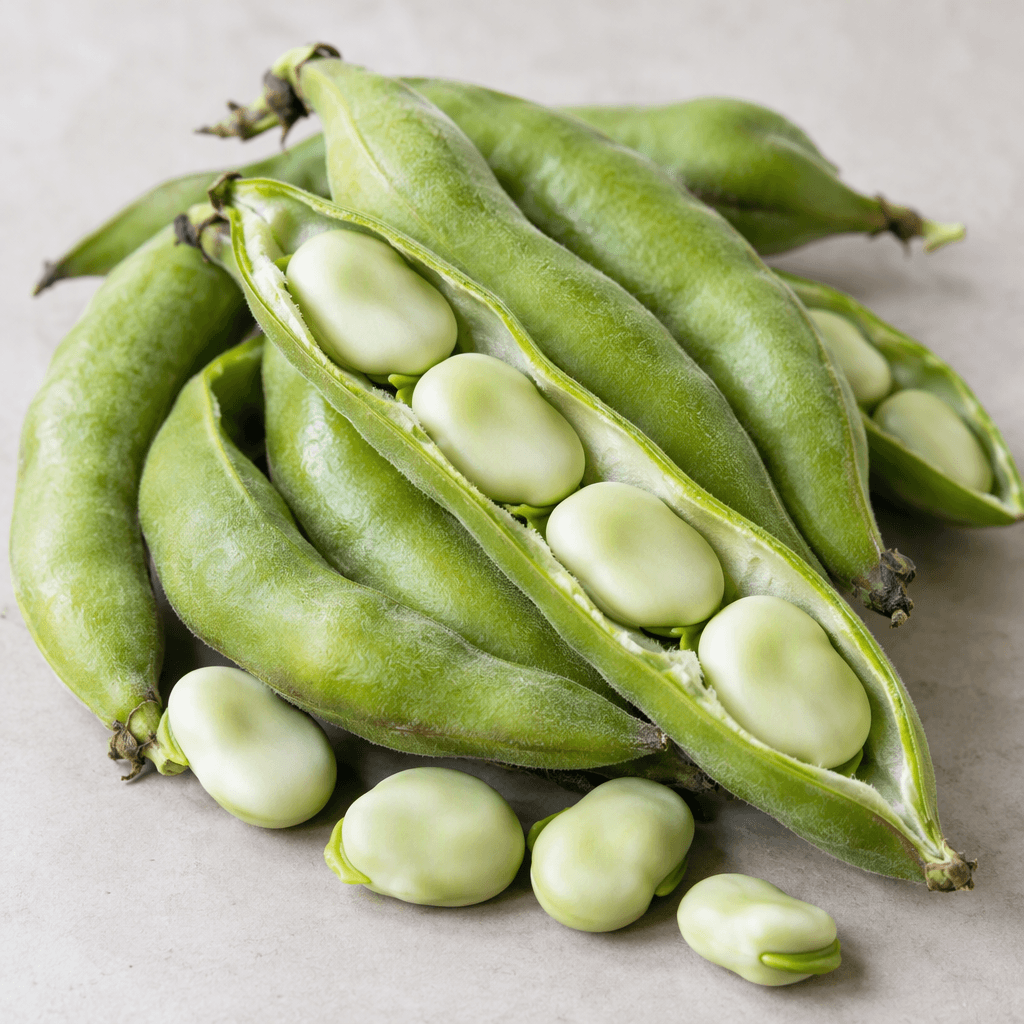
Broad beans Calories
Rich in protein and fiber, source of folate and iron
In season: Spring
CALORIES
GI
POTASSIUM
FIBER
Quick answer
1 cup (medium) of Broad beans (170 g) has 150 calories. That works out to 88 calories per 100 g. It contains 30.8 g of carbs, 12.9 g of protein, 0.9 g of fat and 9.2 g of fiber. Its 306 µg of Folate covers 77% of the Daily Value. Its glycemic index is 40 (low), so it raises blood sugar slowly.
What is Broad beans?
Broad beans, also called fava beans, grow in long pods that hold large, flat beans. They are eaten fresh when young or dried for use later; across the Mediterranean and Middle East they appear in everything from simple home-cooked dishes to dips. In Britain and elsewhere, fresh beans are often shelled, cooked until tender and served as a seasonal side, added to salads or stirred through pasta.
Their flavour is gently sweet and earthy, with a soft, substantial texture when cooked. Broad beans provide plant protein and fibre, so they can make a vegetable-based meal more filling. Pair them with lemon, herbs and olive oil, or add them to grains; for a lighter serving, use a modest amount of oil and let fresh herbs bring brightness.
Broad beans Nutrition Facts
Selected: 100 g
88
KCAL / 100G
Carbs
18.1g
· 7% DV
Protein
7.6g
· 15% DV
Fat
0.5g
· 1% DV
Fiber
5.4g
· 19% DV
DV is the share of the daily value covered, on a 2,000 kcal reference diet.
Calories come from: Carbs 67% · Protein 28% · Fat 5%
Broad beans Vitamins & Minerals
Vitamins
Folate
180µg · 45% DV
Vitamin C
33mg · 37% DV
B1
0.3mg · 25% DV
Biotin
7µg · 23% DV
Minerals
Phosphorus
140mg · 20% DV
Iron
2mg · 11% DV
Potassium ⭐
332mg · 10% DV
Zinc
1mg · 9% DV
How Nutritious Is Broad beans?
Nutrient density
Very high
How many vitamins, minerals and how much fiber this food carries per calorie. A high score means a lot of nutrition for few calories.
Satiety score
High
An EatBetter score computed from fiber, protein and calorie density. A high score means staying full longer on the same calories.
Both scores are calculated per 100 g and do not change with the selected portion. The satiety score is EatBetter's own calculation, not a clinical measure.
Broad beans Glycemic Index
GLYCEMIC INDEX
GLYCEMIC LOAD
Accounts for portion size — a more realistic measure than GI alone.
How to Burn Off Broad beans
To burn the 88 calories in 100 g:
🚶
Walking (5 km/h)
🏃
Running (8 km/h)
🚴
Cycling
🏊
Swimming
Times are calculated with the MET equation for a 70 kg adult. Actual burn varies with your weight, age and pace.
Is Broad beans Processed?
NOVA 1
Unprocessed
1. Unprocessed
2. Minimally Processed
3. Processed
4. Ultra-Processed
NOVA classifies foods into 4 groups by industrial processing. NOVA 1 (unprocessed) is the healthiest.
Does Broad beans Contain Allergens?
No known major allergens
Which Diets Is Broad beans Good For?
Vegan
✓ Suitable
Vegetarian
✓ Suitable
Gluten-Free
✓ Suitable
Dairy-Free
— Not suitable
Mediterranean
✓ Suitable
Paleo
✓ Suitable
Whole30
— Not suitable
DASH
— Not suitable
Keto
— Not suitable
Low FODMAP
— Not suitable
Broad beans Fat Profile
SATURATED
0.1g
MONOUNSATURATED
0.04g
POLYUNSATURATED
0.14g
Omega 6:3 ratio 4.3:1
Above the ideal 4:1 (4.3:1).
Compare Broad beans
Foods Similar to Broad beans
Frequently Asked Questions About Broad beans
How do you cook broad beans?
Cook broad beans by removing them from their pods, then simmering the beans until tender. Young, small beans can be cooked and eaten with their thin skins; larger beans are often peeled after cooking because the skins can feel tough.
Are broad beans the same as fava beans?
Yes, broad beans and fava beans are two names for the same bean, Vicia faba. “Fava” is common in American English and Mediterranean cooking, while “broad bean” is widely used in British English.
Do you need to peel broad beans?
No, you do not always need to peel broad beans. The thin skins on young, small beans are tender enough to eat, while the skins on larger, mature beans can be chewy, so many cooks slip them off after cooking.
Can you eat broad bean pods?
Yes, very young, tender broad bean pods can be cooked and eaten whole. Most mature pods are too fibrous and are discarded; shell those beans and cook the inner beans instead.
Can you eat broad beans raw?
Yes, fresh broad beans can be eaten raw, although cooking makes them softer and often easier to digest. Anyone with G6PD deficiency should avoid broad beans entirely, whether raw or cooked, because they can trigger a serious reaction.
How do you store fresh broad beans?
Keep fresh broad beans unwashed in a breathable bag or container in the refrigerator’s crisper drawer. Use them within a few days for the best texture, and discard any pods that become slimy or develop an off smell.
Can you freeze broad beans?
Yes, broad beans freeze well after a brief blanch. Shell them, blanch the beans, cool them quickly in cold water, and drain thoroughly before packing in airtight freezer bags; you can add them to cooking without thawing.
Why do broad beans turn brown after shelling?
Broad beans can turn brown because their exposed surfaces react with air after shelling. To slow the discoloration, keep the beans in cold water with a little lemon juice and cook them soon after preparing.
Are broad beans safe for people with G6PD deficiency?
No, people with G6PD deficiency should avoid broad beans. They contain compounds that can trigger favism, a potentially serious breakdown of red blood cells; cooking does not make broad beans a safe choice for someone with this condition.
Do broad beans cause gas?
Yes, broad beans can cause gas or bloating in some people because they contain fiber and carbohydrates that are difficult to digest. Cooking them thoroughly and starting with a smaller serving may make them easier to tolerate.
Have another question about Broad beans?
Ask the AI nutrition coach — calories, portions, alternatives and more, answered in seconds in the app.

Scan calories with your camera
Instant AI nutrition analysis

Nutrition data compiled from USDA FoodData Central and scientific sources.