

Ready & Packaged Foods
All →Vegetables & Legumes
All →Desserts & Confectionery
All →Meat & Protein
All →Grains & Bakery
All →Beverages
All →Milk & Dairy
All →

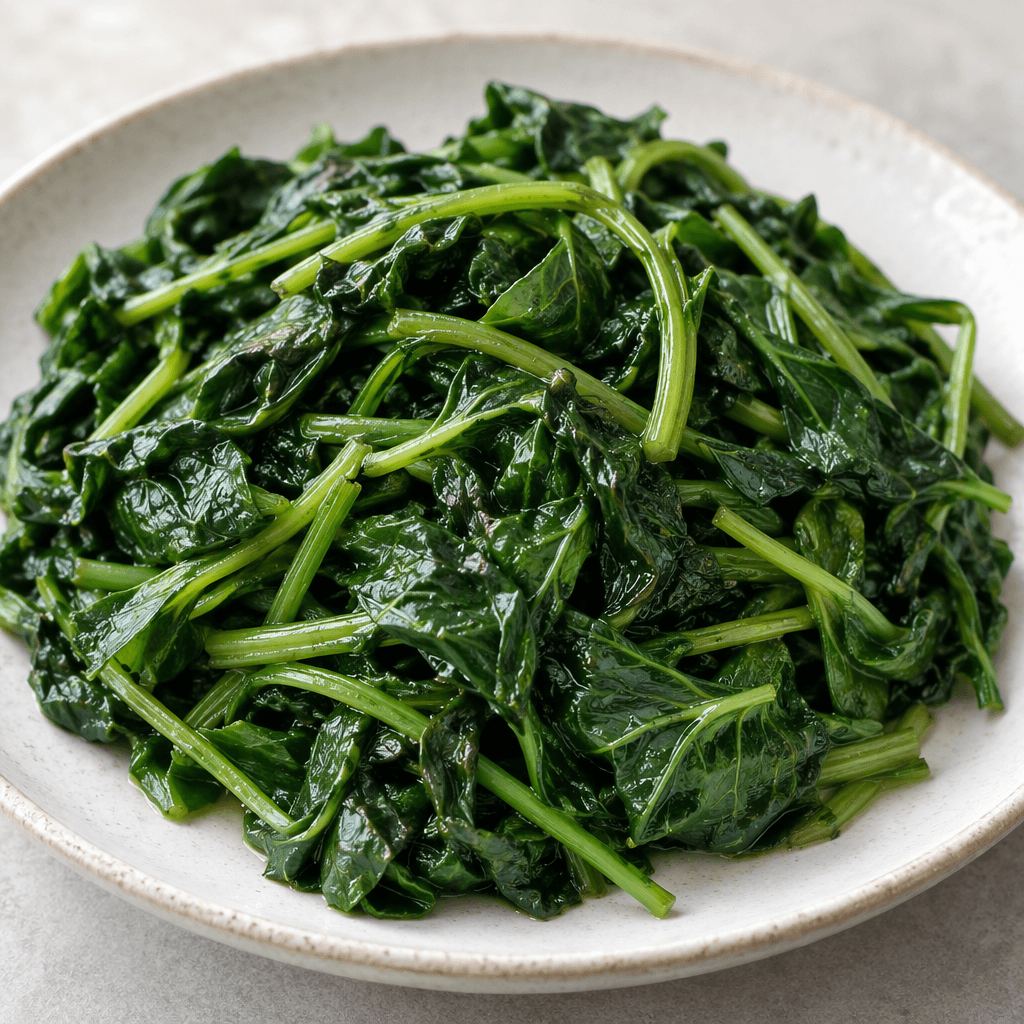
Boiled mallow Calories
Source of iron, vitamin C and fiber, low calorie
In season: Spring · Summer
CALORIES
GI
POTASSIUM
FIBER
Quick answer
1 cup (medium) of Boiled mallow (130 g) has 31 calories. That works out to 24 calories per 100 g. It contains 5.3 g of carbs, 2.7 g of protein, 0.4 g of fat and 4.2 g of fiber. Its 143 µg of Vitamin K covers 119% of the Daily Value. Its glycemic index is 15 (low), so it raises blood sugar slowly.
What is Boiled mallow?
Boiled mallow is made from the tender leaves of the mallow plant, cooked until soft. Mallow greens have a long history in Mediterranean and Middle Eastern cooking, where they are gathered or grown and prepared as a simple vegetable side.
The leaves become silky and mild, with a lightly earthy, green flavour. Serve them warm or at room temperature with olive oil and lemon, or alongside grains and other dishes. Boiled mallow is low in calories and provides fibre, iron and vitamin C. For a more filling meal, pair it with beans or lentils; a generous squeeze of lemon brightens its gentle flavour.
Boiled mallow Nutrition Facts
Selected: 100 g
24
KCAL / 100G
Carbs
4.1g
· 1% DV
Protein
2.1g
· 4% DV
Fat
0.3g
· 0% DV
Fiber
3.2g
· 11% DV
DV is the share of the daily value covered, on a 2,000 kcal reference diet.
Calories come from: Carbs 60% · Protein 31% · Fat 9%
Boiled mallow Vitamins & Minerals
Vitamins
Vitamin K
110µg · 92% DV
Vitamin A
350µg · 39% DV
Vitamin C
32mg · 36% DV
B2
0.13mg · 10% DV
Minerals
Manganese
1mg · 43% DV
Calcium
185mg · 19% DV
Iron
3mg · 17% DV
Magnesium
48mg · 11% DV
How Nutritious Is Boiled mallow?
Nutrient density
Very high
How many vitamins, minerals and how much fiber this food carries per calorie. A high score means a lot of nutrition for few calories.
Satiety score
Medium
An EatBetter score computed from fiber, protein and calorie density. A high score means staying full longer on the same calories.
Both scores are calculated per 100 g and do not change with the selected portion. The satiety score is EatBetter's own calculation, not a clinical measure.
Boiled mallow Glycemic Index
GLYCEMIC INDEX
GLYCEMIC LOAD
Accounts for portion size — a more realistic measure than GI alone.
How to Burn Off Boiled mallow
To burn the 24 calories in 100 g:
🚶
Walking (5 km/h)
🏃
Running (8 km/h)
🚴
Cycling
🏊
Swimming
Times are calculated with the MET equation for a 70 kg adult. Actual burn varies with your weight, age and pace.
Is Boiled mallow Processed?
NOVA 2
Minimally Processed
1. Unprocessed
2. Minimally Processed
3. Processed
4. Ultra-Processed
NOVA classifies foods into 4 groups by industrial processing. NOVA 1 (unprocessed) is the healthiest.
Does Boiled mallow Contain Allergens?
No known major allergens
Which Diets Is Boiled mallow Good For?
Vegan
✓ Suitable
Vegetarian
✓ Suitable
Gluten-Free
✓ Suitable
Dairy-Free
— Not suitable
Mediterranean
✓ Suitable
Paleo
✓ Suitable
Whole30
— Not suitable
DASH
— Not suitable
Keto
— Not suitable
Low FODMAP
— Not suitable
Boiled mallow Fat Profile
SATURATED
0.06g
MONOUNSATURATED
0.01g
POLYUNSATURATED
0.12g
Omega 6:3 ratio 2:1
Below the ideal 4:1 — a good omega balance.
Compare Boiled mallow
Foods Similar to Boiled mallow
Frequently Asked Questions About Boiled mallow
What is boiled mallow?
Boiled mallow is the cooked leaf vegetable made from edible mallow plants, often common mallow. Its leaves become tender and can have a naturally slippery texture; people serve them as a side dish or add them to soups and stews.
How do you cook boiled mallow?
To make boiled mallow, remove tough stems and damaged leaves, wash the greens thoroughly, and simmer them in water until tender. Drain them, then season with olive oil, lemon, or garlic, or stir them into a cooked dish.
Is mallow safe to eat when boiled?
Yes, correctly identified edible mallow leaves are commonly eaten cooked. Wash them well and avoid plants gathered from roadsides or treated areas. Never eat a wild plant unless you can confidently identify it as edible mallow.
What does boiled mallow taste like?
Boiled mallow has a mild, leafy flavor, often compared with other cooked greens. Its texture can be softer and more slippery than spinach, so lemon, garlic, or olive oil can make a simple serving more appealing.
Why is boiled mallow slimy?
Boiled mallow can feel slippery because the leaves naturally contain mucilage, a gel-like substance that becomes noticeable during cooking. This texture is normal and does not mean the greens have spoiled; avoid overcooking if you prefer them firmer.
How do you serve boiled mallow?
Boiled mallow is often served warm or cold with olive oil and lemon, or topped with garlic yogurt. It also works as a side dish alongside bread, grains, or a main course, and can be seasoned with herbs or chili.
Can you eat mallow raw instead of making boiled mallow?
Yes, young, correctly identified mallow leaves can be eaten raw after thorough washing, though they are often cooked because cooking softens their texture. Older leaves may be tougher, making them better suited to boiled mallow or soups.
Can you freeze boiled mallow?
Yes, boiled mallow can be frozen. Drain it well, let it cool, and pack it in airtight portions. Its texture may become softer after thawing, so use thawed mallow in soups, stews, or cooked dishes.
How long does boiled mallow last in the fridge?
Boiled mallow keeps for a few days when refrigerated promptly in a covered container. Do not leave it at room temperature for long, and discard it if it develops an off smell, unusual discoloration, or a changed texture.
What can you make with boiled mallow?
Boiled mallow can be added to soup or cooked with onion and grains such as rice or bulgur. You can also serve it as a simple vegetable side with lemon and olive oil, or combine it with garlic yogurt.
Have another question about Boiled mallow?
Ask the AI nutrition coach — calories, portions, alternatives and more, answered in seconds in the app.

Scan calories with your camera
Instant AI nutrition analysis

Nutrition data compiled from USDA FoodData Central and scientific sources.