

Ready & Packaged Foods
All →Vegetables & Legumes
All →Desserts & Confectionery
All →Meat & Protein
All →Grains & Bakery
All →Beverages
All →Milk & Dairy
All →

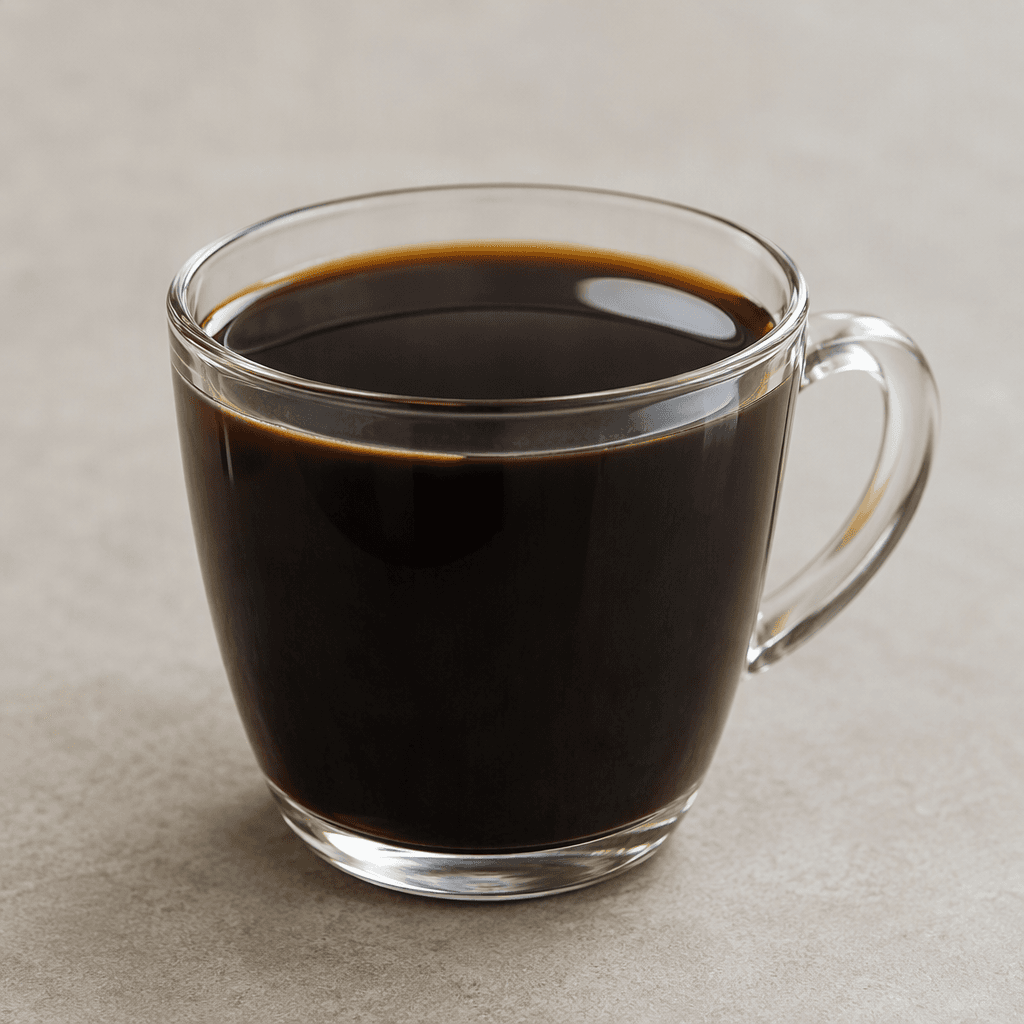
Black coffee Calories
Zero calories, antioxidant source, contains caffeine
In season: Spring · Summer · Autumn · Winter
CALORIES
GI
POTASSIUM
FIBER
Quick answer
1 cup (medium) of Black coffee (240 g) has 2 calories. That works out to 1 calories per 100 g. It contains 0.5 g of carbs, 0.2 g of protein, 0 g of fat and 0 g of fiber. Its 0.7 mg of B3 covers 5% of the Daily Value. Its glycemic index is 0 (low), so it raises blood sugar slowly.
What is Black coffee?
Black coffee is brewed from roasted coffee beans and served without milk or sweetener. Depending on the method, it may be a pour-over, French press, espresso or another brew; its flavour can range from bright and fruity to deep and roasted. People drink it around the world at breakfast, during a work break or after a meal, often on its own or alongside something sweet.
Plain black coffee has almost no energy, but it does contain caffeine. Its strength and texture depend on the beans and brewing method, so you can choose a lighter cup or a more concentrated one to suit your taste. If you prefer a gentler flavour, add hot water rather than milk or sugar.
Black coffee Nutrition Facts
Selected: 100 g
1
KCAL / 100G
Carbs
0.2g
· 0% DV
Protein
0.1g
· 0% DV
Fat
0g
· 0% DV
Fiber
0g
· 0% DV
DV is the share of the daily value covered, on a 2,000 kcal reference diet.
Calories come from: Carbs 67% · Protein 33% · Fat 0%

Log this food in EatBetter
100,000+ people use it
- Get your daily calorie target
- Snap your meal, log it in seconds
- See every vitamin and mineral

📸 Scan the code to get the app free.

Black coffee Vitamins & Minerals
Vitamins
B3
0.3mg · 2% DV
B2
0.02mg · 2% DV
B1
0.01mg · 1% DV
B5
0.03mg · 1% DV
Minerals
Potassium ⭐
49mg · 1% DV
Phosphorus
7mg · 1% DV
Manganese
0mg · 0% DV
Copper
0mg · 0% DV
How Nutritious Is Black coffee?
Nutrient density
Low
How many vitamins, minerals and how much fiber this food carries per calorie. A high score means a lot of nutrition for few calories.
Satiety score
Medium
An EatBetter score computed from fiber, protein and calorie density. A high score means staying full longer on the same calories.
Both scores are calculated per 100 g and do not change with the selected portion. The satiety score is EatBetter's own calculation, not a clinical measure.
Black coffee Glycemic Index
GLYCEMIC INDEX
GLYCEMIC LOAD
Accounts for portion size — a more realistic measure than GI alone.
How to Burn Off Black coffee
To burn the 1 calories in 100 g:
🚶
Walking (5 km/h)
🏃
Running (8 km/h)
🚴
Cycling
🏊
Swimming
Times are calculated with the MET equation for a 70 kg adult. Actual burn varies with your weight, age and pace.
Is Black coffee Processed?
NOVA 2
Minimally Processed
1. Unprocessed
2. Minimally Processed
3. Processed
4. Ultra-Processed
NOVA classifies foods into 4 groups by industrial processing. NOVA 1 (unprocessed) is the healthiest.
Does Black coffee Contain Allergens?
No known major allergens
Which Diets Is Black coffee Good For?
Vegan
✓ Suitable
Vegetarian
✓ Suitable
Gluten-Free
✓ Suitable
Dairy-Free
— Not suitable
Mediterranean
✓ Suitable
Paleo
✓ Suitable
Whole30
— Not suitable
DASH
— Not suitable
Keto
✓ Suitable
Low FODMAP
— Not suitable
Black coffee Fat Profile
SATURATED
0g
MONOUNSATURATED
0g
POLYUNSATURATED
0g
Compare Black coffee
Foods Similar to Black coffee
Frequently Asked Questions About Black coffee
What is black coffee?
Black coffee is coffee served without milk or cream; it may still contain sugar unless you order it unsweetened. Drip coffee, espresso, and other brewing styles can all be served black.
How do you make black coffee?
Make black coffee by brewing ground coffee with hot water, using a drip machine, French press, pour-over, or another method. Serve it without milk or cream; changing the grind and brewing method changes its strength and taste.
Does black coffee break a fast?
Usually, unsweetened black coffee is allowed during intermittent fasting because it contributes very little energy. Strict fasts may permit only water, so follow the rules of your specific fasting plan and avoid adding milk, sugar, or cream.
Does black coffee help you lose weight?
No, black coffee does not cause weight loss on its own. Choosing it instead of a sweetened coffee drink can reduce what you consume, but drinking black coffee is not a substitute for sustainable changes to eating habits.
Does black coffee have more caffeine than espresso?
Not necessarily; caffeine varies with the beans, brewing method, and serving size. Espresso is more concentrated by volume, but a larger cup of black drip coffee can contain more caffeine overall than a single espresso shot.
Is black coffee the same as an Americano?
No, black coffee describes coffee served without milk or cream, while an Americano is made by adding hot water to espresso. An Americano can be served black, but not every black coffee is an Americano.
Does black coffee stain your teeth?
Yes, black coffee can stain teeth over time because its dark pigments can cling to tooth enamel. Rinsing your mouth with water after drinking it helps clear residue; avoid brushing immediately if the coffee is acidic.
When should you stop drinking black coffee before bed?
Stop drinking black coffee several hours before bedtime if caffeine affects your sleep. Caffeine can stay active for hours, and sensitivity differs from person to person, so an earlier cutoff may help if you have trouble falling asleep.
Can you drink black coffee before a workout?
Yes, many people drink black coffee before exercise because its caffeine can increase alertness and reduce the perception of effort. Try it before a routine workout first, since it can cause jitters or stomach discomfort in some people.
Is black coffee safe during pregnancy?
Yes, black coffee can be part of a pregnancy diet, but its caffeine content varies by serving and brewing method. Count caffeine from all sources and ask your pregnancy care provider what daily amount is appropriate for you.
Have another question about Black coffee?
Ask the AI nutrition coach — calories, portions, alternatives and more, answered in seconds in the app.

Scan calories with your camera
Instant AI nutrition analysis

Nutrition data compiled from USDA FoodData Central and scientific sources.