

Ready & Packaged Foods
All →Vegetables & Legumes
All →Desserts & Confectionery
All →Meat & Protein
All →Grains & Bakery
All →Beverages
All →Milk & Dairy
All →

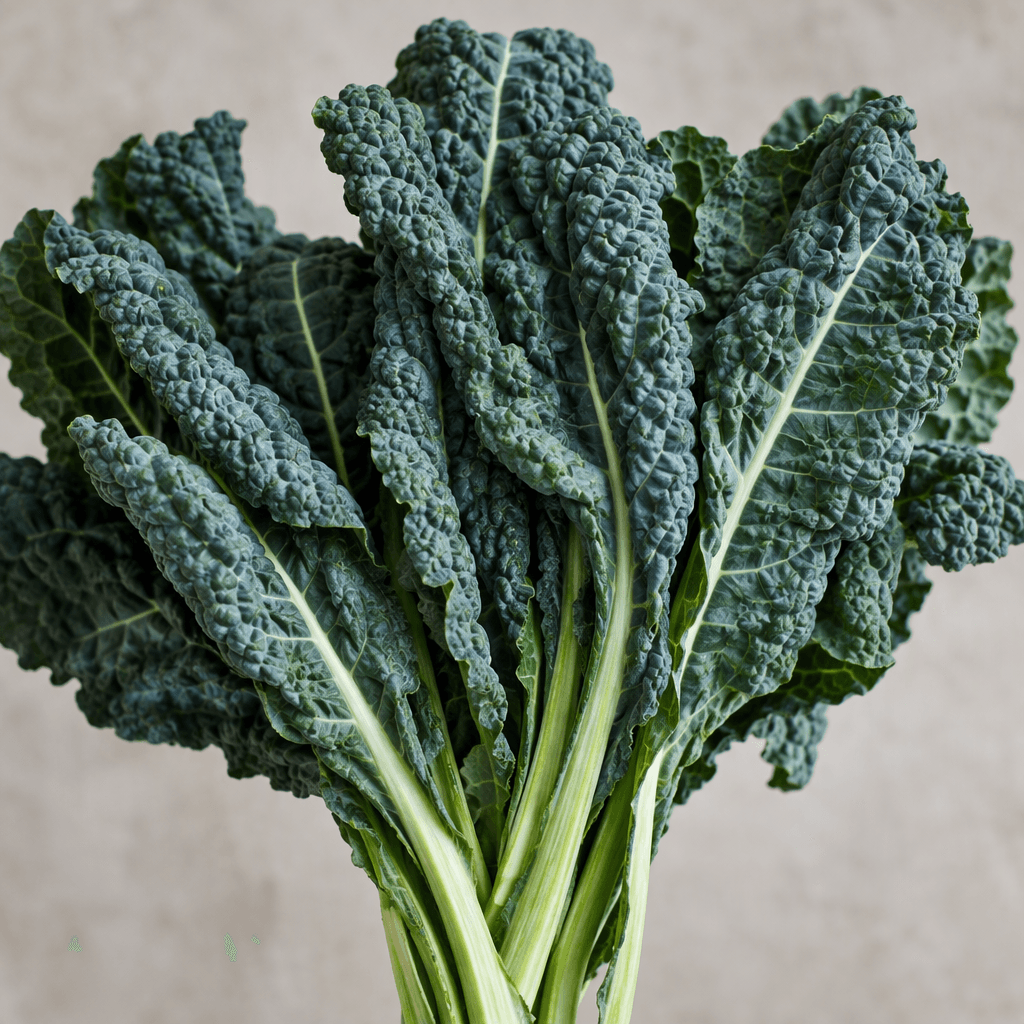
Black cabbage Calories
Nutrient-dense, low-calorie, high-fiber leafy vegetable
In season: Autumn · Winter · Spring
CALORIES
GI
POTASSIUM
FIBER
Quick answer
1 cup (chopped) of Black cabbage (65 g) has 21 calories. That works out to 32 calories per 100 g. It contains 4.4 g of carbs, 1.9 g of protein, 0.2 g of fat and 2.3 g of fiber. Its 531.1 µg of Vitamin K covers 443% of the Daily Value. Its glycemic index is 15 (low), so it raises blood sugar slowly.
What is Black cabbage?
Black cabbage is the name used here for karalahana, a dark-leaved cabbage grown and eaten especially along Turkey’s Black Sea coast. Its broad, sturdy leaves and thick ribs are cooked in soups, stews and stuffed-leaf dishes rather than usually eaten raw.
Cooking softens the leaves and brings out a mild, earthy cabbage flavour. In the Black Sea region, it is often cooked with beans and served with cornbread; soup is another familiar home-style preparation. Black cabbage is a fibre-rich, low-calorie vegetable, so it adds substance and greens to a meal without making it heavy. Pair it with beans for a more filling dish, or simmer it with modest amounts of oil and finish with lemon for a lighter serving.
Black cabbage Nutrition Facts
Selected: 100 g
32
KCAL / 100G
Carbs
6.7g
· 2% DV
Protein
2.9g
· 6% DV
Fat
0.3g
· 0% DV
Fiber
3.6g
· 13% DV
DV is the share of the daily value covered, on a 2,000 kcal reference diet.
Calories come from: Carbs 65% · Protein 28% · Fat 7%
Black cabbage Vitamins & Minerals
Vitamins
Vitamin K
817µg · 681% DV
Vitamin C
120mg · 133% DV
Vitamin A
950µg · 106% DV
B6
0.21mg · 12% DV
Minerals
Manganese
1mg · 43% DV
Calcium
150mg · 15% DV
Magnesium
34mg · 8% DV
Potassium ⭐
228mg · 7% DV
How Nutritious Is Black cabbage?
Nutrient density
Very high
How many vitamins, minerals and how much fiber this food carries per calorie. A high score means a lot of nutrition for few calories.
Satiety score
Medium
An EatBetter score computed from fiber, protein and calorie density. A high score means staying full longer on the same calories.
Both scores are calculated per 100 g and do not change with the selected portion. The satiety score is EatBetter's own calculation, not a clinical measure.
Black cabbage Glycemic Index
GLYCEMIC INDEX
GLYCEMIC LOAD
Accounts for portion size — a more realistic measure than GI alone.
How to Burn Off Black cabbage
To burn the 32 calories in 100 g:
🚶
Walking (5 km/h)
🏃
Running (8 km/h)
🚴
Cycling
🏊
Swimming
Times are calculated with the MET equation for a 70 kg adult. Actual burn varies with your weight, age and pace.
Is Black cabbage Processed?
NOVA 1
Unprocessed
1. Unprocessed
2. Minimally Processed
3. Processed
4. Ultra-Processed
NOVA classifies foods into 4 groups by industrial processing. NOVA 1 (unprocessed) is the healthiest.
Does Black cabbage Contain Allergens?
No known major allergens
Which Diets Is Black cabbage Good For?
Vegan
✓ Suitable
Vegetarian
✓ Suitable
Gluten-Free
✓ Suitable
Dairy-Free
— Not suitable
Mediterranean
✓ Suitable
Paleo
✓ Suitable
Whole30
— Not suitable
DASH
— Not suitable
Keto
✓ Suitable
Low FODMAP
— Not suitable
Black cabbage Fat Profile
SATURATED
0.04g
MONOUNSATURATED
0.02g
POLYUNSATURATED
0.09g
Omega 6:3 ratio 0.2:1
Below the ideal 4:1 — a good omega balance.
Compare Black cabbage
Foods Similar to Black cabbage
Frequently Asked Questions About Black cabbage
What is black cabbage, and is it the same as kale?
Black cabbage is a dark-leaved member of the cabbage family, commonly used as a leafy green rather than a head cabbage. The name can refer to different regional varieties; it is closely related to kale, but names and leaf types vary by region.
What are the health benefits of black cabbage?
Black cabbage is a nutrient-dense leafy vegetable that provides fibre and a range of vitamins and minerals. Using it in soups, stews, or salads is an easy way to add dark greens to meals.
How do you cook black cabbage?
You can boil, steam, sauté, or braise black cabbage. Remove or finely chop the thick central ribs, and cook the ribs before adding the leaves so both become tender at the same time.
Can you eat black cabbage raw?
Yes, black cabbage can be eaten raw. Remove the tough ribs, slice the leaves thinly, and massage them briefly with dressing to soften their texture before adding them to a salad.
Do you remove the stems from black cabbage?
You can eat black cabbage stems, but they are tougher than the leaves. Strip or cut them out if you want a more tender dish, or chop them finely and start cooking them before the leaves.
How do you make black cabbage less bitter?
Briefly blanching black cabbage and draining the water can mellow its strong, slightly bitter taste. You can also cook it with onion, garlic, or beans, which pair well with its robust flavour.
How should you store black cabbage?
Keep unwashed black cabbage in a loose bag in the refrigerator’s crisper drawer, and wash it just before use. Dry leaves generally keep better than wet ones; discard leaves that have become slimy or developed an unpleasant smell.
Can you freeze black cabbage?
Yes. Wash and chop black cabbage, blanch it briefly, cool it quickly in cold water, then drain it thoroughly and freeze it in portions. Add frozen leaves straight to soups or stews.
How do you prepare black cabbage for a salad?
For a salad, wash black cabbage carefully, remove its thick ribs, and slice the leaves into thin ribbons. Massaging them briefly with the dressing helps soften the leaves and makes them easier to eat.
Can black cabbage be used instead of kale in recipes?
Usually, yes. Black cabbage and kale have a similar hearty texture, so black cabbage can replace kale in soups, pasta, and sautéed dishes. Allow for differences in leaf thickness and cook the ribs until tender.
Have another question about Black cabbage?
Ask the AI nutrition coach — calories, portions, alternatives and more, answered in seconds in the app.

Scan calories with your camera
Instant AI nutrition analysis

Nutrition data compiled from USDA FoodData Central and scientific sources.