

Ready & Packaged Foods
All →Vegetables & Legumes
All →Desserts & Confectionery
All →Meat & Protein
All →Grains & Bakery
All →Beverages
All →Milk & Dairy
All →

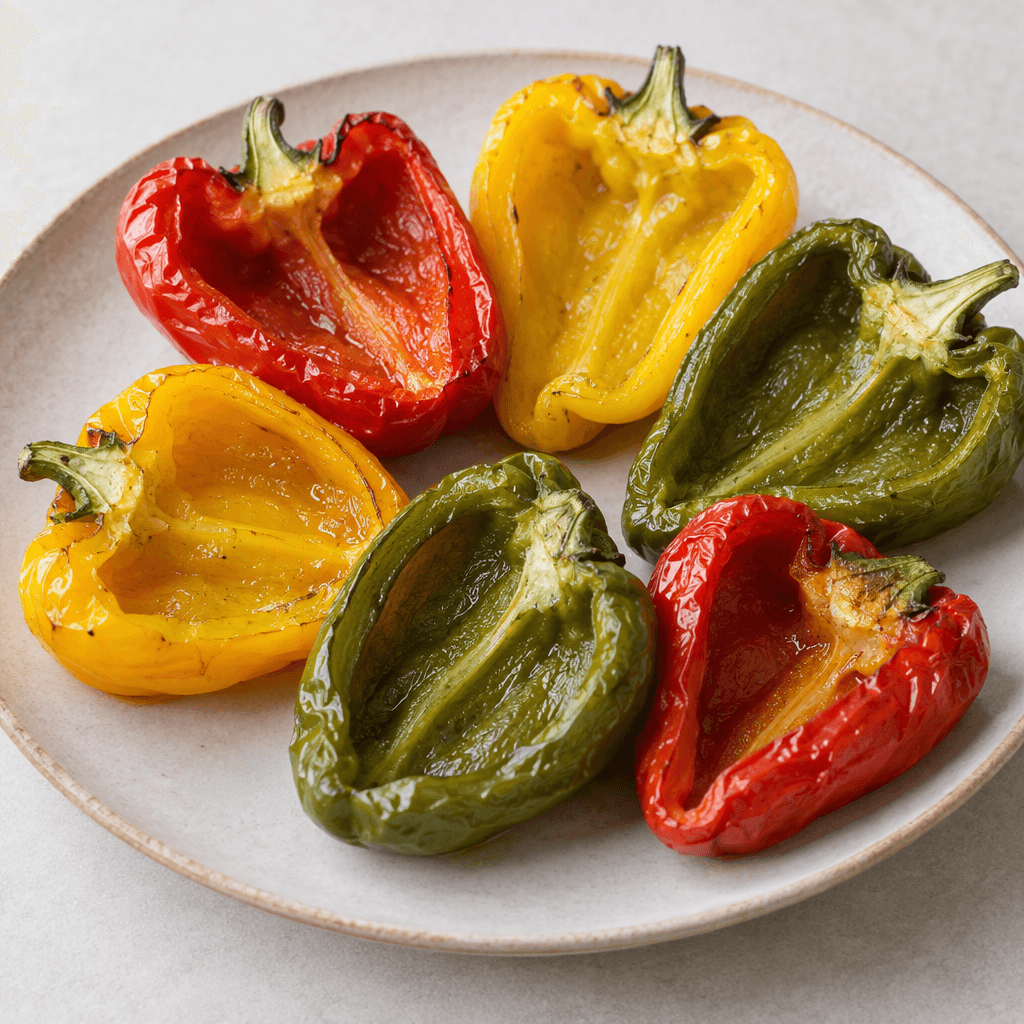
Baked Bell Pepper Calories
Rich in vitamin C and fiber, low calorie, antioxidant source
In season: Summer · Autumn
CALORIES
GI
POTASSIUM
FIBER
Quick answer
1 piece (medium) of Baked Bell Pepper (120 g) has 38 calories. That works out to 32 calories per 100 g. It contains 7.8 g of carbs, 1.3 g of protein, 0.4 g of fat and 2.5 g of fiber. Its 151.2 mg of Vitamin C covers 168% of the Daily Value. Its glycemic index is 15 (low), so it raises blood sugar slowly.
What is Baked Bell Pepper?
Baked bell pepper is made by roasting sweet bell peppers until their flesh softens and their skins become slightly wrinkled. It fits naturally into Mediterranean-style home cooking, where peppers are often served as a vegetable side or part of a shared spread; the halves can be baked plain or with a little oil and herbs.
Its flavour turns mellow and gently sweet, and it can be served warm or at room temperature. Pair it with grains, beans, or a main dish, or add it to salads and sandwiches. Baked bell pepper is low in calories and provides fibre and vitamin C. For a more filling plate, serve it with a protein-rich accompaniment rather than relying on the pepper alone.
Baked Bell Pepper Nutrition Facts
Selected: 100 g
32
KCAL / 100G
Carbs
6.5g
· 2% DV
Protein
1.1g
· 2% DV
Fat
0.3g
· 0% DV
Fiber
2.1g
· 8% DV
DV is the share of the daily value covered, on a 2,000 kcal reference diet.
Calories come from: Carbs 79% · Protein 13% · Fat 8%
Baked Bell Pepper Vitamins & Minerals
Vitamins
Vitamin C
126mg · 140% DV
Vitamin A
157µg · 17% DV
B6
0.29mg · 17% DV
Vitamin E
1.6mg · 11% DV
Minerals
Potassium ⭐
211mg · 6% DV
Magnesium
12mg · 3% DV
Phosphorus
24mg · 3% DV
Calcium
11mg · 1% DV
How Nutritious Is Baked Bell Pepper?
Nutrient density
Very high
How many vitamins, minerals and how much fiber this food carries per calorie. A high score means a lot of nutrition for few calories.
Satiety score
Medium
An EatBetter score computed from fiber, protein and calorie density. A high score means staying full longer on the same calories.
Both scores are calculated per 100 g and do not change with the selected portion. The satiety score is EatBetter's own calculation, not a clinical measure.
Baked Bell Pepper Glycemic Index
GLYCEMIC INDEX
GLYCEMIC LOAD
Accounts for portion size — a more realistic measure than GI alone.
How to Burn Off Baked Bell Pepper
To burn the 32 calories in 100 g:
🚶
Walking (5 km/h)
🏃
Running (8 km/h)
🚴
Cycling
🏊
Swimming
Times are calculated with the MET equation for a 70 kg adult. Actual burn varies with your weight, age and pace.
Is Baked Bell Pepper Processed?
NOVA 2
Minimally Processed
1. Unprocessed
2. Minimally Processed
3. Processed
4. Ultra-Processed
NOVA classifies foods into 4 groups by industrial processing. NOVA 1 (unprocessed) is the healthiest.
Does Baked Bell Pepper Contain Allergens?
No known major allergens
Which Diets Is Baked Bell Pepper Good For?
Vegan
✓ Suitable
Vegetarian
✓ Suitable
Gluten-Free
✓ Suitable
Dairy-Free
— Not suitable
Mediterranean
✓ Suitable
Paleo
✓ Suitable
Whole30
— Not suitable
DASH
— Not suitable
Keto
— Not suitable
Low FODMAP
— Not suitable
Baked Bell Pepper Fat Profile
SATURATED
0.03g
MONOUNSATURATED
0.02g
POLYUNSATURATED
0.07g
Omega 6:3 ratio 2:1
Below the ideal 4:1 — a good omega balance.
Compare Baked Bell Pepper
Foods Similar to Baked Bell Pepper
Frequently Asked Questions About Baked Bell Pepper
How do you bake bell peppers?
To bake bell peppers, wash and dry them, then roast them whole or halved until tender and lightly wrinkled. A little olive oil, garlic, and seasoning add flavor, but the peppers can also be baked plain for salads, sides, or sauces.
Should you peel baked bell peppers?
You can peel baked bell peppers, but you do not have to. The skin is edible; removing it gives dips and sauces a smoother texture. To make peeling easier, cover the hot peppers briefly so the steam loosens their skins.
Can you bake bell peppers whole, or should you cut them first?
You can bake bell peppers either whole or cut in half. Halving them helps them cook more evenly and makes it easy to remove the seeds beforehand; baking them whole keeps them juicy and works well when you plan to peel them afterward.
What can you put inside baked bell peppers?
Baked bell peppers can be filled with cooked grains, beans, vegetables, cheese, or seasoned meat. Use a filling that is already cooked or nearly ready, since the pepper may soften before a raw filling finishes cooking.
What goes well with baked bell peppers?
Baked bell peppers pair well with hummus, yogurt sauces, grains, grilled meat, or fish. They also add sweetness to sandwiches, pasta, and salads, so you can serve them as a side or use them as an ingredient.
How long do baked bell peppers last in the fridge?
Baked bell peppers keep for a few days in the refrigerator when cooled and stored in a covered container. Store them separately from fresh garnishes, and use them sooner if they were mixed with a perishable filling or sauce.
Can you freeze baked bell peppers?
Yes, baked bell peppers freeze well, although they become softer after thawing. Cool them completely, remove the skins if you prefer, and pack them in airtight portions. Use thawed peppers in sauces, soups, or cooked dishes rather than crisp salads.
Why are my baked bell peppers watery?
Baked bell peppers release water as they soften, especially when crowded in a pan. Leave space between them and dry them before baking to reduce excess liquid; the flavorful juices can be added to a sauce or dressing.
Are bell pepper seeds edible after baking?
Yes, bell pepper seeds are edible after baking, though most people remove them because they can be unpleasant in texture. Taking out the seeds and pale inner ribs before cooking also makes the pepper easier to stuff or slice.
Are baked bell peppers sweeter than raw bell peppers?
Yes, baked bell peppers often taste sweeter than raw ones because cooking softens their texture and concentrates their flavor. Red peppers are naturally sweeter than green ones, and roasting brings out that difference particularly well.
Have another question about Baked Bell Pepper?
Ask the AI nutrition coach — calories, portions, alternatives and more, answered in seconds in the app.

Scan calories with your camera
Instant AI nutrition analysis

Nutrition data compiled from USDA FoodData Central and scientific sources.