

Ready & Packaged Foods
All →Vegetables & Legumes
All →Desserts & Confectionery
All →Meat & Protein
All →Grains & Bakery
All →Beverages
All →Milk & Dairy
All →

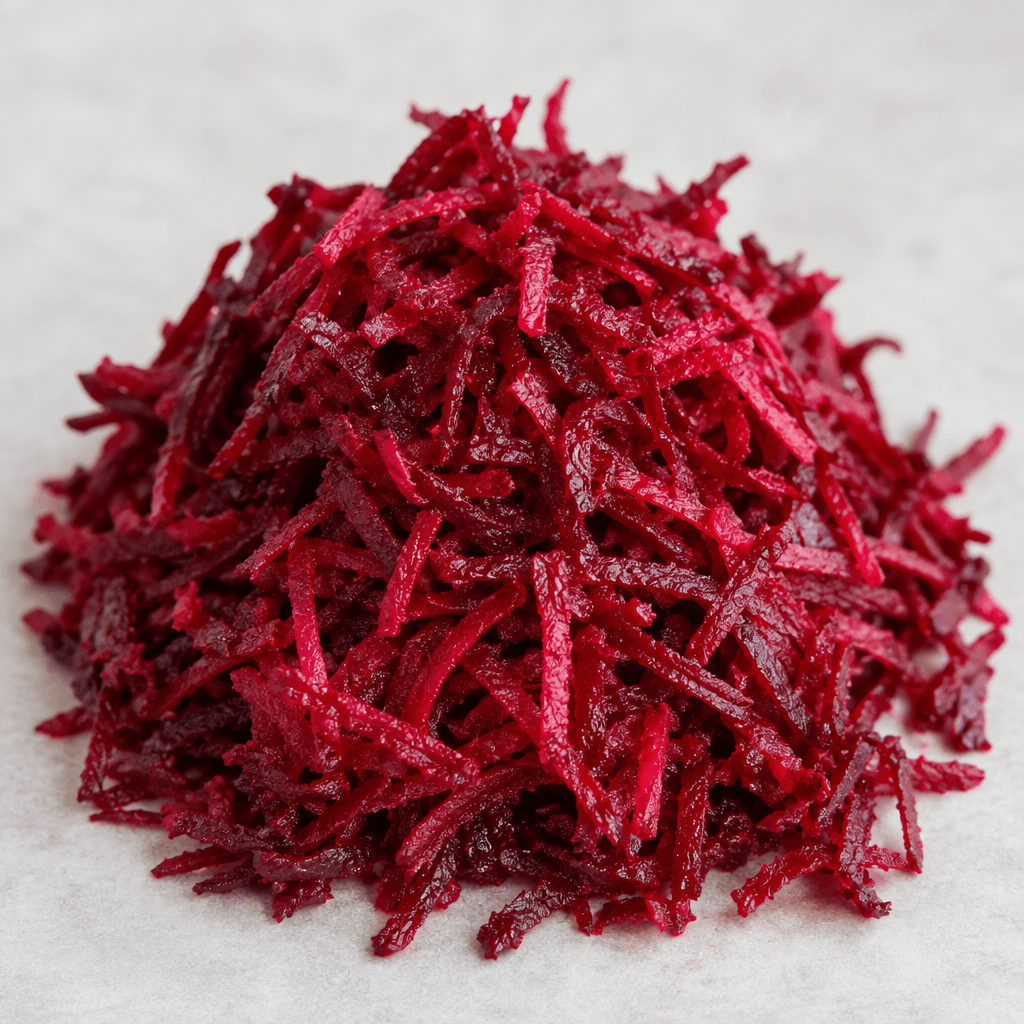
Beetroot (Grated) Calories
Vitamin C, fiber, folate, antioxidants
In season: Autumn · Winter
CALORIES
GI
POTASSIUM
FIBER
Quick answer
1 cup (medium) of Beetroot (Grated) (85 g) has 37 calories. That works out to 43 calories per 100 g. It contains 8.2 g of carbs, 1.4 g of protein, 0.2 g of fat and 2.4 g of fiber. Its 92.6 µg of Folate covers 23% of the Daily Value. Its glycemic index is 64 (medium), so it raises blood sugar at a moderate pace.
What is Beetroot (Grated)?
Grated beetroot is the root vegetable cut into fine shreds. It is often used raw, though it can also be cooked briefly; its earthy sweetness and juicy, slightly crisp texture add both colour and bite to a dish.
Across many cuisines, it turns up in salads and slaws, and can be tucked into sandwiches or served alongside a main course. It pairs well with citrus, herbs, tangy dressings and creamy ingredients such as yoghurt. Beetroot provides fibre and folate, with very little fat. For a lighter salad, dress it with lemon juice and a little olive oil, or mix it with crunchy vegetables.
Beetroot (Grated) Nutrition Facts
Selected: 100 g
43
KCAL / 100G
Carbs
9.6g
· 3% DV
Protein
1.6g
· 3% DV
Fat
0.2g
· 0% DV
Fiber
2.8g
· 10% DV
DV is the share of the daily value covered, on a 2,000 kcal reference diet.
Calories come from: Carbs 82% · Protein 14% · Fat 4%
Beetroot (Grated) Vitamins & Minerals
Vitamins
Folate
109µg · 27% DV
Vitamin C
4.9mg · 5% DV
B6
0.06mg · 4% DV
B1
0.03mg · 3% DV
Minerals
Potassium ⭐
325mg · 10% DV
Iron
1mg · 6% DV
Phosphorus
40mg · 6% DV
Magnesium
23mg · 5% DV
How Nutritious Is Beetroot (Grated)?
Nutrient density
Very high
How many vitamins, minerals and how much fiber this food carries per calorie. A high score means a lot of nutrition for few calories.
Satiety score
Medium
An EatBetter score computed from fiber, protein and calorie density. A high score means staying full longer on the same calories.
Both scores are calculated per 100 g and do not change with the selected portion. The satiety score is EatBetter's own calculation, not a clinical measure.
Beetroot (Grated) Glycemic Index
GLYCEMIC INDEX
GLYCEMIC LOAD
Accounts for portion size — a more realistic measure than GI alone.
How to Burn Off Beetroot (Grated)
To burn the 43 calories in 100 g:
🚶
Walking (5 km/h)
🏃
Running (8 km/h)
🚴
Cycling
🏊
Swimming
Times are calculated with the MET equation for a 70 kg adult. Actual burn varies with your weight, age and pace.
Is Beetroot (Grated) Processed?
NOVA 2
Minimally Processed
1. Unprocessed
2. Minimally Processed
3. Processed
4. Ultra-Processed
NOVA classifies foods into 4 groups by industrial processing. NOVA 1 (unprocessed) is the healthiest.
Does Beetroot (Grated) Contain Allergens?
No known major allergens
Which Diets Is Beetroot (Grated) Good For?
Vegan
✓ Suitable
Vegetarian
✓ Suitable
Gluten-Free
✓ Suitable
Dairy-Free
— Not suitable
Mediterranean
✓ Suitable
Paleo
✓ Suitable
Whole30
— Not suitable
DASH
— Not suitable
Keto
— Not suitable
Low FODMAP
— Not suitable
Beetroot (Grated) Fat Profile
SATURATED
0.03g
MONOUNSATURATED
0.02g
POLYUNSATURATED
0.07g
Omega 6:3 ratio 4:1
Below the ideal 4:1 — a good omega balance.
Compare Beetroot (Grated)
Foods Similar to Beetroot (Grated)
Frequently Asked Questions About Beetroot (Grated)
Can you eat grated beetroot raw?
Yes, grated beetroot can be eaten raw and is commonly added to salads, slaws and sandwiches. Wash the whole beetroot thoroughly under running water before peeling and grating it, and use a clean grater.
Why does beetroot make your urine look red?
Beetroot contains natural red pigments that can turn urine, and sometimes stools, pink or reddish. This is usually harmless after eating beetroot; seek medical advice if the change persists without beetroot or comes with other symptoms.
Do you have to peel beetroot before grating it?
Peeling is usually best, especially when the skin is rough or marked with soil. Scrub the beetroot under running water first, then peel and grate it so dirt on the skin does not get mixed into the shreds.
How do you stop grated beetroot from going brown?
Toss grated beetroot with lemon juice or vinegar soon after grating; the acidity helps keep its colour bright. Store it covered in the fridge until serving, since air exposure and time can dull its vivid colour.
How long does grated beetroot keep in the fridge?
Keep grated beetroot in a clean, airtight container in the refrigerator and use it within a few days. Drain any liquid before serving, and discard it if it develops an off smell or other signs of spoilage.
Can you freeze grated beetroot?
Yes, grated beetroot can be frozen, although it may become softer and release water when thawed. Freeze it in airtight portions, then use the thawed beetroot in cooked dishes rather than expecting it to retain a crisp salad texture.
How do you get beetroot stains off your hands and chopping board?
Rinse beetroot stains promptly with cold water and soap, and wash the chopping board before the pigment dries. Avoid starting with hot water, which can set a stain; use a surface-safe cleaner for any colour that remains.
Can you add grated beetroot to a smoothie?
Yes, add a small handful of washed, peeled grated beetroot to a smoothie with fruit such as apple or berries. Grating helps it blend more easily, while lemon or citrus can balance its earthy flavour.
Can grated beetroot be cooked, or is it only eaten raw?
Grated beetroot can be cooked as well as eaten raw. Sauté it briefly, stir it into fritter batter, or add it to a stew near the end; fine shreds soften quickly, so avoid overcooking if you want some texture.
Does eating grated beetroot lower blood pressure?
The natural nitrates in beetroot may lead to a modest, temporary reduction in blood pressure, but grated beetroot is not a treatment or a substitute for prescribed medicine. If you take blood-pressure medication, discuss dietary changes with your clinician.
Have another question about Beetroot (Grated)?
Ask the AI nutrition coach — calories, portions, alternatives and more, answered in seconds in the app.

Scan calories with your camera
Instant AI nutrition analysis

Nutrition data compiled from USDA FoodData Central and scientific sources.