

Ready & Packaged Foods
All →Vegetables & Legumes
All →Desserts & Confectionery
All →Meat & Protein
All →Grains & Bakery
All →Beverages
All →Milk & Dairy
All →

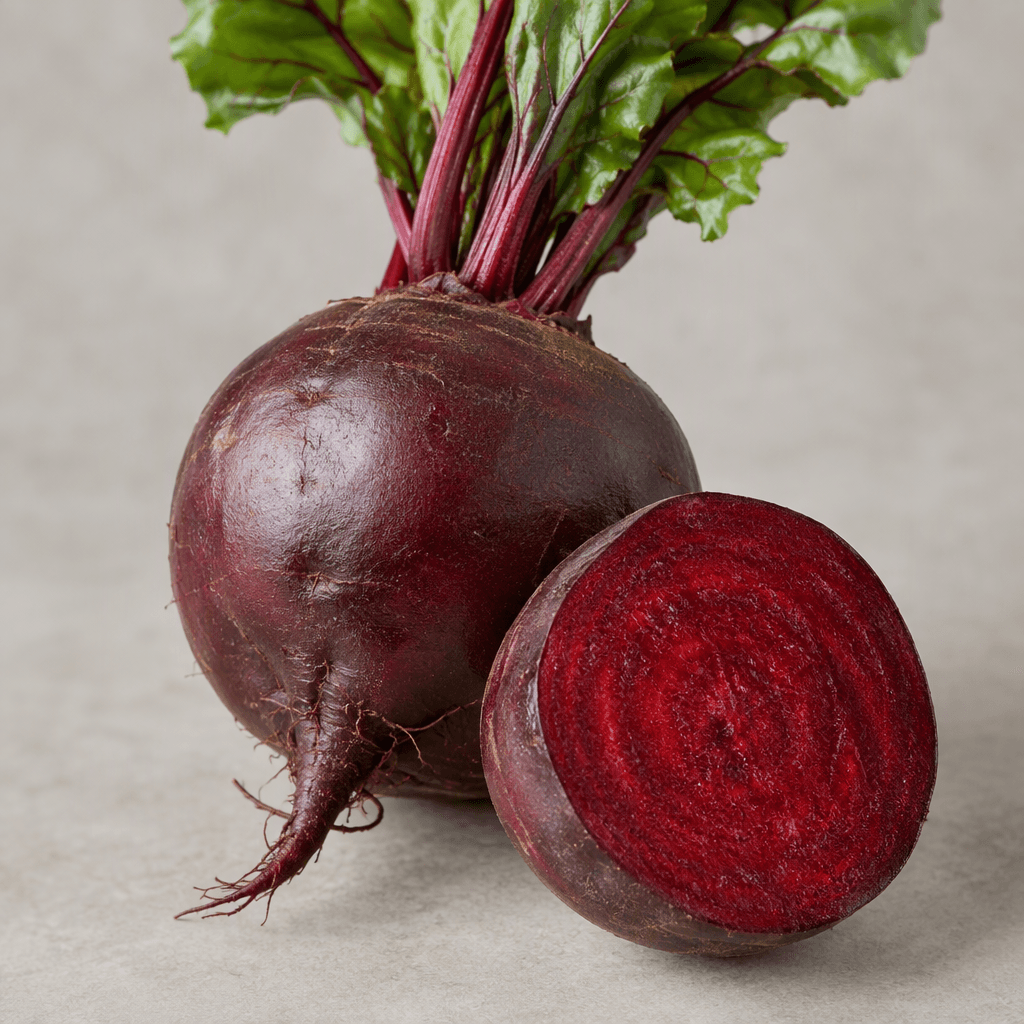
Beetroot Calories
Rich in iron and folate, high in antioxidants
In season: Autumn · Winter
CALORIES
GI
POTASSIUM
FIBER
Quick answer
1 piece (medium) of Beetroot (80 g) has 34 calories. That works out to 43 calories per 100 g. It contains 7.7 g of carbs, 1.3 g of protein, 0.2 g of fat and 2.2 g of fiber. Its 87.2 µg of Folate covers 22% of the Daily Value. Its glycemic index is 64 (medium), so it raises blood sugar at a moderate pace.
What is Beetroot?
Beetroot is the edible root of a cultivated plant in the beet family, with deep red flesh and a naturally earthy sweetness. Beets have a long history around the Mediterranean, and the root is now a familiar ingredient in many cuisines.
It can be boiled, roasted, grated raw into salads or pickled. In the UK and elsewhere, beetroot is often served cold in salads or alongside sandwiches; roasting brings out its sweetness, while boiling leaves it softer and juicier. It provides fibre and folate, with very little fat. Pair it with citrus, fresh herbs or tangy yoghurt to balance its earthy flavour, or roast it rather than frying for a simple side.
Beetroot Nutrition Facts
Selected: 100 g
43
KCAL / 100G
Carbs
9.6g
· 3% DV
Protein
1.6g
· 3% DV
Fat
0.2g
· 0% DV
Fiber
2.8g
· 10% DV
DV is the share of the daily value covered, on a 2,000 kcal reference diet.
Calories come from: Carbs 82% · Protein 14% · Fat 4%
Beetroot Vitamins & Minerals
Vitamins
Folate
109µg · 27% DV
Vitamin C
4.9mg · 5% DV
B6
0.07mg · 4% DV
B1
0.03mg · 3% DV
Minerals
Potassium ⭐
325mg · 10% DV
Iron
1mg · 6% DV
Phosphorus
40mg · 6% DV
Magnesium
23mg · 5% DV
How Nutritious Is Beetroot?
Nutrient density
High
How many vitamins, minerals and how much fiber this food carries per calorie. A high score means a lot of nutrition for few calories.
Satiety score
Medium
An EatBetter score computed from fiber, protein and calorie density. A high score means staying full longer on the same calories.
Both scores are calculated per 100 g and do not change with the selected portion. The satiety score is EatBetter's own calculation, not a clinical measure.
Beetroot Glycemic Index
GLYCEMIC INDEX
GLYCEMIC LOAD
Accounts for portion size — a more realistic measure than GI alone.
How to Burn Off Beetroot
To burn the 43 calories in 100 g:
🚶
Walking (5 km/h)
🏃
Running (8 km/h)
🚴
Cycling
🏊
Swimming
Times are calculated with the MET equation for a 70 kg adult. Actual burn varies with your weight, age and pace.
Is Beetroot Processed?
NOVA 1
Unprocessed
1. Unprocessed
2. Minimally Processed
3. Processed
4. Ultra-Processed
NOVA classifies foods into 4 groups by industrial processing. NOVA 1 (unprocessed) is the healthiest.
Does Beetroot Contain Allergens?
No known major allergens
Which Diets Is Beetroot Good For?
Vegan
✓ Suitable
Vegetarian
✓ Suitable
Gluten-Free
✓ Suitable
Dairy-Free
— Not suitable
Mediterranean
✓ Suitable
Paleo
✓ Suitable
Whole30
— Not suitable
DASH
— Not suitable
Keto
— Not suitable
Low FODMAP
— Not suitable
Beetroot Fat Profile
SATURATED
0.03g
MONOUNSATURATED
0.02g
POLYUNSATURATED
0.04g
Omega 6:3 ratio 3:1
Below the ideal 4:1 — a good omega balance.
Compare Beetroot
Foods Similar to Beetroot
Frequently Asked Questions About Beetroot
How do you roast beetroot?
Wrap whole, scrubbed beetroot in foil and roast until a knife slides in easily, then let it cool and rub off the skin. Roasting concentrates its sweetness and keeps the cutting board less stained than peeling it first.
Does beetroot need to be peeled?
No, beetroot does not have to be peeled before cooking; the skin comes off easily once the root is tender. For raw salads, peel it after washing, or scrub very small, young roots well if you prefer to leave the skin on.
Can beetroot juice improve exercise performance?
Beetroot juice may modestly improve endurance for some people because its nitrates can support blood flow and muscle efficiency. It is not an instant energy boost, and concentrated shots can cause stomach discomfort in some athletes.
Why does beetroot turn urine or stool red?
Beetroot’s red pigments can pass through digestion and temporarily tint urine or stool pink or red. This is usually harmless after eating beetroot; seek medical advice if the color persists without beetroot or comes with pain.
Can you eat beetroot leaves?
Yes, beetroot leaves and tender stems are edible. Wash them thoroughly and sauté, steam, or add them to soups like other leafy greens; remove the tops before storing the roots because the leaves draw out moisture.
How do you pickle beetroot?
Cook beetroot until tender, peel and slice it, then cover it in a clean jar with hot vinegar-based pickling liquid. Refrigerated quick-pickled beetroot is ready after the flavors have had time to develop; use a tested canning recipe for shelf-stable jars.
How can you tell if beetroot has gone bad?
Fresh beetroot should feel firm and have no mold or sour smell. Discard roots that are slimy, extensively soft, leaking, or moldy; slight surface wrinkling usually means they have dried out rather than spoiled.
Can beetroot be eaten raw?
Yes, beetroot can be eaten raw after you wash and peel it. Grate or slice it thinly for salads and slaws, since raw beetroot is denser and earthier than cooked beetroot.
Does beetroot lower blood pressure?
Beetroot may modestly lower blood pressure for a short time because its dietary nitrates help blood vessels relax. If you take blood-pressure medication or already have low blood pressure, ask your clinician before using beetroot juice regularly.
Can you freeze beetroot?
Yes, cooked beetroot freezes well. Cool it, peel and cut it into portions, then pack it airtight; thawed beetroot is softer, so it works especially well in soups, sauces, and cooked dishes.
Have another question about Beetroot?
Ask the AI nutrition coach — calories, portions, alternatives and more, answered in seconds in the app.

Scan calories with your camera
Instant AI nutrition analysis

Nutrition data compiled from USDA FoodData Central and scientific sources.