

Ready & Packaged Foods
All →Vegetables & Legumes
All →Desserts & Confectionery
All →Meat & Protein
All →Grains & Bakery
All →Beverages
All →Milk & Dairy
All →

Beer Calories
Alcoholic fermented grain beverage
In season: Spring · Summer · Autumn · Winter
CALORIES
GI
POTASSIUM
FIBER
Quick answer
1 bottle (medium) of Beer (330 g) has 142 calories. That works out to 43 calories per 100 g. It contains 11.9 g of carbs, 1.7 g of protein, 0 g of fat and 0 g of fiber. Its 1.7 mg of B3 covers 10% of the Daily Value. Its glycemic index is 100 (high), so it raises blood sugar quickly.
What is Beer?
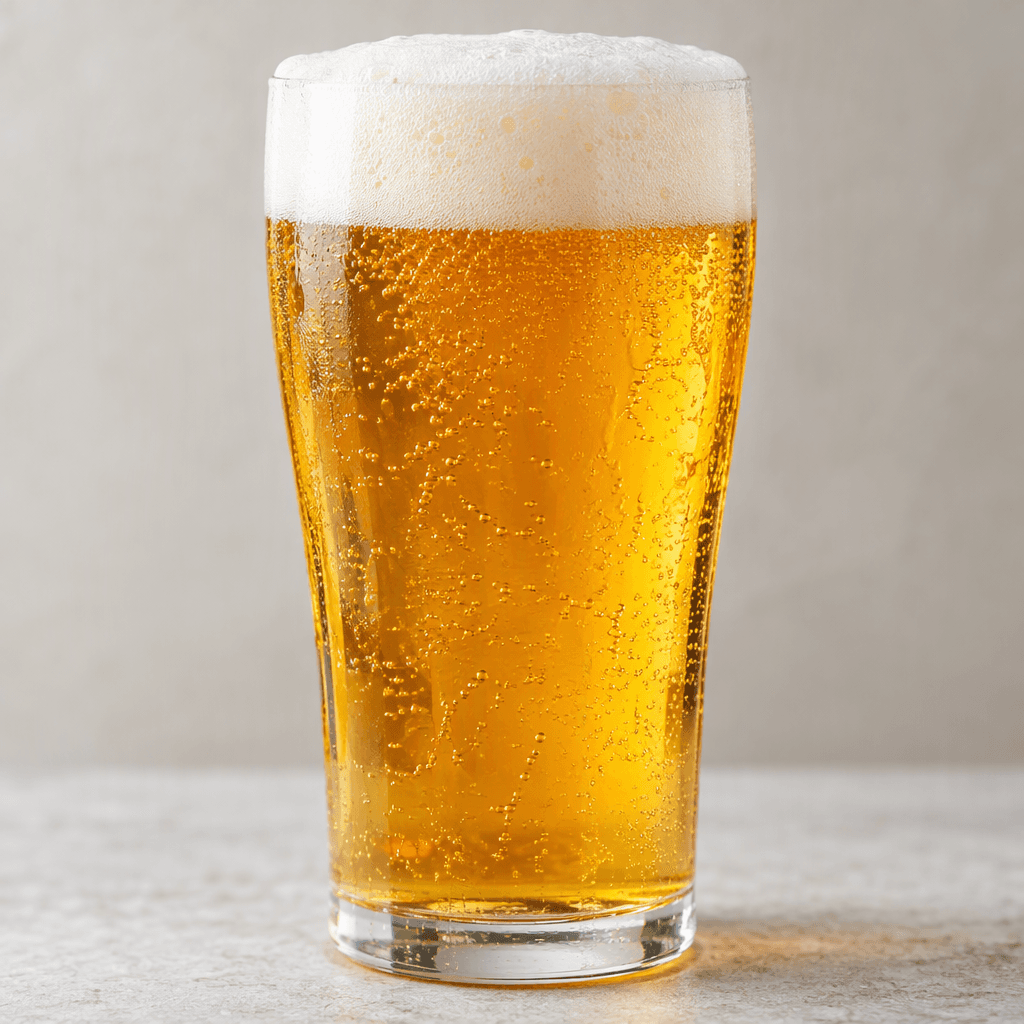
Beer is an alcoholic fermented grain drink, most often brewed from malted barley, hops, water and yeast. Its colour ranges from pale gold to deep amber, while the balance of malty sweetness and hop bitterness varies by style. Served chilled, it has a gently fizzy texture and often a foamy head. Around the world, people enjoy it at social gatherings, with meals or alongside snacks; it pairs particularly well with savoury foods such as grilled dishes, salty snacks and cheese. Beer is low in protein and contains some carbohydrate; the amount varies by style. If you want a lighter option, choose a lower-alcohol or alcohol-free beer, and serve it with water as well.
Beer Nutrition Facts
Selected: 100 g
43
KCAL / 100G
Carbs
3.6g
· 1% DV
Protein
0.5g
· 1% DV
Fat
0g
· 0% DV
Fiber
0g
· 0% DV
DV is the share of the daily value covered, on a 2,000 kcal reference diet.
Calories come from: Carbs 88% · Protein 12% · Fat 0%
Beer Vitamins & Minerals
Vitamins
B3
0.5mg · 3% DV
B2
0.03mg · 2% DV
B1
0.01mg · 1% DV
B6
0.02mg · 1% DV
Minerals
Magnesium
7mg · 2% DV
Phosphorus
13mg · 2% DV
Selenium
0.3µg · 1% DV
Potassium ⭐
27mg · 1% DV
How Nutritious Is Beer?
Nutrient density
Low
How many vitamins, minerals and how much fiber this food carries per calorie. A high score means a lot of nutrition for few calories.
Satiety score
Medium
An EatBetter score computed from fiber, protein and calorie density. A high score means staying full longer on the same calories.
Both scores are calculated per 100 g and do not change with the selected portion. The satiety score is EatBetter's own calculation, not a clinical measure.
Beer Glycemic Index
GLYCEMIC INDEX
GLYCEMIC LOAD
Accounts for portion size — a more realistic measure than GI alone.
How to Burn Off Beer
To burn the 43 calories in 100 g:
🚶
Walking (5 km/h)
🏃
Running (8 km/h)
🚴
Cycling
🏊
Swimming
Times are calculated with the MET equation for a 70 kg adult. Actual burn varies with your weight, age and pace.
Is Beer Processed?
NOVA 3
Processed
1. Unprocessed
2. Minimally Processed
3. Processed
4. Ultra-Processed
NOVA classifies foods into 4 groups by industrial processing. NOVA 1 (unprocessed) is the healthiest.
Does Beer Contain Allergens?
No known major allergens
Which Diets Is Beer Good For?
Vegan
✓ Suitable
Vegetarian
✓ Suitable
Gluten-Free
— Not suitable
Dairy-Free
— Not suitable
Mediterranean
✓ Suitable
Paleo
— Not suitable
Whole30
— Not suitable
DASH
— Not suitable
Keto
— Not suitable
Low FODMAP
— Not suitable
Beer Fat Profile
SATURATED
0g
MONOUNSATURATED
0g
POLYUNSATURATED
0g
Compare Beer
Foods Similar to Beer
Frequently Asked Questions About Beer
How long does beer last after opening?
Opened beer is best consumed the same day because it quickly loses carbonation and aroma. If you need to keep it, cover it and refrigerate it, but expect it to taste flatter by the next day.
Why does beer make you pee more?
Beer can increase urine production because alcohol temporarily reduces the body’s release of a hormone that helps retain water. It is not a good way to hydrate; drink water to replace fluids.
How should you pour beer to get a good head?
Pour beer into a clean glass tilted at an angle, letting it run down the side. Straighten the glass near the end to create a foamy head; the foam helps release aroma.
Can you freeze beer?
Yes, briefly chilling beer in a freezer is possible, but do not leave it there long enough to freeze. Beer expands as it freezes, which can split a glass bottle or burst a can.
Does beer go bad?
Yes, beer can lose quality over time, especially when exposed to heat or light. It may taste stale or develop off-flavours; an unopened beer kept cool and dark generally retains its flavour longer.
What is the difference between lager and ale beer?
Lagers and ales use different yeast strains and fermentation conditions. Lager is fermented cooler and typically tastes crisp and clean, while ale is fermented warmer and often has more pronounced fruity or herbal flavours.
Why does beer foam?
Beer foams when dissolved carbon dioxide escapes as bubbles after pouring or agitation. Proteins and other compounds from the malt help stabilize those bubbles, so the head can last rather than disappearing immediately.
Does beer make you gain weight?
Beer can contribute to weight gain because it contains alcohol energy and can make snacks seem more appealing. Frequent drinking can add to overall energy intake, particularly when paired with high-calorie foods.
Is beer safe to drink during pregnancy?
No. Beer contains alcohol, and no safe amount of alcohol during pregnancy has been established. Avoid alcoholic beer throughout pregnancy; check the label carefully if choosing a product described as non-alcoholic.
Should beer be served cold or at room temperature?
Most beer is served cool, but not every style is best ice-cold. Very low temperatures can mute aroma and flavour, so richer, malt-forward beers are often more enjoyable slightly warmer than light lagers.
Have another question about Beer?
Ask the AI nutrition coach — calories, portions, alternatives and more, answered in seconds in the app.

Scan calories with your camera
Instant AI nutrition analysis

Nutrition data compiled from USDA FoodData Central and scientific sources.