

Ready & Packaged Foods
All →Vegetables & Legumes
All →Desserts & Confectionery
All →Meat & Protein
All →Grains & Bakery
All →Beverages
All →Milk & Dairy
All →

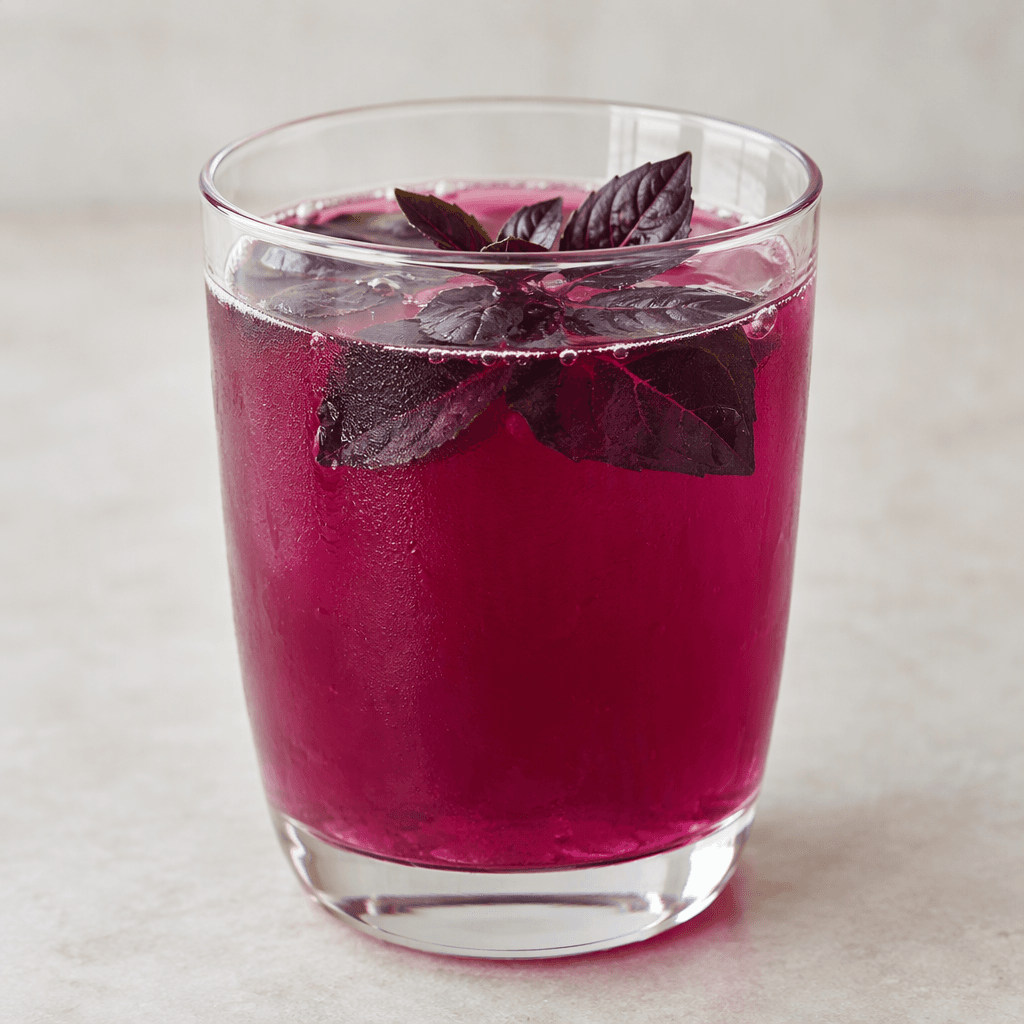
Basil Sherbet Calories
Traditional, refreshing, herbal beverage
In season: Spring · Summer
CALORIES
GI
POTASSIUM
FIBER
Quick answer
1 cup (medium) of Basil Sherbet (200 g) has 90 calories. That works out to 45 calories per 100 g. It contains 22.4 g of carbs, 0.4 g of protein, 0.2 g of fat and 0.4 g of fiber. Its 16 µg of Vitamin K covers 13% of the Daily Value. Its glycemic index is 65 (medium), so it raises blood sugar at a moderate pace.
What is Basil Sherbet?
Basil Sherbet is a traditional Turkish drink made by steeping basil leaves in water, often with lemon and sugar. Purple basil can give it a vivid pink-purple colour, though ingredients and methods vary from one household or region to another.
Fragrant and gently tangy, it is usually served chilled, especially in warm weather, and may appear at family gatherings or an iftar table. Its energy comes mainly from carbohydrates, while protein and fat are very low. If you prefer a less sweet drink, use less sugar and let lemon bring more brightness to the basil’s herbal flavour.
Basil Sherbet Nutrition Facts
Selected: 100 g
45
KCAL / 100G
Carbs
11.2g
· 4% DV
Protein
0.2g
· 0% DV
Fat
0.1g
· 0% DV
Fiber
0.2g
· 1% DV
DV is the share of the daily value covered, on a 2,000 kcal reference diet.
Calories come from: Carbs 96% · Protein 2% · Fat 2%
Basil Sherbet Vitamins & Minerals
Vitamins
Vitamin K
8µg · 7% DV
Vitamin A
20µg · 2% DV
B2
0.02mg · 2% DV
Vitamin C
2mg · 2% DV
Minerals
Calcium
15mg · 2% DV
Magnesium
4mg · 1% DV
Potassium ⭐
18mg · 1% DV
Iron
0mg · 0% DV
How Nutritious Is Basil Sherbet?
Nutrient density
Low
How many vitamins, minerals and how much fiber this food carries per calorie. A high score means a lot of nutrition for few calories.
Satiety score
Medium
An EatBetter score computed from fiber, protein and calorie density. A high score means staying full longer on the same calories.
Both scores are calculated per 100 g and do not change with the selected portion. The satiety score is EatBetter's own calculation, not a clinical measure.
Basil Sherbet Glycemic Index
GLYCEMIC INDEX
GLYCEMIC LOAD
Accounts for portion size — a more realistic measure than GI alone.
How to Burn Off Basil Sherbet
To burn the 45 calories in 100 g:
🚶
Walking (5 km/h)
🏃
Running (8 km/h)
🚴
Cycling
🏊
Swimming
Times are calculated with the MET equation for a 70 kg adult. Actual burn varies with your weight, age and pace.
Is Basil Sherbet Processed?
NOVA 2
Minimally Processed
1. Unprocessed
2. Minimally Processed
3. Processed
4. Ultra-Processed
NOVA classifies foods into 4 groups by industrial processing. NOVA 1 (unprocessed) is the healthiest.
Does Basil Sherbet Contain Allergens?
No known major allergens
Which Diets Is Basil Sherbet Good For?
Vegan
✓ Suitable
Vegetarian
✓ Suitable
Gluten-Free
✓ Suitable
Dairy-Free
— Not suitable
Mediterranean
✓ Suitable
Paleo
— Not suitable
Whole30
— Not suitable
DASH
— Not suitable
Keto
— Not suitable
Low FODMAP
— Not suitable
Basil Sherbet Fat Profile
SATURATED
0.01g
MONOUNSATURATED
0.01g
POLYUNSATURATED
0.02g
Omega 6:3 ratio 1:1
Below the ideal 4:1 — a good omega balance.
Compare Basil Sherbet
Foods Similar to Basil Sherbet
Frequently Asked Questions About Basil Sherbet
What is Basil Sherbet made of?
Basil Sherbet is a traditional drink made by steeping basil leaves in water, then adding lemon and usually sugar. Some home recipes include spices such as cloves. The exact ingredients vary, so the flavor and sweetness can differ from one recipe to another.
How do you make Basil Sherbet at home?
To make Basil Sherbet, steep fresh basil leaves in hot water, strain the liquid, and stir in lemon juice and sugar to taste. Chill it before serving. Purple basil can give the drink its distinctive color, which may shift when lemon is added.
Why does Basil Sherbet change color when you add lemon?
Basil Sherbet can change color because lemon juice is acidic. Natural pigments in purple basil respond to acidity, often turning the drink a brighter pink or red. A color shift by itself does not mean the sherbet has spoiled.
What does Basil Sherbet taste like?
Basil Sherbet tastes herbal, citrusy, and usually sweet. The basil gives it a fragrant, slightly peppery note, while lemon adds tartness. How sweet or sharp it tastes depends on the recipe and how much lemon and sugar are used.
Is Basil Sherbet the same as basil lemonade?
No, Basil Sherbet is a traditional basil-infused drink, while basil lemonade is generally lemonade flavored with basil. Recipes overlap in their use of lemon and basil, but sherbet is often prepared by steeping the leaves to extract their color and aroma.
Can you make Basil Sherbet without sugar?
Yes, you can make Basil Sherbet without sugar. The basil and lemon still provide flavor, but the result will taste sharper and less sweet than the traditional version. You can also add a preferred sweetener after the drink has cooled.
Does Basil Sherbet contain caffeine?
No, Basil Sherbet is naturally caffeine-free when made from basil, water, lemon, and sugar. Traditional recipes do not require tea or coffee. Check the ingredients if you are drinking a prepared version with additional ingredients.
How long does Basil Sherbet last in the fridge?
Keep Basil Sherbet in a covered container in the refrigerator and drink it within a few days. Use a clean container, and discard the drink if it develops an unusual smell, bubbles, or a noticeably changed appearance.
How should Basil Sherbet be served?
Basil Sherbet is usually served chilled in a glass. Strain out the leaves after steeping for a clearer drink, and add ice if you like. Its herbal, citrusy flavor works well as a refreshing accompaniment to a meal.
Is Basil Sherbet good for you?
Basil Sherbet can be a refreshing drink, but it is not a proven remedy for illness. It contributes to fluid intake, while a sugar-sweetened recipe also adds sugar; enjoy it alongside water rather than relying on it as your main drink.
Have another question about Basil Sherbet?
Ask the AI nutrition coach — calories, portions, alternatives and more, answered in seconds in the app.

Scan calories with your camera
Instant AI nutrition analysis

Nutrition data compiled from USDA FoodData Central and scientific sources.