

Ready & Packaged Foods
All →Vegetables & Legumes
All →Desserts & Confectionery
All →Meat & Protein
All →Grains & Bakery
All →Beverages
All →Milk & Dairy
All →

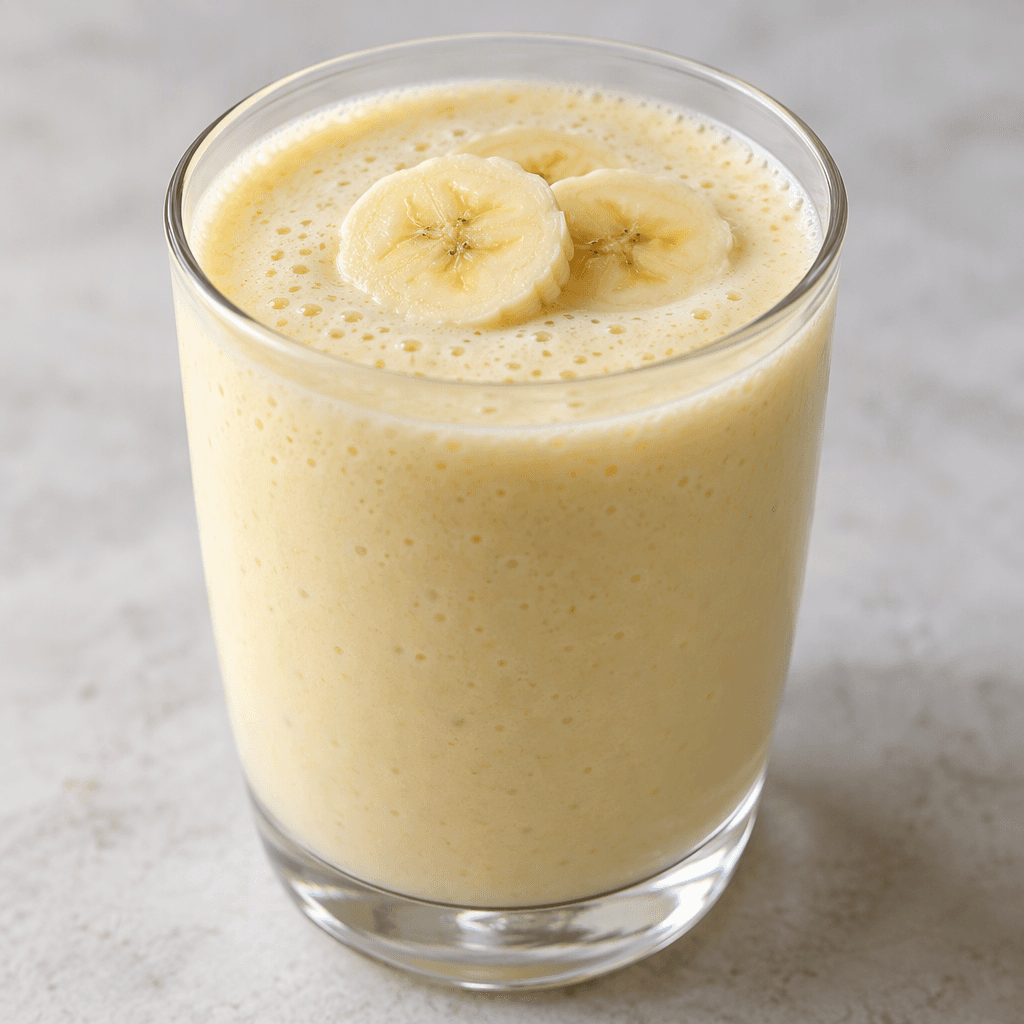
Banana shake Calories
Milk-based banana drink with potassium
CALORIES
GI
POTASSIUM
FIBER
Quick answer
1 cup (medium) of Banana shake (240 g) has 211 calories. That works out to 88 calories per 100 g. It contains 37 g of carbs, 7.4 g of protein, 4.6 g of fat and 1.9 g of fiber. Its 0.8 µg of B12 covers 32% of the Daily Value. Its glycemic index is 48 (low), so it raises blood sugar slowly.
What is Banana shake?
Banana shake blends ripe banana with milk into a smooth, filling drink. It belongs to the broader family of milkshakes and fruit shakes enjoyed in many places; recipes range from a simple banana-and-milk blend to richer versions with yoghurt or ice cream. In South Asia, banana shakes are a familiar café and home drink, while elsewhere they’re often made as a quick breakfast or snack.
Its creamy texture and naturally sweet flavour depend on how ripe the banana is. The drink provides some protein from milk and potassium from banana; it has 88 calories per 100 g. For a lighter shake, skip added sweeteners and use a ripe banana, or add ice for a thinner, cooler finish.
Banana shake Nutrition Facts
Selected: 100 g
88
KCAL / 100G
Carbs
15.4g
· 6% DV
Protein
3.1g
· 6% DV
Fat
1.9g
· 2% DV
Fiber
0.8g
· 3% DV
DV is the share of the daily value covered, on a 2,000 kcal reference diet.
Calories come from: Carbs 68% · Protein 14% · Fat 18%
Banana shake Vitamins & Minerals
Vitamins
B12
0.32µg · 13% DV
B2
0.11mg · 8% DV
B5
0.28mg · 6% DV
B6
0.08mg · 5% DV
Minerals
Phosphorus
89mg · 13% DV
Calcium
112mg · 11% DV
Potassium ⭐
220mg · 6% DV
Magnesium
20mg · 5% DV
How Nutritious Is Banana shake?
Nutrient density
Medium
How many vitamins, minerals and how much fiber this food carries per calorie. A high score means a lot of nutrition for few calories.
Satiety score
Medium
An EatBetter score computed from fiber, protein and calorie density. A high score means staying full longer on the same calories.
Both scores are calculated per 100 g and do not change with the selected portion. The satiety score is EatBetter's own calculation, not a clinical measure.
Banana shake Glycemic Index
GLYCEMIC INDEX
GLYCEMIC LOAD
Accounts for portion size — a more realistic measure than GI alone.
How to Burn Off Banana shake
To burn the 88 calories in 100 g:
🚶
Walking (5 km/h)
🏃
Running (8 km/h)
🚴
Cycling
🏊
Swimming
Times are calculated with the MET equation for a 70 kg adult. Actual burn varies with your weight, age and pace.
Is Banana shake Processed?
NOVA 2
Minimally Processed
1. Unprocessed
2. Minimally Processed
3. Processed
4. Ultra-Processed
NOVA classifies foods into 4 groups by industrial processing. NOVA 1 (unprocessed) is the healthiest.
Does Banana shake Contain Allergens?
Contains these allergens:
Which Diets Is Banana shake Good For?
Vegan
— Not suitable
Vegetarian
✓ Suitable
Gluten-Free
✓ Suitable
Dairy-Free
— Not suitable
Mediterranean
✓ Suitable
Paleo
— Not suitable
Whole30
— Not suitable
DASH
— Not suitable
Keto
— Not suitable
Low FODMAP
— Not suitable
Banana shake Fat Profile
SATURATED
1.16g
MONOUNSATURATED
0.5g
POLYUNSATURATED
0.06g
Omega 6:3 ratio 5:1
Above the ideal 4:1 (5:1).
Compare Banana shake
Foods Similar to Banana shake
Frequently Asked Questions About Banana shake
How do you make a banana shake without ice cream?
Blend a ripe banana with milk until smooth; ice cream is not needed. For a thicker shake, use a frozen banana or add a spoonful of yogurt. Add the milk gradually so you can control the consistency.
Can you use overripe bananas in a banana shake?
Yes, overripe bananas work well in a banana shake if they are still in good condition. Their soft texture blends easily and their sweetness may mean you do not need added sugar. Avoid bananas with mold or spoiled sections.
Why does a banana shake turn brown?
A banana shake can turn brown because cut banana flesh reacts with oxygen. The color change is usually cosmetic, though the flavor and texture are best soon after blending. Keeping the drink covered and chilled can slow the change.
Can you make a banana shake with water instead of milk?
Yes, you can blend banana with water, but the result will be less creamy and milky than a traditional banana shake. Add the water gradually, and consider blending in yogurt if you want a thicker texture.
How long does a banana shake last in the fridge?
A banana shake is best consumed soon after blending, but it can be kept covered in the refrigerator for a short time. It may separate and darken as it stands; stir or shake it well before drinking.
Can a banana shake replace a meal?
A banana shake can be a quick snack, but a basic version may not provide the variety and lasting fullness of a complete meal. To make it more substantial, pair it with solid food or blend in ingredients such as oats or nut butter.
Is a banana shake healthy?
A banana shake can fit into a balanced diet as a drink made with fruit and milk. Its overall nutritional profile changes with the ingredients: added sugar, syrup, or ice cream can make it sweeter and more energy-dense.
Is a banana shake good after a workout?
Yes, a banana shake can be a convenient post-workout drink, particularly when you want something easy to prepare. Milk and banana provide a mix of nutrients, but it does not need to be consumed immediately after exercise.
Can a banana shake cause bloating?
Yes, a banana shake can cause bloating in some people, especially if they have trouble digesting lactose in milk or are sensitive to a large serving. Try a smaller amount or lactose-free milk to see whether symptoms improve.
Does a banana shake help you gain weight?
A banana shake may help increase calorie intake if it is added regularly to your usual meals, especially when made with calorie-dense additions. It does not cause weight gain by itself; the overall eating pattern matters.
Have another question about Banana shake?
Ask the AI nutrition coach — calories, portions, alternatives and more, answered in seconds in the app.

Scan calories with your camera
Instant AI nutrition analysis

Nutrition data compiled from USDA FoodData Central and scientific sources.