

Ready & Packaged Foods
All →Vegetables & Legumes
All →Desserts & Confectionery
All →Meat & Protein
All →Grains & Bakery
All →Beverages
All →Milk & Dairy
All →

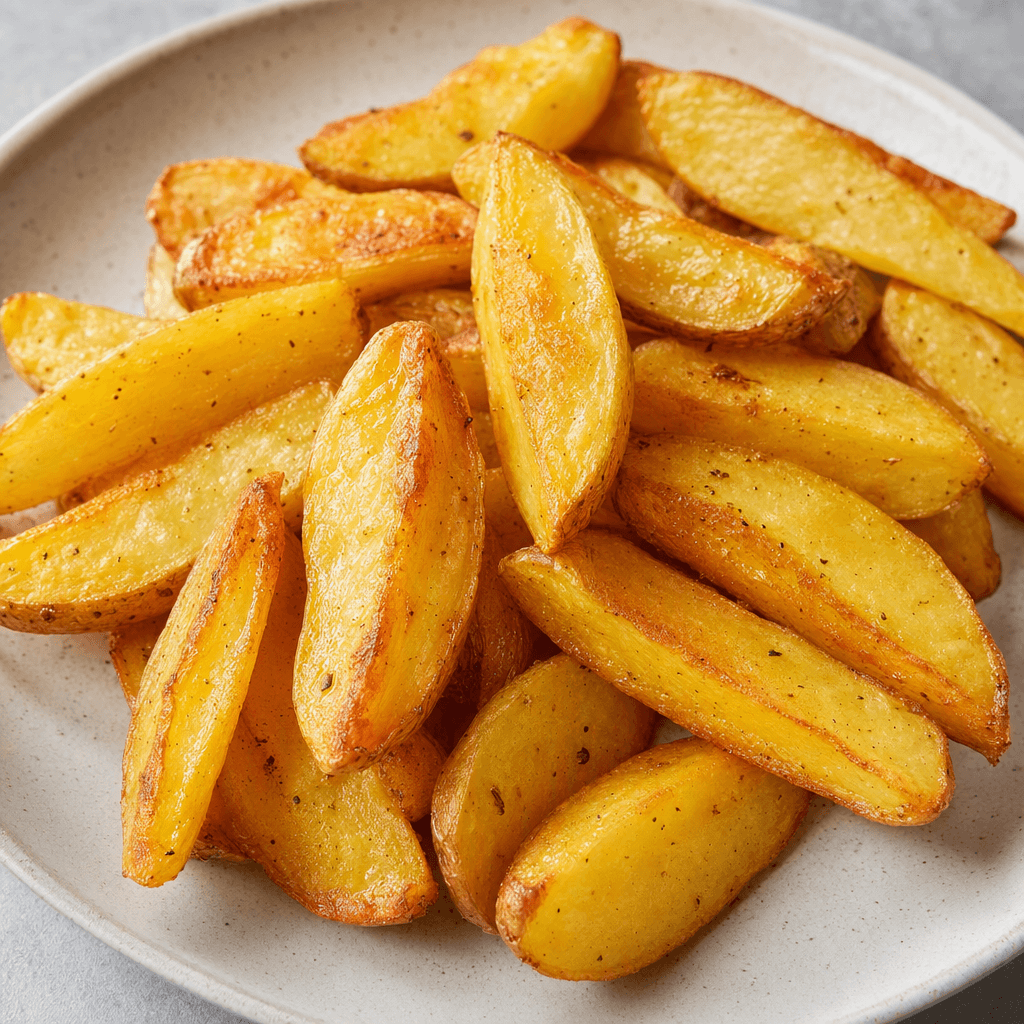
Low-Oil Baked Potatoes Calories
Source of potassium and vitamin C
In season: Spring · Summer · Autumn · Winter
CALORIES
GI
POTASSIUM
FIBER
Quick answer
1 piece (medium) of Low-Oil Baked Potatoes (180 g) has 185 calories. That works out to 103 calories per 100 g. It contains 38.5 g of carbs, 4.5 g of protein, 2.2 g of fat and 4 g of fiber. Its 0.5 mg of B6 covers 32% of the Daily Value. Its glycemic index is 85 (high), so it raises blood sugar quickly.
What is Low-Oil Baked Potatoes?
Low-oil baked potatoes are made by roasting potato wedges or chunks with a modest amount of oil, often with herbs and spices. The oven gives them browned, lightly crisp edges while the centres stay soft; garlic, paprika and rosemary are popular additions, though simple seasoning lets the potato’s flavour come through.
They work as a side for roasted vegetables, beans, fish or meat, and can also anchor a casual meal with a salad and a dip. Using less oil than deep-frying keeps the dish relatively low in fat, while potatoes contribute filling carbohydrates, potassium and vitamin C. For a lighter plate, keep the oil measured and pair the potatoes with vegetables or a fresh, tangy sauce.
Low-Oil Baked Potatoes Nutrition Facts
Selected: 100 g
103
KCAL / 100G
Carbs
21.4g
· 8% DV
Protein
2.5g
· 5% DV
Fat
1.2g
· 2% DV
Fiber
2.2g
· 8% DV
DV is the share of the daily value covered, on a 2,000 kcal reference diet.
Calories come from: Carbs 80% · Protein 9% · Fat 11%
Low-Oil Baked Potatoes Vitamins & Minerals
Vitamins
B6
0.3mg · 18% DV
Vitamin C
9.6mg · 11% DV
B3
1.45mg · 9% DV
B1
0.08mg · 7% DV
Minerals
Potassium ⭐
535mg · 16% DV
Phosphorus
70mg · 10% DV
Magnesium
28mg · 7% DV
Iron
1mg · 6% DV
How Nutritious Is Low-Oil Baked Potatoes?
Nutrient density
High
How many vitamins, minerals and how much fiber this food carries per calorie. A high score means a lot of nutrition for few calories.
Satiety score
Medium
An EatBetter score computed from fiber, protein and calorie density. A high score means staying full longer on the same calories.
Both scores are calculated per 100 g and do not change with the selected portion. The satiety score is EatBetter's own calculation, not a clinical measure.
Low-Oil Baked Potatoes Glycemic Index
GLYCEMIC INDEX
GLYCEMIC LOAD
Accounts for portion size — a more realistic measure than GI alone.
How to Burn Off Low-Oil Baked Potatoes
To burn the 103 calories in 100 g:
🚶
Walking (5 km/h)
🏃
Running (8 km/h)
🚴
Cycling
🏊
Swimming
Times are calculated with the MET equation for a 70 kg adult. Actual burn varies with your weight, age and pace.
Is Low-Oil Baked Potatoes Processed?
NOVA 2
Minimally Processed
1. Unprocessed
2. Minimally Processed
3. Processed
4. Ultra-Processed
NOVA classifies foods into 4 groups by industrial processing. NOVA 1 (unprocessed) is the healthiest.
Does Low-Oil Baked Potatoes Contain Allergens?
No known major allergens
Which Diets Is Low-Oil Baked Potatoes Good For?
Vegan
✓ Suitable
Vegetarian
✓ Suitable
Gluten-Free
✓ Suitable
Dairy-Free
— Not suitable
Mediterranean
✓ Suitable
Paleo
✓ Suitable
Whole30
— Not suitable
DASH
— Not suitable
Keto
— Not suitable
Low FODMAP
— Not suitable
Low-Oil Baked Potatoes Fat Profile
SATURATED
0.17g
MONOUNSATURATED
0.62g
POLYUNSATURATED
0.27g
Omega 6:3 ratio 25:1
Above the ideal 4:1 (25:1).
Compare Low-Oil Baked Potatoes
Foods Similar to Low-Oil Baked Potatoes
Frequently Asked Questions About Low-Oil Baked Potatoes
How do you make low-oil baked potatoes crispy?
Dry the cut potatoes thoroughly, coat them lightly with oil, and spread them in a single layer on a preheated tray. Crowding traps steam and softens them, so use two trays if needed and turn the pieces once while baking.
How long do low-oil baked potatoes take to cook?
Low-oil baked potatoes usually take about 30–40 minutes at roughly 400°F (200°C), depending on the size of the pieces. They are ready when browned outside and easily pierced with a fork; turn them once for even cooking.
Should you soak potatoes before making low-oil baked potatoes?
Soaking is optional for low-oil baked potatoes. A brief soak can remove some surface starch and help the edges crisp, but dry the pieces very thoroughly afterward; otherwise, excess moisture can make them steam.
Which potatoes are best for low-oil baked potatoes?
Starchy potatoes, such as russets, give low-oil baked potatoes a fluffy middle and crisp edges. Waxy varieties hold their shape better, so they work well when you want firm wedges rather than soft, fluffy pieces.
Do you need to peel potatoes for low-oil baked potatoes?
No, peeling is not necessary for low-oil baked potatoes. Scrub the skins well under running water and dry the potatoes before cutting; leaving the skin on gives the wedges a more rustic texture.
Can you prepare low-oil baked potatoes ahead of time?
Yes, you can cut potatoes ahead for low-oil baked potatoes, but keep the pieces submerged in cold water in the refrigerator to prevent browning. Drain and dry them completely just before seasoning and baking.
How should you season low-oil baked potatoes?
Paprika, garlic powder, black pepper, and rosemary all work well on low-oil baked potatoes. Toss the seasonings with the potatoes and a little oil before baking; add fresh herbs afterward so their flavor stays bright.
How long do low-oil baked potatoes keep in the fridge?
Low-oil baked potatoes keep for about 3–4 days in a covered container in the refrigerator once cooled. Refrigerate them promptly, and reheat only the portion you plan to eat.
What is the best way to reheat low-oil baked potatoes?
Reheat low-oil baked potatoes in an oven or air fryer to bring back some crispness. Arrange them in a single layer; a microwave is quicker but tends to leave the outside soft.
What can you serve with low-oil baked potatoes?
Low-oil baked potatoes pair well with a yogurt dip, salad, grilled vegetables, or a protein such as beans, fish, or chicken. Adding a protein-rich side makes them a more satisfying part of a meal.
Have another question about Low-Oil Baked Potatoes?
Ask the AI nutrition coach — calories, portions, alternatives and more, answered in seconds in the app.

Scan calories with your camera
Instant AI nutrition analysis

Nutrition data compiled from USDA FoodData Central and scientific sources.