

Ready & Packaged Foods
All →Vegetables & Legumes
All →Desserts & Confectionery
All →Meat & Protein
All →Grains & Bakery
All →Beverages
All →Milk & Dairy
All →

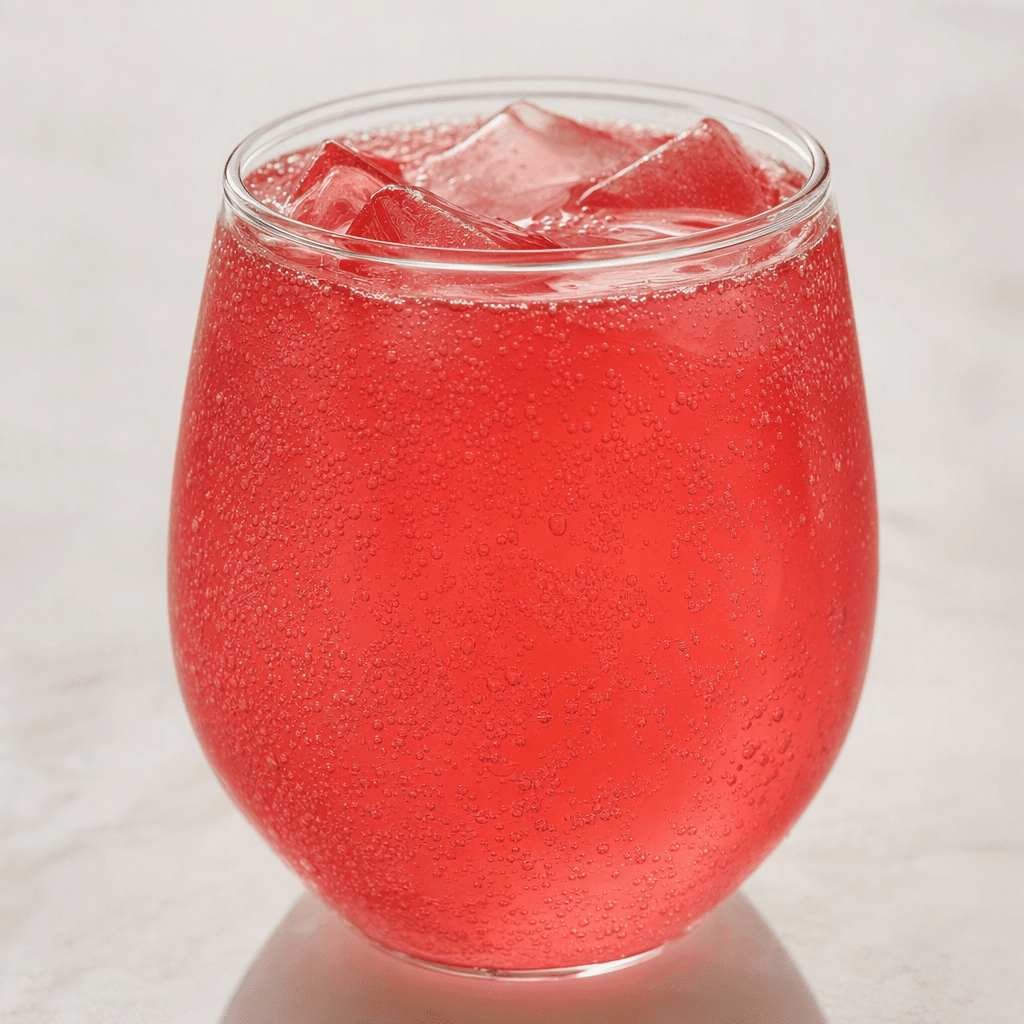
Avşar watermelon strawberry carbonated drink Calories
Low-calorie flavored carbonated drink
CALORIES · 100 G
GI
POTASSIUM · 100 G
FIBER · 100 G
Quick answer
1 bottle (small) of Avşar watermelon strawberry carbonated drink (200 g) has 8 calories. That works out to 4 calories per 100 g. It contains 1.6 g of carbs, 0 g of protein, 0 g of fat and 0 g of fiber. Its glycemic index is 5 (low), so it raises blood sugar slowly.
Avşar watermelon strawberry carbonated drink Nutrition Facts
Selected: 1 bottle (small) · 200 g
8
KCAL / 200G
Carbs
1.6g
· 1% DV
Protein
0g
· 0% DV
Fat
0g
· 0% DV
Fiber
0g
· 0% DV
DV is the share of the daily value covered, on a 2,000 kcal reference diet.
Calories come from: Carbs 100% · Protein 0% · Fat 0%
Avşar watermelon strawberry carbonated drink nutrition facts table · 1 bottle (small) (200 g)
| Nutrient | Amount | % DV |
|---|---|---|
| Calories | 8 kcal | |
| Total fat | 0 g | 0% |
| Saturated fat | 0 g | 0% |
| Trans fat | 0 g | |
| Sodium | 16 mg | 1% |
| Total carbohydrate | 1.6 g | 1% |
| Fiber | 0 g | 0% |
| Protein | 0 g | 0% |
Calories: Calories measure energy. Average daily need is 2,000 kcal. Excess calories are stored as fat, too few cause weight loss.
Carbs: Your body's primary energy source. The brain runs exclusively on carbs. Daily need: 275g.
Protein: Essential for muscle repair and cell growth. Daily need: 50g. Keeps you full and boosts metabolism.
Fat: Needed for hormone production and vitamin absorption. Daily need: 78g. Limit saturated fats, choose unsaturated.
Fiber: Critical for digestive health and satiety. Daily need: 28g. Stabilizes blood sugar, lowers cholesterol.

Log this food in EatBetter
100,000+ people use it
- Get your daily calorie target
- Snap your meal, log it in seconds
- See every vitamin and mineral

📸 Scan the code to get the app free.

How Many Calories in 1 Small Bottle of Avşar watermelon strawberry carbonated drink?
| Serving | Amount | Calories |
|---|---|---|
| 1 bottle (small) | 200 g | 8 kcal |
| 100 g | 100 g | 4 kcal |
| 1 serving (small) | 150 g | 6 kcal |
| 1 cup (medium) | 240 g | 10 kcal |
| 1 bottle (medium) | 250 g | 10 kcal |
| 1 can (medium) | 330 g | 13 kcal |
| 1 serving (large) | 330 g | 13 kcal |
| 2 cup (double) | 480 g | 19 kcal |
| 1 bottle (large) | 500 g | 20 kcal |
Calculated from 4 calories per 100 g.
Frequently Asked Questions About Avşar watermelon strawberry carbonated drink
Is Avşar watermelon strawberry carbonated drink sugar-free?
You cannot confirm that it is sugar-free from the carbohydrate figure alone. Check the ingredient list and nutrition information for sugar or sweeteners; the fruit flavors in the name do not establish whether either is present.
Does Avşar watermelon strawberry carbonated drink contain caffeine?
There is no product information here confirming caffeine. Fruit-flavored fizzy drinks are often caffeine-free, but check this drink’s ingredient list if you avoid caffeine, especially later in the day.
Does Avşar watermelon strawberry carbonated drink contain real fruit juice?
The watermelon and strawberry names do not mean the drink contains juice. Look for fruit juice or fruit purée in the ingredients; flavoring can provide a fruit-like taste without either.
Is Avşar watermelon strawberry carbonated drink sparkling mineral water or soda?
It is a flavored carbonated drink, but its name alone does not establish whether it is made with mineral water. The ingredients or product description should specify the water base.
What does Avşar watermelon strawberry carbonated drink taste like?
It is intended to combine watermelon and strawberry flavors in a fizzy drink. The balance of those flavors and how sweet it tastes can vary with the formulation and your own palate.
Can you use Avşar watermelon strawberry carbonated drink as a cocktail mixer?
Yes, you can use it as a fizzy mixer for a simple drink. Its watermelon-and-strawberry flavor pairs naturally with fruit; pour it in last to keep the carbonation from fading quickly.
How should you store Avşar watermelon strawberry carbonated drink after opening?
Close the bottle tightly and refrigerate it after opening. Drink it soon while it is still fizzy; leaving it open or at room temperature makes it lose carbonation faster.
Can Avşar watermelon strawberry carbonated drink replace water for hydration?
No, it should not replace plain water as your main everyday drink. You can have it as an occasional flavored option, while drinking water regularly to meet your fluid needs.
Can people with diabetes drink Avşar watermelon strawberry carbonated drink?
Whether it fits depends on its sugar or sweetener content and your individual meal plan. Check the product information, and ask your doctor or dietitian if you need guidance for managing blood glucose.
Is Avşar watermelon strawberry carbonated drink a good choice for weight loss?
It may fit occasionally, but it is not a weight-loss drink. Whether it supports your plan depends on its sugar content and how often you choose it instead of water or other drinks.
Avşar watermelon strawberry carbonated drink Vitamins & Minerals
Vitamins
Vitamin A
0µg · 0% DV
B1
0mg · 0% DV
B2
0mg · 0% DV
B3
0mg · 0% DV
Minerals
Sodium
16mg · 1% DV
Magnesium
1mg · 0% DV
Calcium
2mg · 0% DV
Potassium ⭐
4mg · 0% DV
Avşar watermelon strawberry carbonated drink Glycemic Index
GLYCEMIC INDEX
GLYCEMIC LOAD
Accounts for portion size — a more realistic measure than GI alone.
How to Burn Off Avşar watermelon strawberry carbonated drink
To burn the 8 calories in 1 bottle (small) (200 g):
🚶
Walking (5 km/h)
🏃
Running (8 km/h)
🚴
Cycling
🏊
Swimming
Times are calculated with the MET equation for a 70 kg adult. Actual burn varies with your weight, age and pace.
What is Avşar watermelon strawberry carbonated drink?
Avşar watermelon strawberry carbonated drink is a ready-to-drink, non-alcoholic beverage with bubbles and watermelon and strawberry flavour. It is best understood as a fruity soft drink rather than fruit juice, with a sweet-leaning aroma and a light, sparkling finish.
Serve it chilled, whether alongside a casual meal, at a picnic or as a refreshing option on a warm day. Its fruit notes pair easily with savoury snacks and simple sandwiches. It is very low in energy, with 4 calories per 100 g, so it can suit someone looking for a lighter flavoured drink. For everyday hydration, though, plain water remains a useful choice alongside it.
How Nutritious Is Avşar watermelon strawberry carbonated drink?
Nutrient density
Low
How many vitamins, minerals and how much fiber this food carries per calorie. A high score means a lot of nutrition for few calories.
Satiety score
Medium
An EatBetter score computed from fiber, protein and calorie density. A high score means staying full longer on the same calories.
Both scores are calculated per 100 g and do not change with the selected portion. The satiety score is EatBetter's own calculation, not a clinical measure.
Is Avşar watermelon strawberry carbonated drink Processed?
NOVA 3
Processed
1. Unprocessed
2. Minimally Processed
3. Processed
4. Ultra-Processed
NOVA classifies foods into 4 groups by industrial processing. NOVA 1 (unprocessed) is the healthiest.
Does Avşar watermelon strawberry carbonated drink Contain Allergens?
No known major allergens
Which Diets Is Avşar watermelon strawberry carbonated drink Good For?
Vegan
✓ Suitable
Vegetarian
✓ Suitable
Gluten-Free
✓ Suitable
Dairy-Free
— Not suitable
Mediterranean
✓ Suitable
Paleo
— Not suitable
Whole30
— Not suitable
DASH
— Not suitable
Keto
— Not suitable
Low FODMAP
— Not suitable
Avşar watermelon strawberry carbonated drink Fat Profile
SATURATED
0g
MONOUNSATURATED
0g
POLYUNSATURATED
0g
Compare Avşar watermelon strawberry carbonated drink
Foods Similar to Avşar watermelon strawberry carbonated drink
Have another question about Avşar watermelon strawberry carbonated drink?
Ask the AI nutrition coach — calories, portions, alternatives and more, answered in seconds in the app.

Scan calories with your camera
Instant AI nutrition analysis

Nutrition data compiled from USDA FoodData Central and scientific sources.