

Ready & Packaged Foods
All →Vegetables & Legumes
All →Desserts & Confectionery
All →Meat & Protein
All →Grains & Bakery
All →Beverages
All →Milk & Dairy
All →

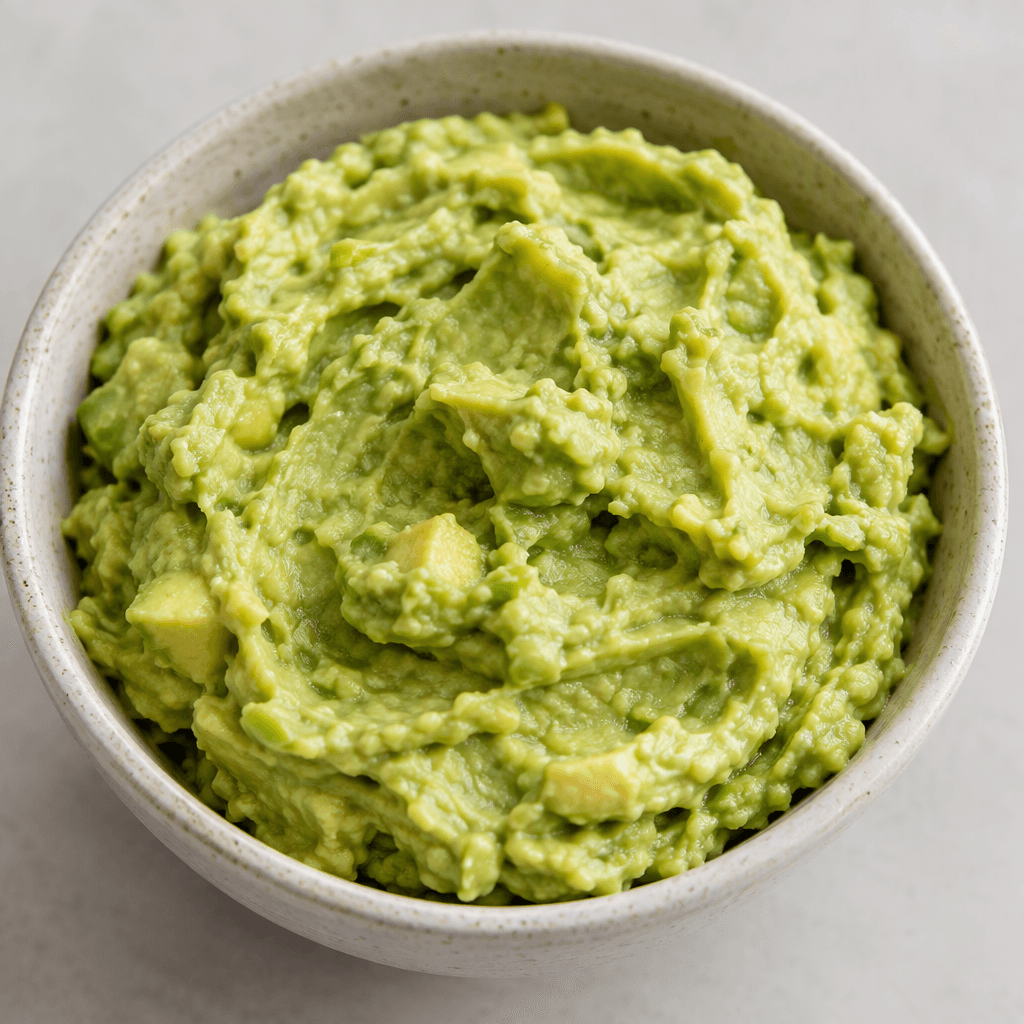
Avocado Mash Calories
Rich in potassium and healthy fats, good fiber source
In season: Spring · Summer · Autumn · Winter
CALORIES
GI
POTASSIUM
FIBER
Quick answer
2 tablespoon (medium) of Avocado Mash (30 g) has 48 calories. That works out to 160 calories per 100 g. It contains 2.6 g of carbs, 0.6 g of protein, 4.4 g of fat and 2 g of fiber. Its 0.4 mg of B5 covers 8% of the Daily Value. Its glycemic index is 15 (low), so it raises blood sugar slowly.
What is Avocado Mash?
Avocado Mash is made by mashing ripe avocado, with the texture left smooth or slightly chunky. Avocados originated in the Americas, and the mash is now a familiar spread in many kitchens. A little lemon or lime, salt and pepper can keep it simple; garlic and fresh herbs are common additions too.
Its mild, buttery flavour and creamy texture work well on toast, in sandwiches, or alongside eggs. It is also served as a dip or spooned into salads and grain bowls. Avocado Mash provides fibre and mostly unsaturated fat; 100 g contains 6.7 g of fibre. For a lighter version, brighten it with citrus and herbs rather than adding extra oil.
Avocado Mash Nutrition Facts
Selected: 100 g
160
KCAL / 100G
Carbs
8.5g
· 3% DV
Protein
2g
· 4% DV
Fat
14.7g
· 19% DV
Fiber
6.7g
· 24% DV
DV is the share of the daily value covered, on a 2,000 kcal reference diet.
Calories come from: Carbs 20% · Protein 5% · Fat 75%
Avocado Mash Vitamins & Minerals
Vitamins
B5
1.39mg · 28% DV
Folate
81µg · 20% DV
Vitamin K
21µg · 18% DV
B6
0.26mg · 15% DV
Minerals
Potassium ⭐
485mg · 14% DV
Zinc
1mg · 9% DV
Magnesium
29mg · 7% DV
Phosphorus
52mg · 7% DV
How Nutritious Is Avocado Mash?
Nutrient density
Very high
How many vitamins, minerals and how much fiber this food carries per calorie. A high score means a lot of nutrition for few calories.
Satiety score
Medium
An EatBetter score computed from fiber, protein and calorie density. A high score means staying full longer on the same calories.
Both scores are calculated per 100 g and do not change with the selected portion. The satiety score is EatBetter's own calculation, not a clinical measure.
Avocado Mash Glycemic Index
GLYCEMIC INDEX
GLYCEMIC LOAD
Accounts for portion size — a more realistic measure than GI alone.
How to Burn Off Avocado Mash
To burn the 160 calories in 100 g:
🚶
Walking (5 km/h)
🏃
Running (8 km/h)
🚴
Cycling
🏊
Swimming
Times are calculated with the MET equation for a 70 kg adult. Actual burn varies with your weight, age and pace.
Is Avocado Mash Processed?
NOVA 2
Minimally Processed
1. Unprocessed
2. Minimally Processed
3. Processed
4. Ultra-Processed
NOVA classifies foods into 4 groups by industrial processing. NOVA 1 (unprocessed) is the healthiest.
Does Avocado Mash Contain Allergens?
No known major allergens
Which Diets Is Avocado Mash Good For?
Vegan
✓ Suitable
Vegetarian
✓ Suitable
Gluten-Free
✓ Suitable
Dairy-Free
— Not suitable
Mediterranean
✓ Suitable
Paleo
✓ Suitable
Whole30
— Not suitable
DASH
— Not suitable
Keto
✓ Suitable
Low FODMAP
— Not suitable
Avocado Mash Fat Profile
SATURATED
2.13g
MONOUNSATURATED
9.8g
POLYUNSATURATED
1.8g
Omega 6:3 ratio 15.5:1
Above the ideal 4:1 (15.5:1).
Compare Avocado Mash
Foods Similar to Avocado Mash
Frequently Asked Questions About Avocado Mash
How do you make avocado mash?
To make avocado mash, scoop a ripe avocado into a bowl and crush it with a fork. Stir in lemon or lime juice and salt; leave it chunky or keep mashing until it reaches the texture you prefer.
How do you stop avocado mash from turning brown?
Add lemon or lime juice and limit the avocado mash’s contact with air. Press cling film directly onto its surface or seal it in an airtight container, then refrigerate it promptly.
Is avocado mash the same as guacamole?
No. Avocado mash can be simply mashed avocado, while guacamole usually includes seasonings and additions such as lime, onion, tomato, chilli or cilantro. The names are sometimes used interchangeably, but guacamole is typically the more seasoned preparation.
How long does avocado mash last in the fridge?
Avocado mash is best eaten soon after preparation, but it generally keeps for about one to two days in an airtight container in the refrigerator. Discard it if you notice mould, an off smell or an unusual change in texture.
Can you freeze avocado mash?
Yes, avocado mash can be frozen, though thawing may make it softer or watery. Mix in lemon or lime juice, seal it in a freezer-safe airtight container, and stir it well after thawing before using it in a dip or sandwich.
Can avocado mash replace butter on toast?
Yes, avocado mash can replace butter as a spread on toast. It gives toast a creamy texture and pairs well with toppings such as eggs, tomatoes or chilli flakes; add it just before eating to limit browning.
What goes well with avocado mash besides toast?
Avocado mash also works in wraps, tacos and grain bowls, or as a dip for sliced vegetables. Its creamy texture pairs especially well with eggs, beans, grilled fish and chicken.
Can babies eat avocado mash?
Yes, babies who are ready for solid foods can generally try soft, unsalted avocado mash from around six months. Adjust the texture to your baby’s stage and avoid firm chunks that could pose a choking risk.
Is avocado mash good for weight loss?
Avocado mash can fit into a weight-loss eating plan: its fibre and fat may help make a meal satisfying. It is also energy-dense, so use a sensible spread or topping portion rather than treating it as a free addition.
Can you make avocado mash without lemon juice?
Yes, avocado mash can be made without lemon juice; mash the avocado with a little salt or another seasoning you enjoy. Lemon mainly adds brightness and slows browning, so prepare the mash close to serving time if you leave it out.
Have another question about Avocado Mash?
Ask the AI nutrition coach — calories, portions, alternatives and more, answered in seconds in the app.

Scan calories with your camera
Instant AI nutrition analysis

Nutrition data compiled from USDA FoodData Central and scientific sources.