

Ready & Packaged Foods
All →Vegetables & Legumes
All →Desserts & Confectionery
All →Meat & Protein
All →Grains & Bakery
All →Beverages
All →Milk & Dairy
All →

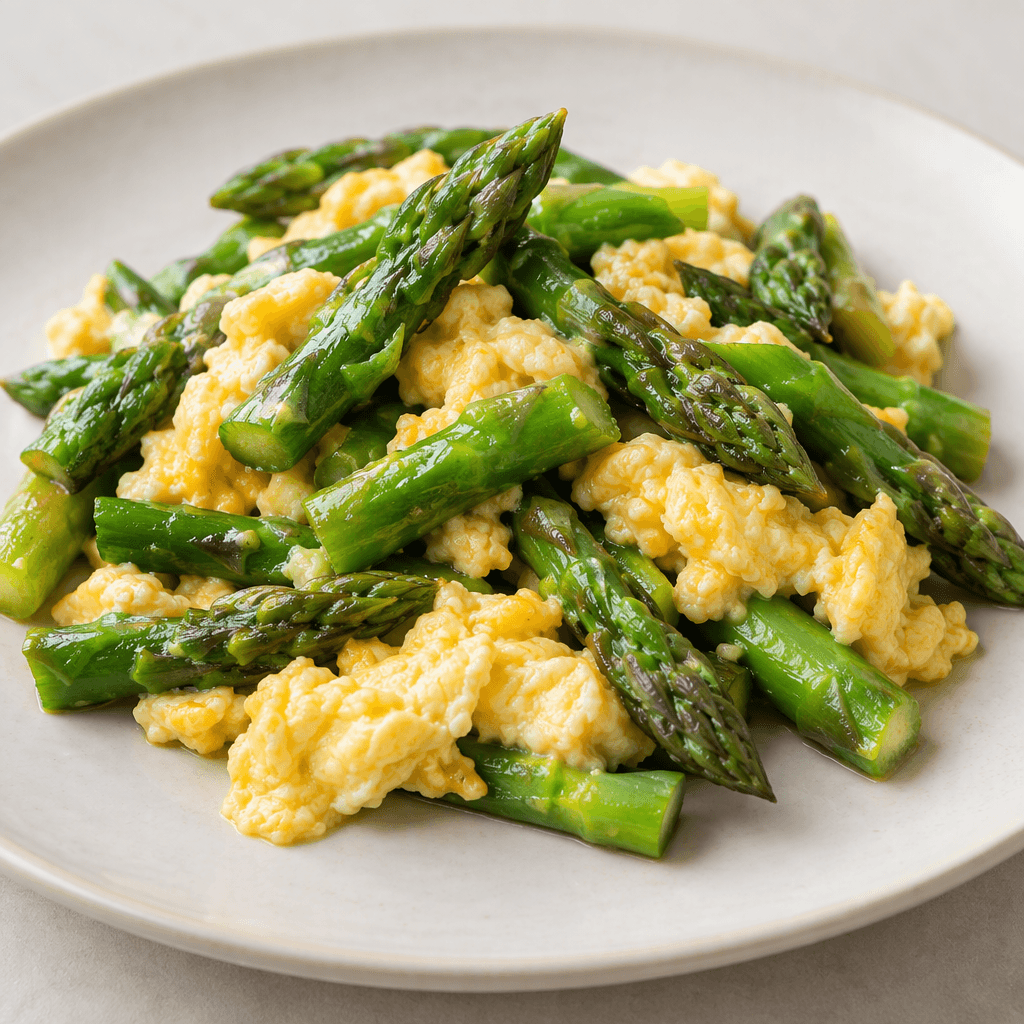
Asparagus with egg Calories
Asparagus with egg: Rich in protein and fiber, source of vitamins and minerals.
In season: Spring
CALORIES
GI
POTASSIUM
FIBER
Quick answer
1 serving (medium) of Asparagus with egg (120 g) has 89 calories. That works out to 74 calories per 100 g. It contains 5 g of carbs, 7.4 g of protein, 4.6 g of fat and 2.5 g of fiber. Its 45.6 µg of Vitamin K covers 38% of the Daily Value. Its glycemic index is 25 (low), so it raises blood sugar slowly.
What is Asparagus with egg?
Asparagus with egg is a straightforward home-cooked dish: asparagus is trimmed and cooked in a pan, then finished with eggs, either stirred through or left to set over the vegetables. There is no single fixed regional recipe; seasonings and the way the eggs are cooked vary from kitchen to kitchen.
Serve it warm for brunch, lunch or a light supper, with bread or a crisp salad. It brings together the fibre of asparagus and the protein of eggs; a 100 g portion has 6.2 g of protein. If the stalks are thick, give them a little extra cooking time before adding the eggs so they turn tender without overcooking the egg.
Asparagus with egg Nutrition Facts
Selected: 100 g
74
KCAL / 100G
Carbs
4.2g
· 2% DV
Protein
6.2g
· 12% DV
Fat
3.8g
· 5% DV
Fiber
2.1g
· 8% DV
DV is the share of the daily value covered, on a 2,000 kcal reference diet.
Calories come from: Carbs 22% · Protein 33% · Fat 45%
Asparagus with egg Vitamins & Minerals
Vitamins
Vitamin K
38µg · 32% DV
B12
0.7µg · 29% DV
Biotin
7µg · 23% DV
Folate
78µg · 20% DV
Minerals
Selenium
7µg · 13% DV
Phosphorus
92mg · 13% DV
Zinc
1mg · 9% DV
Iron
1mg · 6% DV
How Nutritious Is Asparagus with egg?
Nutrient density
High
How many vitamins, minerals and how much fiber this food carries per calorie. A high score means a lot of nutrition for few calories.
Satiety score
Medium
An EatBetter score computed from fiber, protein and calorie density. A high score means staying full longer on the same calories.
Both scores are calculated per 100 g and do not change with the selected portion. The satiety score is EatBetter's own calculation, not a clinical measure.
Asparagus with egg Glycemic Index
GLYCEMIC INDEX
GLYCEMIC LOAD
Accounts for portion size — a more realistic measure than GI alone.
How to Burn Off Asparagus with egg
To burn the 74 calories in 100 g:
🚶
Walking (5 km/h)
🏃
Running (8 km/h)
🚴
Cycling
🏊
Swimming
Times are calculated with the MET equation for a 70 kg adult. Actual burn varies with your weight, age and pace.
Is Asparagus with egg Processed?
NOVA 2
Minimally Processed
1. Unprocessed
2. Minimally Processed
3. Processed
4. Ultra-Processed
NOVA classifies foods into 4 groups by industrial processing. NOVA 1 (unprocessed) is the healthiest.
Does Asparagus with egg Contain Allergens?
Contains these allergens:
Which Diets Is Asparagus with egg Good For?
Vegan
— Not suitable
Vegetarian
✓ Suitable
Gluten-Free
— Not suitable
Dairy-Free
— Not suitable
Mediterranean
✓ Suitable
Paleo
— Not suitable
Whole30
— Not suitable
DASH
— Not suitable
Keto
— Not suitable
Low FODMAP
— Not suitable
Asparagus with egg Fat Profile
SATURATED
1.1g
MONOUNSATURATED
1.4g
POLYUNSATURATED
0.25g
Omega 6:3 ratio 2.6:1
Below the ideal 4:1 — a good omega balance.
Compare Asparagus with egg
Foods Similar to Asparagus with egg
Frequently Asked Questions About Asparagus with egg
What is asparagus with egg?
Asparagus with egg is a simple dish that combines cooked asparagus with eggs, often scrambled together in a pan. It can also be served with a fried or poached egg on top, making the yolk part of the sauce.
How do you make asparagus with egg?
Cook trimmed asparagus in a lightly oiled pan until tender, then add beaten eggs and stir until just set. Season to taste and serve promptly; adding the eggs only after the asparagus softens helps keep them from overcooking.
Should you blanch asparagus before making asparagus with egg?
No, thin asparagus usually cooks through in the pan without blanching. Blanch or briefly steam thicker spears first if needed, then drain them well before adding eggs so the finished dish does not become watery.
What should you serve with asparagus with egg?
Serve asparagus with egg with toast, roasted potatoes, or a crisp green salad. These pairings add crunch or substance without overwhelming the asparagus; a squeeze of lemon also brightens the dish just before serving.
Can you eat asparagus with egg for breakfast?
Yes, asparagus with egg makes a suitable savory breakfast. Cook the asparagus ahead or use thin spears that soften quickly, then add the eggs near the end so breakfast comes together without overcooking them.
Can you bake asparagus with egg in the oven?
Yes, asparagus with egg can be baked in a small ovenproof dish. Arrange the trimmed asparagus, pour beaten egg over it, and bake until the egg is set; cut thicker spears into shorter pieces so they cook evenly.
Why is asparagus with egg watery?
Asparagus with egg can turn watery when the asparagus releases moisture into the pan, especially if it is crowded or was not drained after thawing. Cook off excess liquid before adding the eggs, and leave space between the spears.
Can you use frozen asparagus for asparagus with egg?
Yes, frozen asparagus works in asparagus with egg. Thaw it and drain away excess moisture, or cook it directly in the pan until hot and the released liquid evaporates before you add the eggs.
Can you make asparagus with egg with a runny yolk?
Yes, cook asparagus with egg with whole eggs and leave the yolks runny if you prefer. Cover the pan briefly to set the whites while keeping the yolks soft, and serve immediately for the best texture.
How long do leftovers of asparagus with egg last in the fridge?
Keep leftover asparagus with egg in a sealed container in the refrigerator for up to three days. Reheat it until hot throughout, preferably in a pan over gentle heat; avoid leaving the cooked dish at room temperature for extended periods.
Have another question about Asparagus with egg?
Ask the AI nutrition coach — calories, portions, alternatives and more, answered in seconds in the app.

Scan calories with your camera
Instant AI nutrition analysis

Nutrition data compiled from USDA FoodData Central and scientific sources.