

Ready & Packaged Foods
All →Vegetables & Legumes
All →Desserts & Confectionery
All →Meat & Protein
All →Grains & Bakery
All →Beverages
All →Milk & Dairy
All →

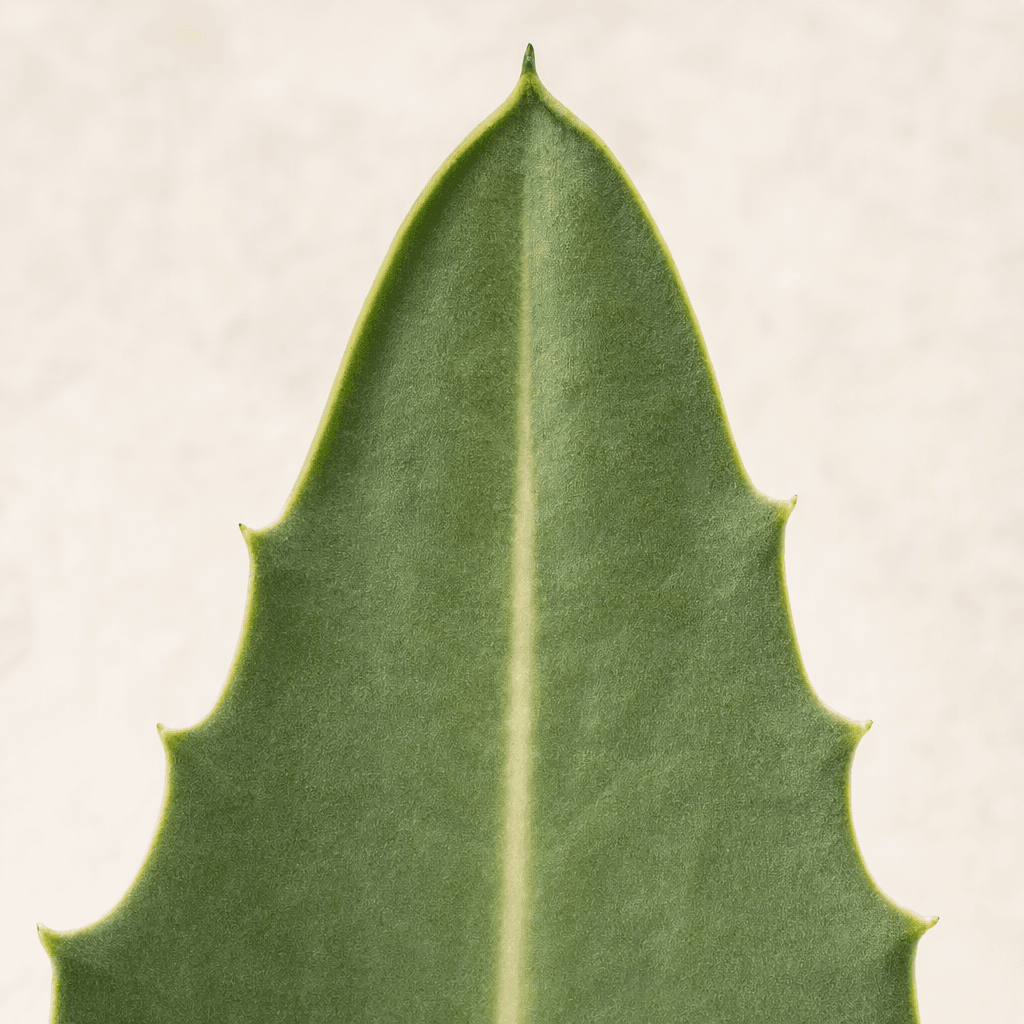
Artichoke leaf Calories
Fiber, antioxidant, low calorie, liver-friendly
In season: Spring
CALORIES · 100 G
GI
POTASSIUM · 100 G
FIBER · 100 G
Quick answer
5 piece (medium) of Artichoke leaf (40 g) has 19 calories. That works out to 47 calories per 100 g. It contains 4.2 g of carbs, 1.3 g of protein, 0.1 g of fat and 2.2 g of fiber. Its 0.1 mg of Copper covers 10% of the Daily Value. Its glycemic index is 15 (low), so it raises blood sugar slowly.
Artichoke leaf Nutrition Facts
Selected: 5 piece (medium) · 40 g
19
KCAL / 40G
Carbs
4.2g
· 2% DV
Protein
1.3g
· 3% DV
Fat
0.1g
· 0% DV
Fiber
2.2g
· 8% DV
DV is the share of the daily value covered, on a 2,000 kcal reference diet.
Calories come from: Carbs 73% · Protein 23% · Fat 4%
Artichoke leaf nutrition facts table · 5 piece (medium) (40 g)
| Nutrient | Amount | % DV |
|---|---|---|
| Calories | 19 kcal | |
| Total fat | 0.1 g | 0% |
| Saturated fat | 0.01 g | 0% |
| Trans fat | 0 g | |
| Sodium | 38 mg | 2% |
| Total carbohydrate | 4.2 g | 2% |
| Fiber | 2.2 g | 8% |
| Protein | 1.3 g | 3% |
Calories: Calories measure energy. Average daily need is 2,000 kcal. Excess calories are stored as fat, too few cause weight loss.
Carbs: Your body's primary energy source. The brain runs exclusively on carbs. Daily need: 275g.
Protein: Essential for muscle repair and cell growth. Daily need: 50g. Keeps you full and boosts metabolism.
Fat: Needed for hormone production and vitamin absorption. Daily need: 78g. Limit saturated fats, choose unsaturated.
Fiber: Critical for digestive health and satiety. Daily need: 28g. Stabilizes blood sugar, lowers cholesterol.

Log this food in EatBetter
100,000+ people use it
- Get your daily calorie target
- Snap your meal, log it in seconds
- See every vitamin and mineral

📸 Scan the code to get the app free.

How Many Calories in 5 Pieces of Artichoke leaf?
| Serving | Amount | Calories |
|---|---|---|
| 5 piece (medium) | 40 g | 19 kcal |
| 1 piece (small) | 8 g | 4 kcal |
| 1 cup (chopped) | 50 g | 24 kcal |
| 1 serving (medium) | 60 g | 28 kcal |
| 10 piece (large) | 80 g | 38 kcal |
| 100 g | 100 g | 47 kcal |
| 2 cup (chopped) | 100 g | 47 kcal |
| 1 serving (large) | 100 g | 47 kcal |
Calculated from 47 calories per 100 g.
Frequently Asked Questions About Artichoke leaf
Can you eat artichoke leaves?
Yes, you can eat the tender, fleshy base of cooked artichoke leaves. Scrape that part off with your teeth and discard the tough outer portion; most of the leaf is too fibrous to eat comfortably.
How do you cook artichoke leaves?
Cook artichoke leaves as part of a whole artichoke by steaming or boiling it until the leaves are tender. Pull off individual leaves and scrape their soft bases to eat; the leaves are commonly served with a dip.
What is artichoke leaf tea used for?
Artichoke leaf tea is commonly used as a herbal drink and is traditionally associated with digestion and liver health. Those traditional uses are not proof that the tea treats a health condition, and evidence about extracts does not establish benefits from tea.
How do you make artichoke leaf tea?
Pour hot water over dried artichoke leaves and let them steep, then strain the leaves out before drinking. The tea can taste bitter; adding lemon can make it more pleasant. Follow the product directions if you are using packaged leaves.
Does artichoke leaf extract lower cholesterol?
Some studies of artichoke leaf extract suggest it may affect cholesterol levels, but results do not establish that eating artichoke leaves or drinking their tea has the same effect. Extracts should not replace prescribed cholesterol treatment.
Is artichoke leaf tea good for your liver?
Artichoke leaf tea has not been shown to cleanse the liver or treat liver disease. Research on artichoke extracts is not enough to establish that homemade tea has the same effects.
Is artichoke leaf extract the same as artichoke leaf tea?
No, artichoke leaf extract is a concentrated product, while tea is made by steeping leaves in water. They can differ in strength and composition, so findings from extract studies cannot automatically be applied to tea.
What are the side effects of artichoke leaf?
Artichoke leaf can cause gas, bloating, or stomach discomfort in some people. It may also trigger an allergic reaction, especially in people sensitive to plants in the daisy family; stop using it if a reaction occurs.
Who should avoid artichoke leaf?
People with a blocked bile duct or gallstones should ask a doctor before using artichoke leaf products, because artichoke can affect bile flow. Anyone with a known allergy to artichoke or related plants should avoid it.
How should you store fresh artichokes, and can you freeze the leaves?
Keep fresh artichokes refrigerated with their leaves attached, loosely wrapped to prevent them from drying out. Cooked leaves can be frozen, though thawing softens their texture, so they work best in soups or other cooked dishes.
Artichoke leaf Vitamins & Minerals
Vitamins
Folate
27.2µg · 7% DV
Vitamin C
4.68mg · 5% DV
Vitamin K
5.92µg · 5% DV
B3
0.36mg · 2% DV
Minerals
Copper
0.09mg · 10% DV
Magnesium
24mg · 6% DV
Phosphorus
36mg · 5% DV
Potassium ⭐
148mg · 4% DV
Sodium
38mg · 2% DV
Artichoke leaf Glycemic Index
GLYCEMIC INDEX
GLYCEMIC LOAD
Accounts for portion size — a more realistic measure than GI alone.
How to Burn Off Artichoke leaf
To burn the 19 calories in 5 piece (medium) (40 g):
🚶
Walking (5 km/h)
🏃
Running (8 km/h)
🚴
Cycling
🏊
Swimming
Times are calculated with the MET equation for a 70 kg adult. Actual burn varies with your weight, age and pace.
What is Artichoke leaf?
Artichoke leaf refers to the fleshy lower part of the leaves surrounding an artichoke, rather than its tender central heart. In places where whole artichokes are commonly served, they’re usually steamed or boiled until tender, then brought to the table as a hands-on starter or side.
Pull off the leaves one by one and scrape the soft base with your teeth; a lemony vinaigrette, melted butter or a simple dip is often served alongside. The leaves are notably high in fibre and low in fat, so they make a satisfying vegetable course without a heavy sauce. Pair them with fish or a grain-based dish, or keep the meal lighter with a squeeze of lemon.
How Nutritious Is Artichoke leaf?
Nutrient density
High
How many vitamins, minerals and how much fiber this food carries per calorie. A high score means a lot of nutrition for few calories.
Satiety score
High
An EatBetter score computed from fiber, protein and calorie density. A high score means staying full longer on the same calories.
Both scores are calculated per 100 g and do not change with the selected portion. The satiety score is EatBetter's own calculation, not a clinical measure.
Is Artichoke leaf Processed?
NOVA 1
Unprocessed
1. Unprocessed
2. Minimally Processed
3. Processed
4. Ultra-Processed
NOVA classifies foods into 4 groups by industrial processing. NOVA 1 (unprocessed) is the healthiest.
Does Artichoke leaf Contain Allergens?
No known major allergens
Which Diets Is Artichoke leaf Good For?
Vegan
✓ Suitable
Vegetarian
✓ Suitable
Gluten-Free
✓ Suitable
Dairy-Free
— Not suitable
Mediterranean
✓ Suitable
Paleo
✓ Suitable
Whole30
— Not suitable
DASH
— Not suitable
Keto
— Not suitable
Low FODMAP
— Not suitable
Artichoke leaf Fat Profile
SATURATED
0.01g
MONOUNSATURATED
0g
POLYUNSATURATED
0.02g
Compare Artichoke leaf
Foods Similar to Artichoke leaf
Have another question about Artichoke leaf?
Ask the AI nutrition coach — calories, portions, alternatives and more, answered in seconds in the app.

Scan calories with your camera
Instant AI nutrition analysis

Nutrition data compiled from USDA FoodData Central and scientific sources.