

Ready & Packaged Foods
All →Vegetables & Legumes
All →Desserts & Confectionery
All →Meat & Protein
All →Grains & Bakery
All →Beverages
All →Milk & Dairy
All →

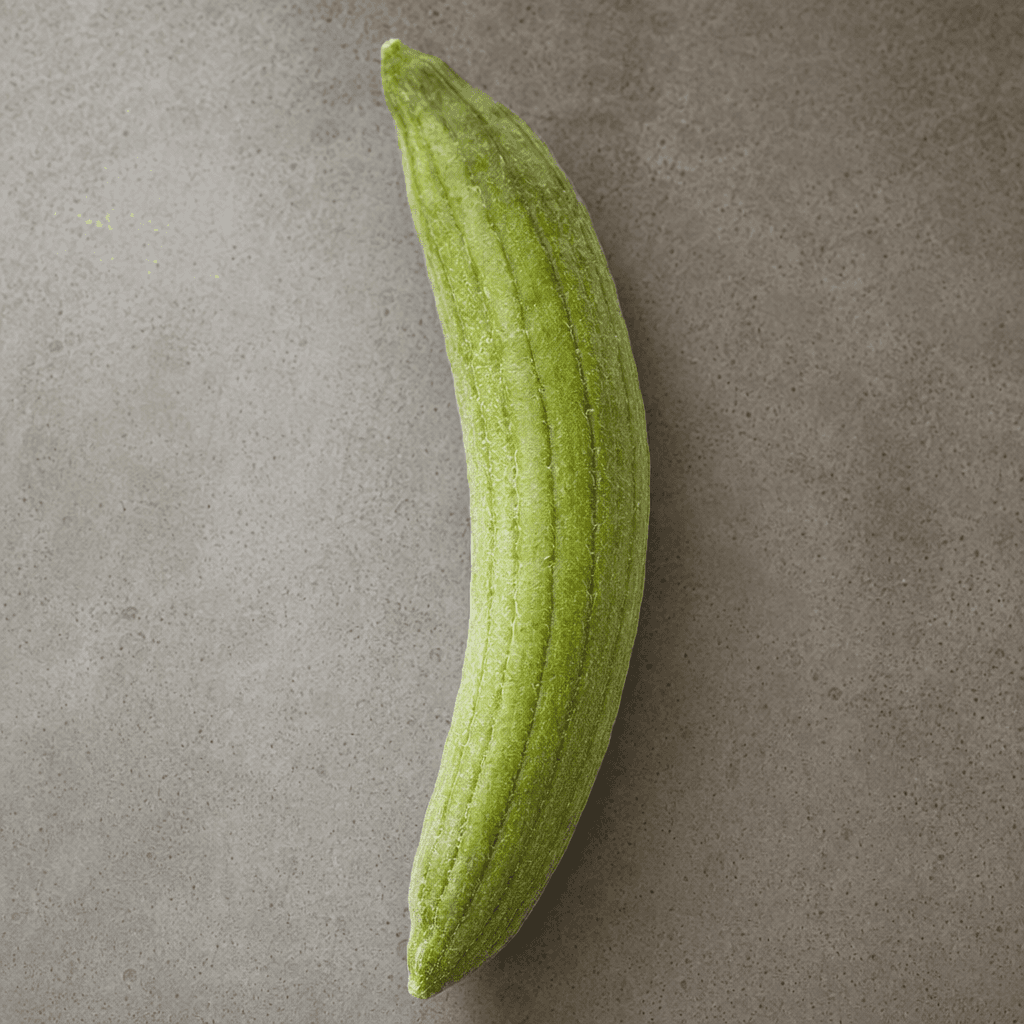
Armenian cucumber Calories
Very low calorie, high water content, good source of vitamin C
In season: Summer
CALORIES
GI
POTASSIUM
FIBER
Quick answer
1 piece (medium) of Armenian cucumber (200 g) has 30 calories. That works out to 15 calories per 100 g. It contains 6.4 g of carbs, 1.6 g of protein, 0.2 g of fat and 1.4 g of fiber. Its 32.8 µg of Vitamin K covers 27% of the Daily Value. Its glycemic index is 15 (low), so it raises blood sugar slowly.
What is Armenian cucumber?
Armenian cucumber is a long, pale-green, deeply ridged vegetable that is eaten much like an ordinary cucumber. Despite its name, it is grown and used in cuisines beyond Armenia, including across the Middle East. Its skin is generally tender enough to leave on.
Mild in flavour, crisp and juicy, it works well sliced into salads, folded into yoghurt, or served as a cooling side with grilled food. In Armenia and nearby regions it is a familiar summer ingredient; elsewhere, use it anywhere you would use cucumber, including sandwiches and quick pickles. It is mostly water, low in calories and provides vitamin C. Pair it with herbs, lemon and a little yoghurt for a fresh, light salad.
Armenian cucumber Nutrition Facts
Selected: 100 g
15
KCAL / 100G
Carbs
3.2g
· 1% DV
Protein
0.8g
· 2% DV
Fat
0.1g
· 0% DV
Fiber
0.7g
· 3% DV
DV is the share of the daily value covered, on a 2,000 kcal reference diet.
Calories come from: Carbs 76% · Protein 19% · Fat 5%
Armenian cucumber Vitamins & Minerals
Vitamins
Vitamin K
16.4µg · 14% DV
Vitamin A
105µg · 12% DV
B5
0.26mg · 5% DV
B1
0.03mg · 3% DV
Minerals
Potassium ⭐
140mg · 4% DV
Magnesium
13mg · 3% DV
Phosphorus
24mg · 3% DV
Calcium
17mg · 2% DV
How Nutritious Is Armenian cucumber?
Nutrient density
Medium
How many vitamins, minerals and how much fiber this food carries per calorie. A high score means a lot of nutrition for few calories.
Satiety score
Medium
An EatBetter score computed from fiber, protein and calorie density. A high score means staying full longer on the same calories.
Both scores are calculated per 100 g and do not change with the selected portion. The satiety score is EatBetter's own calculation, not a clinical measure.
Armenian cucumber Glycemic Index
GLYCEMIC INDEX
GLYCEMIC LOAD
Accounts for portion size — a more realistic measure than GI alone.
How to Burn Off Armenian cucumber
To burn the 15 calories in 100 g:
🚶
Walking (5 km/h)
🏃
Running (8 km/h)
🚴
Cycling
🏊
Swimming
Times are calculated with the MET equation for a 70 kg adult. Actual burn varies with your weight, age and pace.
Is Armenian cucumber Processed?
NOVA 1
Unprocessed
1. Unprocessed
2. Minimally Processed
3. Processed
4. Ultra-Processed
NOVA classifies foods into 4 groups by industrial processing. NOVA 1 (unprocessed) is the healthiest.
Does Armenian cucumber Contain Allergens?
No known major allergens
Which Diets Is Armenian cucumber Good For?
Vegan
✓ Suitable
Vegetarian
✓ Suitable
Gluten-Free
✓ Suitable
Dairy-Free
— Not suitable
Mediterranean
✓ Suitable
Paleo
✓ Suitable
Whole30
— Not suitable
DASH
— Not suitable
Keto
✓ Suitable
Low FODMAP
— Not suitable
Armenian cucumber Fat Profile
SATURATED
0.02g
MONOUNSATURATED
0.01g
POLYUNSATURATED
0.01g
Compare Armenian cucumber
Foods Similar to Armenian cucumber
Frequently Asked Questions About Armenian cucumber
What is an Armenian cucumber?
An Armenian cucumber is a long, ridged fruit eaten while young like a cucumber, but botanically it belongs to the melon family. It is often pale green, mildly flavored, and crisp when freshly picked.
Does an Armenian cucumber taste different from a regular cucumber?
An Armenian cucumber tastes mild, fresh, and watery, much like a regular cucumber, though some people find it slightly sweeter. Its flesh is crisp when young, and its flavor can become less pleasant as it matures.
Can you eat Armenian cucumber raw?
Yes, Armenian cucumber is commonly eaten raw. Wash and slice it for salads, sandwiches, or dips; its mild flavor and crisp texture also work well with lemon, herbs, yogurt, and a little salt.
Do you peel an Armenian cucumber?
Usually, you do not need to peel an Armenian cucumber because its skin is thin and edible. Rinse it well under running water and rub the ridged surface gently, especially if it feels fuzzy.
How is Armenian cucumber different from a regular cucumber?
Armenian cucumber is a different plant from the familiar true cucumber: it is a type of melon harvested young. Its long, pale, deeply ridged fruit is distinctive, but it can be used similarly in many dishes.
How do you store Armenian cucumbers?
Store Armenian cucumbers unwashed in the refrigerator’s crisper drawer, loosely wrapped to limit moisture loss. Wash them just before eating, and discard any pieces that become slimy, moldy, or noticeably soft.
Can you pickle Armenian cucumbers?
Yes, young, firm Armenian cucumbers can be pickled whole or sliced. Their ridges hold brine well, while older, seedier fruit may turn softer; use a tested refrigerator-pickle or canning recipe for safe preparation.
Can you grow Armenian cucumbers at home?
Yes, Armenian cucumbers can be grown at home in a sunny, warm spot with well-drained soil. The vines spread or climb, so give them room or a sturdy trellis, water consistently, and harvest the fruit while young.
Are Armenian cucumber seeds edible?
Yes, the small, soft seeds in a young Armenian cucumber are edible and usually do not need to be removed. In older fruit, the seeds may become larger and firmer, so you can scoop them out if you prefer.
Can you use Armenian cucumber instead of regular cucumber in recipes?
Yes, Armenian cucumber works as a substitute in most fresh salads, sandwiches, and chilled dishes. Its shape and ridges differ, but its mild flavor is similar; slice it to the size the recipe calls for.
Have another question about Armenian cucumber?
Ask the AI nutrition coach — calories, portions, alternatives and more, answered in seconds in the app.

Scan calories with your camera
Instant AI nutrition analysis

Nutrition data compiled from USDA FoodData Central and scientific sources.