

Ready & Packaged Foods
All →Vegetables & Legumes
All →Desserts & Confectionery
All →Meat & Protein
All →Grains & Bakery
All →Beverages
All →Milk & Dairy
All →

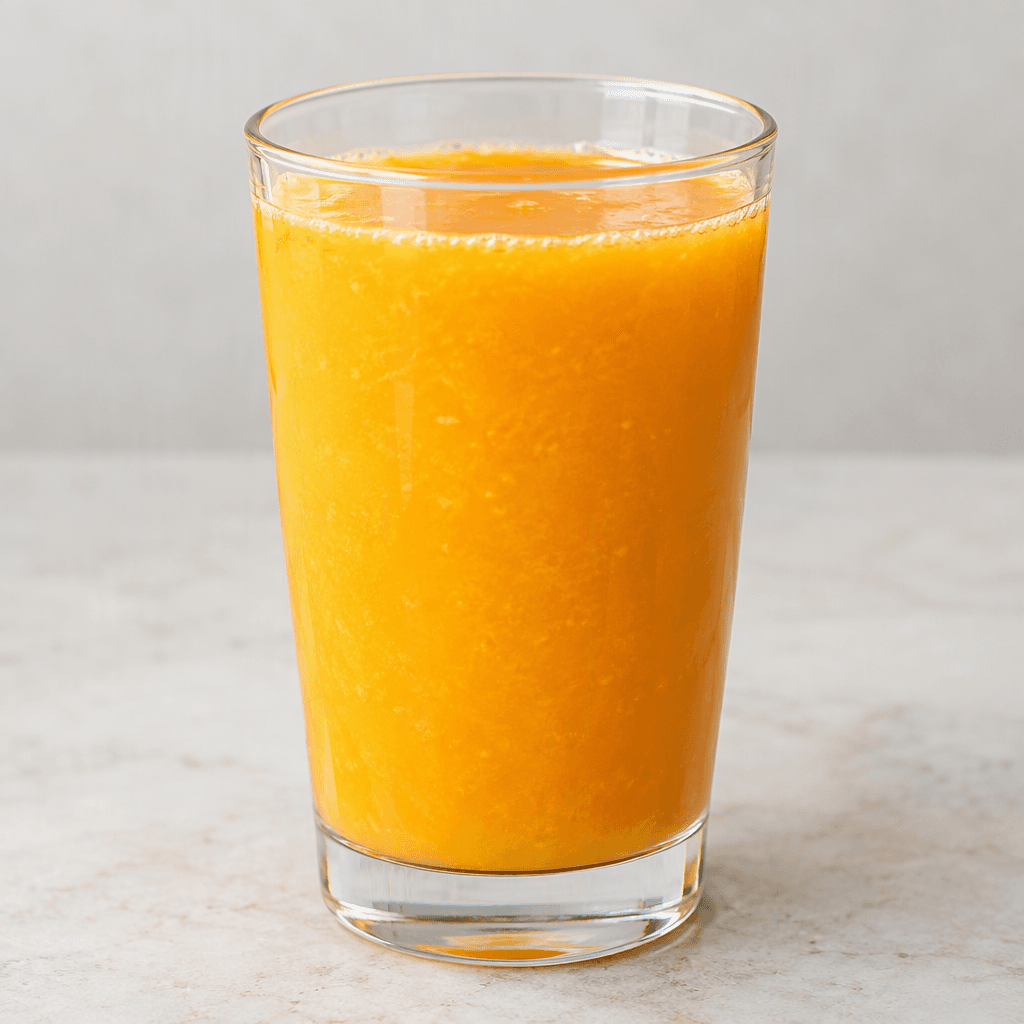
Apple carrot juice Calories
Contains vitamin C and beta-carotene
In season: Autumn · Winter · Spring · Summer
CALORIES
GI
POTASSIUM
FIBER
Quick answer
1 cup (medium) of Apple carrot juice (240 g) has 103 calories. That works out to 43 calories per 100 g. It contains 24.5 g of carbs, 0.7 g of protein, 0.2 g of fat and 0.5 g of fiber. Its 456 µg of Vitamin A covers 51% of the Daily Value. Its glycemic index is 43 (low), so it raises blood sugar slowly.
What is Apple carrot juice?
Apple carrot juice combines the sweetness of apples with the gently earthy flavour of carrots. It is made by juicing the two together and is a familiar option at juice bars as well as an easy drink to prepare at home. Depending on how it is made, it may be smooth or retain a little pulp.
Serve it chilled at breakfast or as a refreshing drink between meals; its mellow sweetness also pairs well with a savoury sandwich. It contains vitamin C and beta-carotene, but has little fibre compared with eating whole apples and carrots: 100 g provides 0.2 g. If you want a more filling snack, have it alongside yoghurt or a handful of nuts.
Apple carrot juice Nutrition Facts
Selected: 100 g
43
KCAL / 100G
Carbs
10.2g
· 4% DV
Protein
0.3g
· 1% DV
Fat
0.1g
· 0% DV
Fiber
0.2g
· 1% DV
DV is the share of the daily value covered, on a 2,000 kcal reference diet.
Calories come from: Carbs 95% · Protein 3% · Fat 2%
Apple carrot juice Vitamins & Minerals
Vitamins
Vitamin A
190µg · 21% DV
Vitamin C
3.8mg · 4% DV
B6
0.05mg · 3% DV
Vitamin K
3.5µg · 3% DV
Minerals
Potassium ⭐
125mg · 4% DV
Phosphorus
14mg · 2% DV
Calcium
8mg · 1% DV
Magnesium
6mg · 1% DV
How Nutritious Is Apple carrot juice?
Nutrient density
Medium
How many vitamins, minerals and how much fiber this food carries per calorie. A high score means a lot of nutrition for few calories.
Satiety score
Medium
An EatBetter score computed from fiber, protein and calorie density. A high score means staying full longer on the same calories.
Both scores are calculated per 100 g and do not change with the selected portion. The satiety score is EatBetter's own calculation, not a clinical measure.
Apple carrot juice Glycemic Index
GLYCEMIC INDEX
GLYCEMIC LOAD
Accounts for portion size — a more realistic measure than GI alone.
How to Burn Off Apple carrot juice
To burn the 43 calories in 100 g:
🚶
Walking (5 km/h)
🏃
Running (8 km/h)
🚴
Cycling
🏊
Swimming
Times are calculated with the MET equation for a 70 kg adult. Actual burn varies with your weight, age and pace.
Is Apple carrot juice Processed?
NOVA 3
Processed
1. Unprocessed
2. Minimally Processed
3. Processed
4. Ultra-Processed
NOVA classifies foods into 4 groups by industrial processing. NOVA 1 (unprocessed) is the healthiest.
Does Apple carrot juice Contain Allergens?
No known major allergens
Which Diets Is Apple carrot juice Good For?
Vegan
✓ Suitable
Vegetarian
✓ Suitable
Gluten-Free
✓ Suitable
Dairy-Free
— Not suitable
Mediterranean
✓ Suitable
Paleo
— Not suitable
Whole30
— Not suitable
DASH
— Not suitable
Keto
— Not suitable
Low FODMAP
— Not suitable
Apple carrot juice Fat Profile
SATURATED
0.02g
MONOUNSATURATED
0.01g
POLYUNSATURATED
0.03g
Omega 6:3 ratio 2:1
Below the ideal 4:1 — a good omega balance.
Compare Apple carrot juice
Foods Similar to Apple carrot juice
Frequently Asked Questions About Apple carrot juice
What are the benefits of apple carrot juice?
Apple carrot juice provides beta-carotene and vitamin C as part of your diet. Beta-carotene can be converted to vitamin A, which supports normal vision, but drinking the juice does not correct eyesight or treat eye conditions.
How do you make apple carrot juice at home?
Make apple carrot juice by washing and chopping the apple and carrots, then running them through a juicer. Without a juicer, blend them with a little water and strain if you want a smoother drink; leaving the pulp retains more fiber.
Is apple carrot juice good for your eyes?
Apple carrot juice supplies beta-carotene, which the body can convert to vitamin A, a nutrient needed for normal vision. It will not improve eyesight beyond normal or cure eye problems, so it is not a substitute for eye care.
Does apple carrot juice help with weight loss?
No, apple carrot juice does not cause weight loss on its own. Juicing removes much of the fiber found in whole apples and carrots, so the drink may be less filling; replacing meals with it can also leave your diet unbalanced.
Can you drink apple carrot juice every day?
Yes, apple carrot juice can be part of a daily diet, but it should not replace whole fruit and vegetables. Since juice is easy to drink quickly and contains little fiber, enjoy it as a drink rather than relying on it for produce servings.
How long does fresh apple carrot juice last in the fridge?
Fresh apple carrot juice is best soon after making it. If needed, keep it in a sealed container in the refrigerator and drink it by the next day; discard it if it has been left at room temperature for a long time.
Should you peel apples and carrots for apple carrot juice?
No, peeling is not necessary for apple carrot juice if the produce is in good condition and washed thoroughly under running water. Peel it if you prefer a smoother taste or texture, or if the skin is damaged.
Should you strain apple carrot juice?
No, apple carrot juice does not have to be strained. Keeping the pulp gives the drink more of the fiber from the ingredients, while straining makes it smoother but removes much of that pulp.
Does apple carrot juice raise blood sugar?
Yes, apple carrot juice can raise blood sugar because it contains naturally occurring sugars. Its low fiber content makes it easier to drink quickly than whole apples and carrots; people with diabetes should discuss portions with their healthcare professional.
When is the best time to drink apple carrot juice?
There is no proven best time to drink apple carrot juice. Have it with breakfast or another meal if that suits you; drinking it on an empty stomach does not give it a special benefit.
Have another question about Apple carrot juice?
Ask the AI nutrition coach — calories, portions, alternatives and more, answered in seconds in the app.

Scan calories with your camera
Instant AI nutrition analysis

Nutrition data compiled from USDA FoodData Central and scientific sources.