



How to Calculate BMI: Formula and Examples
Learn how to calculate BMI using kilograms and meters or pounds and inches, with simple examples and an explanation of what the result means.
EatBetter · October 1, 2026 · 3 min read
Contents
BMI can be calculated from only two measurements: weight and height.
Quick answer: In metric units, BMI equals weight in kilograms divided by height in meters squared. In U.S. customary units, multiply weight in pounds by 703 and divide by height in inches squared.
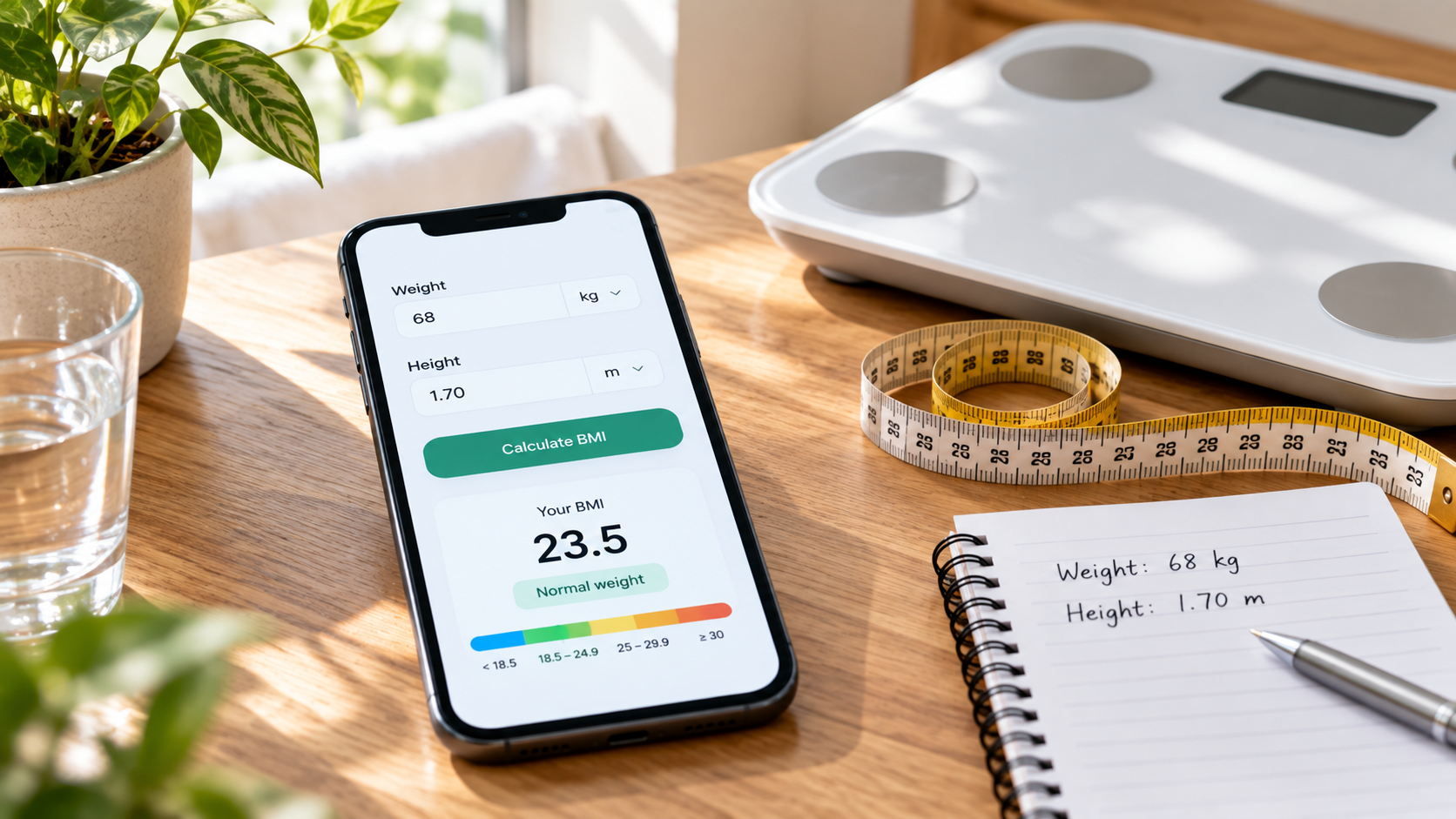
BMI Calculator
See your body mass index from height and weight.
Calculate →
BMI formula in metric units
The metric formula is:
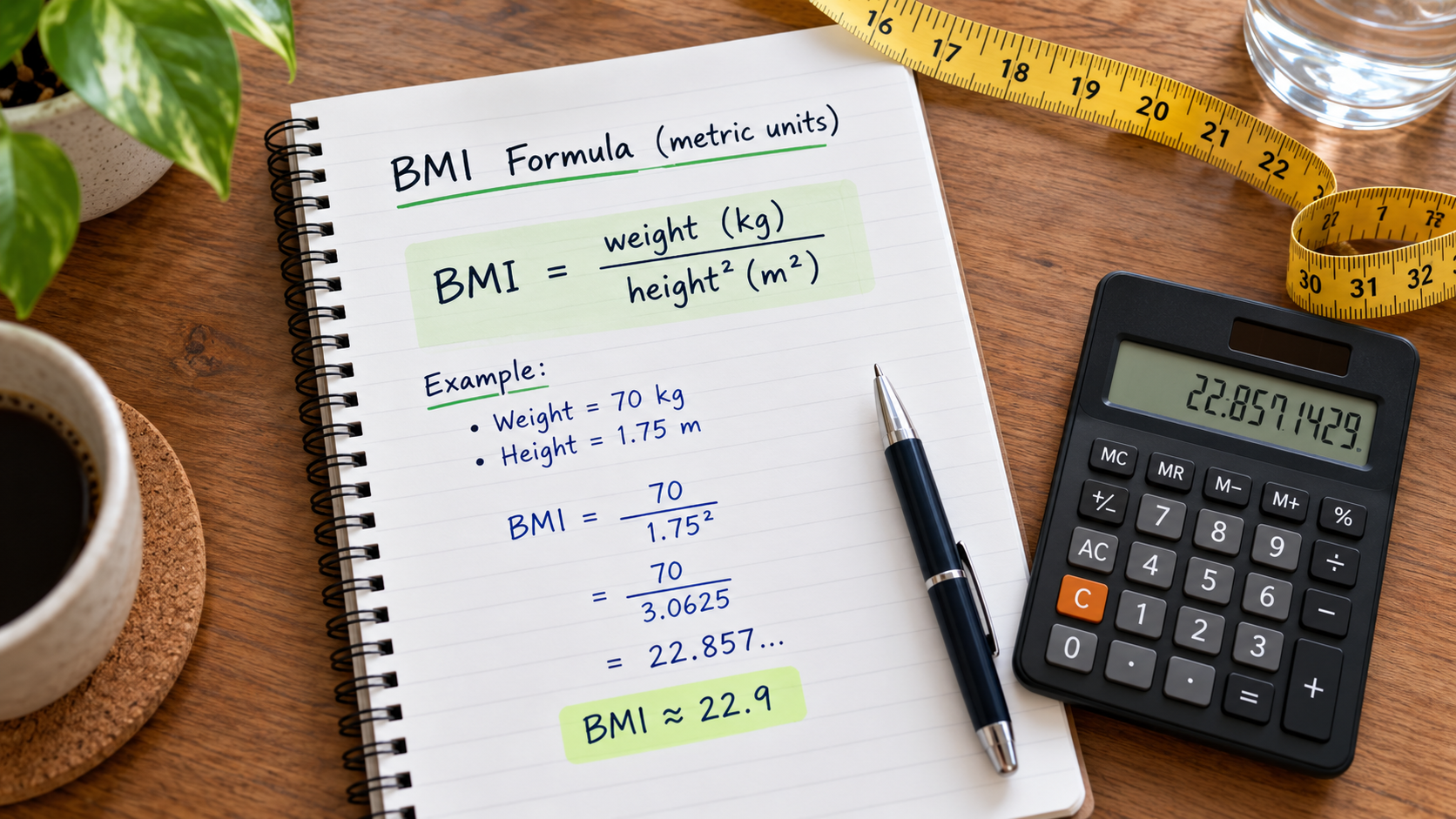
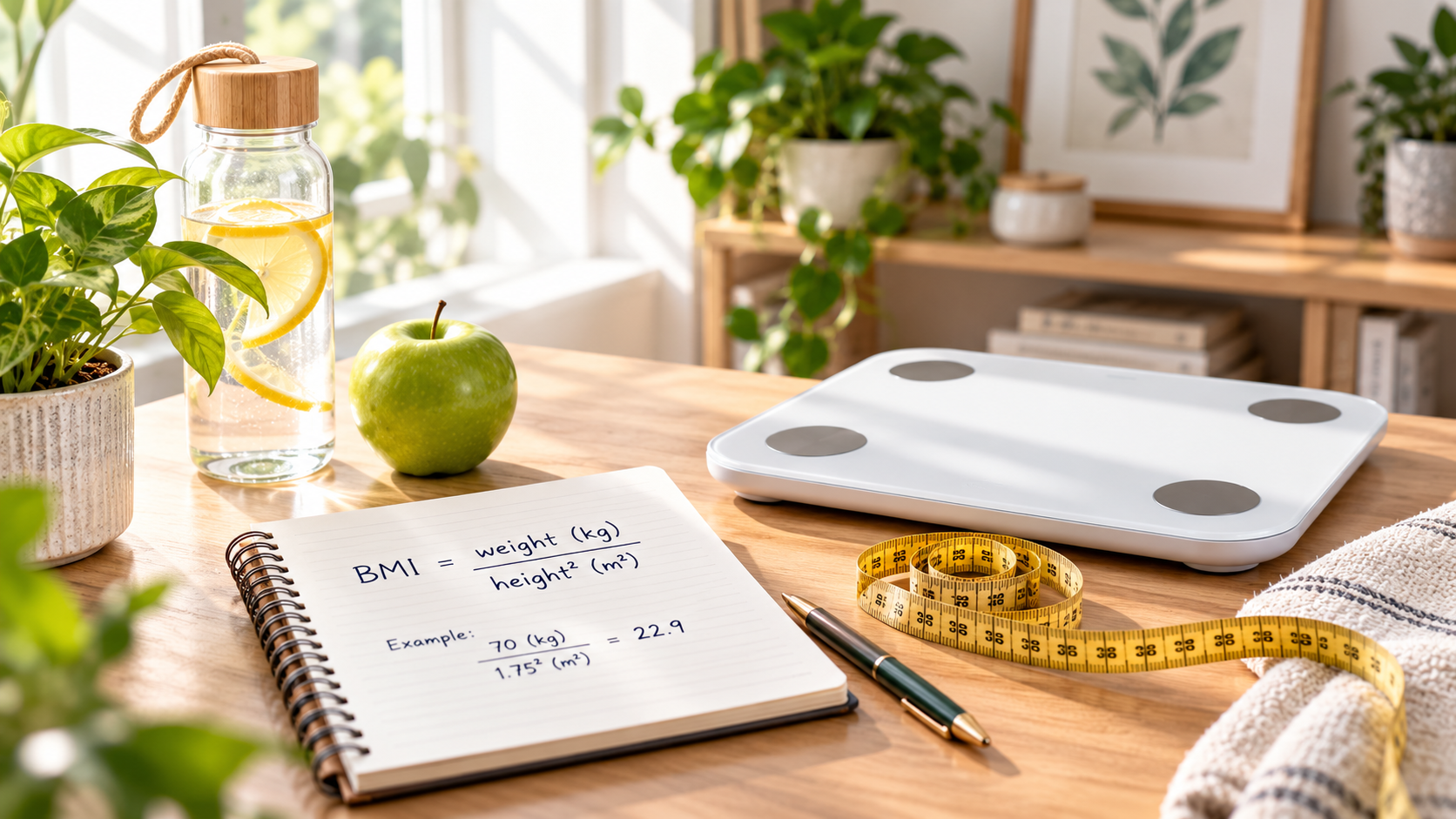
BMI = weight (kg) ÷ height (m)²
Example
Imagine:
- Weight: 70 kg
- Height: 1.75 m
First square the height:
1.75 × 1.75 = 3.0625
Then divide weight by that number:
70 ÷ 3.0625 = 22.9
The BMI is approximately 22.9.
BMI formula using centimeters
If your height is measured in centimeters, CDC also gives this equivalent formula:
BMI = [weight (kg) ÷ height (cm) ÷ height (cm)] × 10,000
For 70 kg and 175 cm:
70 ÷ 175 ÷ 175 × 10,000 = 22.9
BMI formula in pounds and inches
The formula is:
BMI = weight (lb) ÷ height (in)² × 703
Example
Imagine:
- Weight: 170 lb
- Height: 68 in
170 ÷ 68² × 703 ≈ 25.8
How to interpret the result
For adults age 20 and older, CDC categories are:
| BMI | Category |
|---|---|
| Below 18.5 | Underweight |
| 18.5 to <25 | Healthy weight |
| 25 to <30 | Overweight |
| 30 or greater | Obesity |
Obesity is further divided into three classes.
The easiest method: use a BMI calculator
Manual calculation is useful for understanding the formula, but a calculator is faster and reduces arithmetic errors.
BMI Calculator
See your body mass index from height and weight.
Calculate →
Enter:
- height
- weight
and the calculator returns the BMI value and category.
Common BMI calculation mistakes
1. Using centimeters as meters
175 cm is 1.75 m, not 175 m.
2. Forgetting to square height
BMI divides weight by height squared, not height once.
3. Mixing kilograms and inches
Use one complete unit system.
4. Applying adult categories to children
Children and teens require age- and sex-specific BMI percentiles.
5. Treating the result as a diagnosis
BMI is a screening measure.
Why two people with the same BMI can be different
Imagine two adults with the same height and weight.
One may have:
- more muscle
- less body fat
- high activity levels
while the other may have a different body composition.
BMI cannot distinguish those differences.
Should you track BMI over time?
Tracking can be useful when it provides context, but small short-term changes in body weight can reflect:
-
hydration
-
food intake
-
glycogen
-
menstrual-cycle changes
-
normal day-to-day variation
Look at trends rather than individual measurements.
Explore related EatBetter tools
Sources
- CDC — BMI Frequently Asked Questions: https://www.cdc.gov/bmi/faq/
- CDC — Adult BMI Categories: https://www.cdc.gov/bmi/adult-calculator/bmi-categories.html
- CDC — Adult BMI Calculator: https://www.cdc.gov/bmi/adult-calculator/index.html
Note: BMI is a screening measure and is not a substitute for individualized medical advice.
Frequently asked questions
How do I calculate BMI in kg?
Divide weight in kilograms by height in meters squared.
How do I calculate BMI in pounds?
Divide weight in pounds by height in inches squared, then multiply by 703.
What BMI is normal?
CDC uses 18.5 to less than 25 as the "healthy weight" category for adults.
Does BMI measure body fat?
No. It measures weight relative to height.
Is the BMI formula different for men and women?
The standard adult BMI formula is the same. However, BMI does not account for individual differences in body composition.

