



What Is a Healthy BMI Range? Understanding the Categories
Learn the adult BMI categories, what the healthy BMI range means and why BMI should be interpreted as a screening measure rather than a diagnosis.
EatBetter · October 1, 2026 · 3 min read
Contents
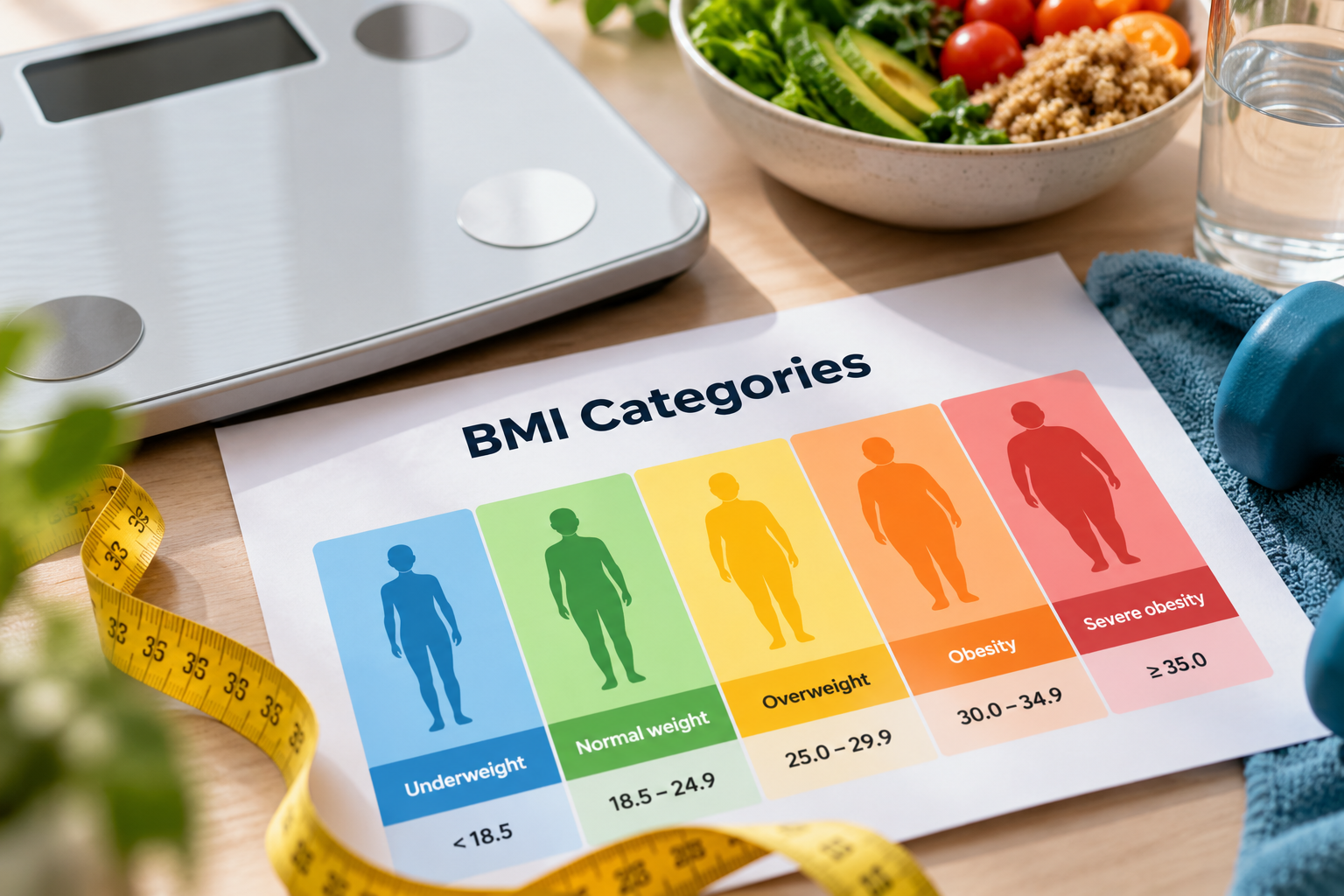
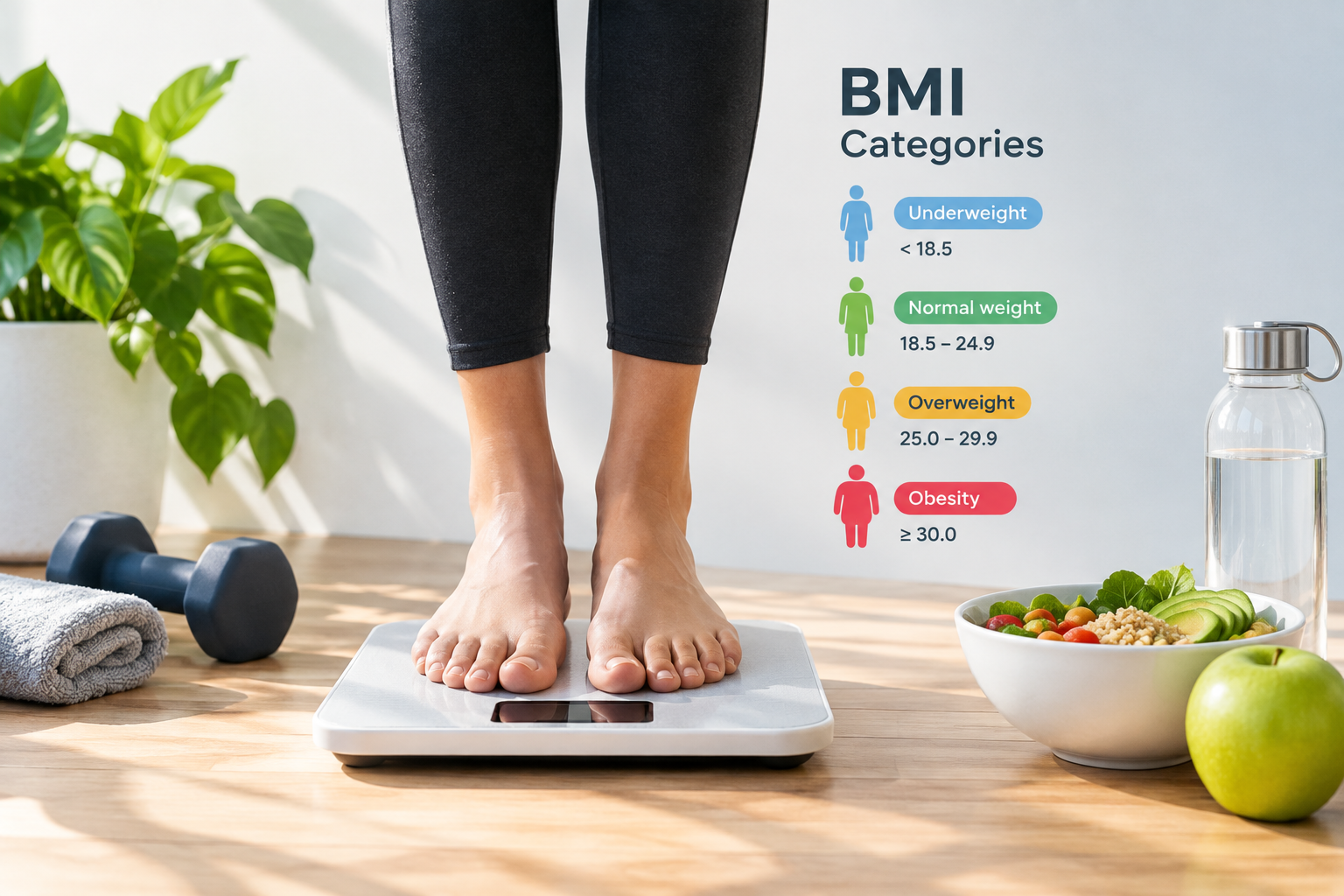
For adults, public-health organizations group BMI values into categories to help screen weight relative to height.
Quick answer: CDC defines a BMI from 18.5 to less than 25 as the adult "healthy weight" range. However, BMI is a screening measure and should be interpreted together with other health information.
BMI Calculator
See your body mass index from height and weight.
Calculate →
Adult BMI chart
For adults age 20 and older:
| BMI | CDC category |
|---|---|
| Below 18.5 | Underweight |
| 18.5 to <25 | Healthy weight |
| 25 to <30 | Overweight |
| 30 to <35 | Class 1 obesity |
| 35 to <40 | Class 2 obesity |
| 40 or greater | Class 3 obesity |
The labels describe BMI categories, not a complete health assessment.
Why is 18.5 to 24.9 called the healthy range?
BMI categories were developed as population-level screening thresholds.
At a population level, weight-for-height outside the middle range is associated with different health risks.
But an individual person's health cannot be determined from BMI alone.
A "healthy" BMI does not guarantee health
Someone can fall in the healthy-weight BMI range and still have:
- high blood pressure
- elevated blood glucose
- high cholesterol
- low physical activity
- poor diet quality
- other medical risk factors
BMI does not replace health screening.
A BMI above 25 does not tell the whole story either
A higher BMI can reflect:
- more body fat
- more muscle mass
- a larger body frame
- a combination of factors
This is why CDC recommends considering BMI with additional clinical information.
BMI is different for children and teens
Adult BMI cutoffs should not be applied to children.
For ages 2 through 19, BMI is interpreted using age- and sex-specific percentiles.
Should older adults use the same BMI categories?
The standard adult categories are still commonly used, but body composition changes with age.
Muscle loss and changes in fat distribution can make BMI less descriptive of body composition in some older adults.
Individual medical context matters.
What should you look at besides BMI?
Useful context can include:
- waist circumference
- body composition
- blood pressure
- blood lipids
- blood glucose
- physical activity
- diet quality
- medical history
A healthcare professional can help interpret these measures together.
Do you need to aim for a specific BMI?
It is usually more useful to focus on sustainable health behaviors than to chase a specific number without context.
Those behaviors may include:
- regular physical activity
- balanced eating
- adequate sleep
- managing medical conditions
- avoiding smoking
- following professional advice when needed
Explore related EatBetter tools
Sources
- CDC — Adult BMI Categories: https://www.cdc.gov/bmi/adult-calculator/bmi-categories.html
- CDC — About Body Mass Index: https://www.cdc.gov/bmi/about/index.html
- CDC — BMI Frequently Asked Questions: https://www.cdc.gov/bmi/faq/
Note: BMI is a screening measure, not a diagnosis. Speak with a healthcare professional if you have concerns about weight, nutrition or health.
Frequently asked questions
What BMI is considered healthy?
For adults, CDC defines 18.5 to less than 25 as the healthy-weight category.
Is BMI 25 unhealthy?
A BMI of 25 falls into the "overweight" category, but BMI is only one screening measure and should be interpreted with other health information.
Is BMI 18.5 too low?
18.5 is the lower boundary of the CDC healthy-weight category for adults. Values below 18.5 are categorized as underweight.
Does a healthy BMI mean I have a healthy body-fat percentage?
Not necessarily. BMI does not directly measure body fat.
Should athletes use BMI?
BMI can still be calculated, but muscular individuals may have a higher BMI because muscle contributes to body weight.

